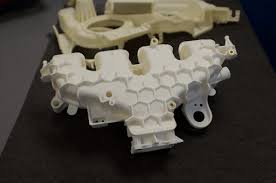
Quality control (QC) and testing are essential steps in automotive mould manufacturing to ensure dimensional accuracy, structural strength, long-term durability, and consistent performance. Since automotive components demand high precision and safety compliance, moulds must undergo a series of inspections, validations, and performance tests before being approved for production.
1. Importance of Quality Control in Automotive Moulds
Ensures accurate part dimensions, reducing rework and scrap.
Guarantees reliable mould performance during high-volume production.
Prevents premature mould wear, breakage, or failure.
Complies with OEM standards and international quality norms.
Enhances product consistency, safety, and overall vehicle quality.
2. Key Quality Control Procedures
2.1 Material Verification
Checking steel grade, hardness, chemical composition, and heat treatment.
Ensures mould durability and resistance to wear and corrosion.
2.2 Dimensional Inspection
Conducted using:
CMM (Coordinate Measuring Machine)
Laser Scanners
Profile Projectors
Digital Verniers and Micrometers
Confirms that core, cavity, sliders, lifters, and inserts match 3D CAD requirements.
2.3 Surface Quality Inspection
Measures:
Surface roughness (Ra value)
Polishing quality
Precision in sealing and parting lines
Ensures a defect-free finish on automotive parts such as bumpers, dashboards, lighting housings, etc.
3. Functional and Performance Testing
3.1 Mould Trial (T0, T1, T2…)
Injection moulding trials are conducted to test:
Fill balance
Flow behavior
Warpage and shrinkage
Cooling efficiency
Cycle time
Helps fine-tune gate design, cooling channels, and ejection systems.
3.2 Injection Pressure and Flow Testing
Verifies the mould’s ability to withstand high injection pressures.
Ensures smooth material flow without trapping air or causing weld lines.
3.3 Thermal Testing
Evaluates:
Uniform temperature distribution
Cooling time optimization
Performance of cooling channels and baffles
Prevents part deformation and reduces cycle time.
3.4 Ejection and Movement Testing
Checks movement of:
Sliders, lifters, ejector pins, ejector plates
Ensures smooth, jam-free operation under production conditions.
4. Durability and Life Cycle Testing
4.1 Repeated Cycle Testing
Simulates large production volumes.
Confirms mould stability and wear resistance over thousands of cycles.
4.2 Stress and Fatigue Testing
Analyzes stress points using:
Finite Element Analysis (FEA)
Physical endurance tests
Ensures mould components can handle repetitive mechanical load.
5. Defect Analysis and Correction
Common issues checked during QC:
Sink marks
Flash formation
Warpage and deformation
Short shots
Weld lines and air traps
Mismatched parting lines
Corrective action is taken through:
Gate design modification
Cooling system optimization
Parting line adjustment
Tool polishing or re-machining
6. Documentation and Final Approval
Detailed trial reports (T0, T1…)
CMM inspection reports
SPI (Society of Plastics Industry) classification
Fitment and assembly validation
Customer approval and sign-off
7. Conclusion
Effective quality control and testing ensure that automotive moulds deliver high precision, durability, and reliable performance throughout their production life. A well-validated mould not only reduces manufacturing defects but also helps automotive manufacturers maintain consistent quality and meet strict industry standards.