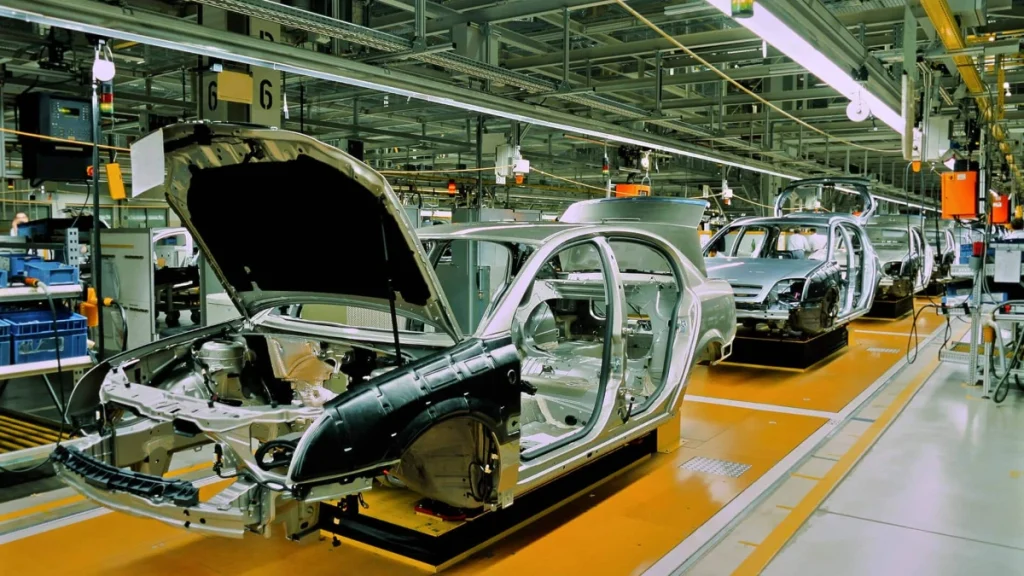
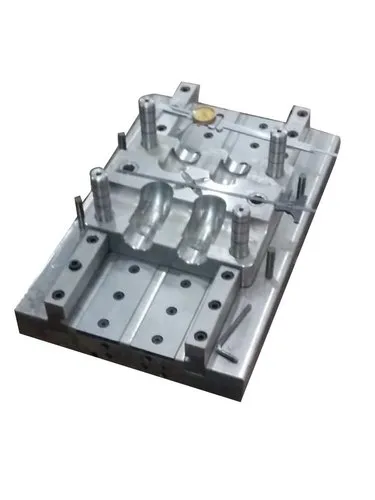
Industry 4.0 has transformed the global automotive sector by integrating smart technologies, advanced automation, and data-driven processes. In automotive moulding, these innovations are improving productivity, enhancing design precision, reducing downtime, and enabling faster product development cycles. The transition from traditional moulding to connected, intelligent manufacturing systems is helping automotive OEMs and mould manufacturers achieve higher efficiency and superior product quality.
1. Smart Moulds with Embedded Sensors
Smart moulds equipped with temperature, pressure, vibration, and flow sensors enable real-time monitoring of moulding conditions. This allows:
Early detection of defects
Prevention of mould failures
Improved part consistency
Optimized cooling and cycle times
Data captured by these sensors becomes the foundation for predictive maintenance and AI-driven quality control.
2. Automation and Robotics
Industry 4.0 promotes heavy adoption of automation in automotive moulding:
Robotic arms for part handling, trimming, and finishing
Automated material feeding and dosing systems
Robotic inspection using vision systems
These technologies reduce labour dependency, enhance safety, and ensure continuous, repeatable moulding operations.
3. Digital Twins and Simulation
Digital twin technology replicates the mould, material flow, and production environment in a virtual model:
Enables simulation of mould behaviour under different conditions
Helps identify design or process issues before manufacturing
Reduces prototyping costs and lead time
Digital twins also improve mould lifecycle management by continuously updating with operational data.
4. IoT and Connectivity
Internet of Things (IoT) platforms integrate machines, moulds, sensors, and operators into a single digital ecosystem. Benefits include:
Real-time dashboard for machine and mould status
Data-driven decision-making
Automatic alerts for abnormalities
Improved traceability of each moulded component
This connectivity supports transparent, efficient production workflows.
5. Predictive Maintenance
Industry 4.0 algorithms use historical and real-time machine data to predict failures before they occur. For moulding units:
Downtime is reduced significantly
Maintenance schedules are optimized
Spare parts planning becomes more efficient
Mould life is prolonged
Predictive maintenance ensures that critical automotive moulds operate at peak performance.
6. Additive Manufacturing for Prototyping
3D printing combined with Industry 4.0 accelerates:
Rapid prototyping of mould inserts
Conformal cooling channel development
Faster design validation
This shortens development cycles and enhances the performance of automotive moulds.
7. AI-Driven Quality Control
Machine learning and AI systems can analyze visual and sensor data to detect defects such as warpage, surface imperfections, or dimensional deviations. This leads to:
Enhanced inspection speed
Near-zero defects
Improved consistency of automotive components
8. Cloud-Based Data Management
Cloud platforms store and analyse production data from multiple moulding lines or factories. This helps automotive manufacturers:
Compare performance across plants
Implement best practices globally
Scale their operations with ease
Cloud systems ensure data availability, security, and collaboration.
Conclusion
Industry 4.0 is reshaping automotive moulding by bringing intelligence, connectivity, and automation to every stage—from design and simulation to production and quality control. Manufacturers adopting these technologies benefit from improved efficiency, reduced production costs, faster time-to-market, and superior moulded components that meet the demanding standards of the automotive industry.