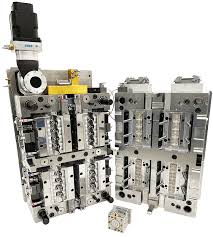
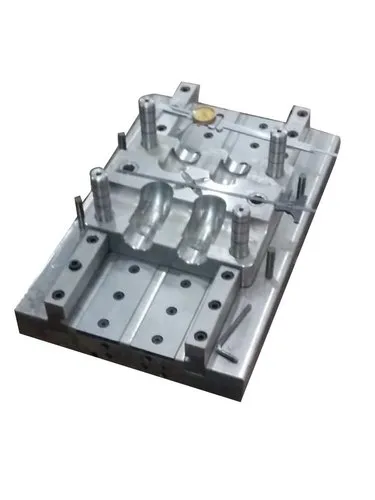
High-precision and micro medical moulds play a critical role in the manufacturing of modern healthcare and medical devices. As medical technology advances toward minimally invasive procedures, compact devices, and disposable components, the demand for extremely accurate and miniature moulded parts has increased significantly. These moulds are designed to produce components with micron-level tolerances while maintaining consistent quality, safety, and regulatory compliance.
Importance in the Medical Industry
Medical components often function in life-critical environments, making dimensional accuracy and reliability essential. High-precision and micro moulds ensure:
Exact replication of intricate geometries
Consistent part performance across large production volumes
Proper fit and function in complex medical assemblies
Compliance with stringent medical regulations and standards
Even minor dimensional deviations can affect device performance, sterility, or patient safety.
Key Characteristics of High-Precision and Micro Moulds
Tight Tolerances: Dimensional tolerances often within ±1–5 microns.
Micro-Scale Features: Capable of forming thin walls, micro-holes, micro-channels, and fine surface textures.
Superior Surface Finish: Smooth finishes to minimize friction, bacterial adhesion, and contamination risks.
High Repeatability: Stable mould performance across long production cycles.
Common Applications
High-precision and micro medical moulds are widely used for manufacturing:
Syringe components and plungers
Catheters and micro-tubing connectors
Insulin pen parts
Diagnostic device components
Implantable device housings
Microfluidic chips and lab-on-a-chip devices
Surgical instrument handles and tips
Materials Used
Medical-grade plastics commonly processed using micro moulds include:
Polycarbonate (PC)
Polypropylene (PP)
Polyether ether ketone (PEEK)
Cyclic olefin polymer (COP) and cyclic olefin copolymer (COC)
Medical-grade ABS and nylon
These materials offer biocompatibility, chemical resistance, sterilization compatibility, and mechanical stability.
Mould Design Considerations
Designing high-precision and micro medical moulds requires advanced engineering expertise:
Gate Design: Micro-gating to ensure uniform flow without damaging delicate features.
Runner Systems: Often hot runner or valve gate systems to reduce material waste and maintain melt stability.
Ventilation: Ultra-fine vents to prevent air traps while avoiding flash.
Cooling Efficiency: Optimized cooling channels to maintain dimensional stability and minimize cycle time.
Ejection Mechanisms: Gentle ejection systems such as stripper plates or air ejection to avoid part deformation.
Manufacturing Technologies
Advanced technologies are essential for producing these moulds:
CNC micro-machining
High-speed milling
Electrical Discharge Machining (EDM) and micro-EDM
Laser machining and texturing
Precision polishing and surface coating
High-quality mould steels such as stainless steel (DIN 1.2083, DIN 1.2316) are commonly used for corrosion resistance and durability.
Quality Control and Validation
Stringent inspection and validation processes are mandatory:
Coordinate Measuring Machines (CMM) for micron-level inspection
Optical and laser measurement systems
Process validation (IQ, OQ, PQ)
Cleanroom moulding compatibility
Full traceability and documentation
Regulatory Compliance
High-precision medical moulds must align with international standards such as:
ISO 13485 (Medical Devices Quality Management)
ISO 9001
GMP (Good Manufacturing Practices)
FDA and CE requirements
Benefits of High-Precision and Micro Medical Moulds
Enhanced product reliability and patient safety
Reduced material waste and rejection rates
Improved consistency in mass production
Support for advanced and miniaturized medical device designs
Long mould life with stable performance
Conclusion
High-precision and micro medical moulds are a cornerstone of modern medical device manufacturing. By combining advanced design, precision engineering, high-quality materials, and rigorous quality control, these moulds enable the production of safe, reliable, and innovative medical components that meet the evolving demands of the healthcare industry.