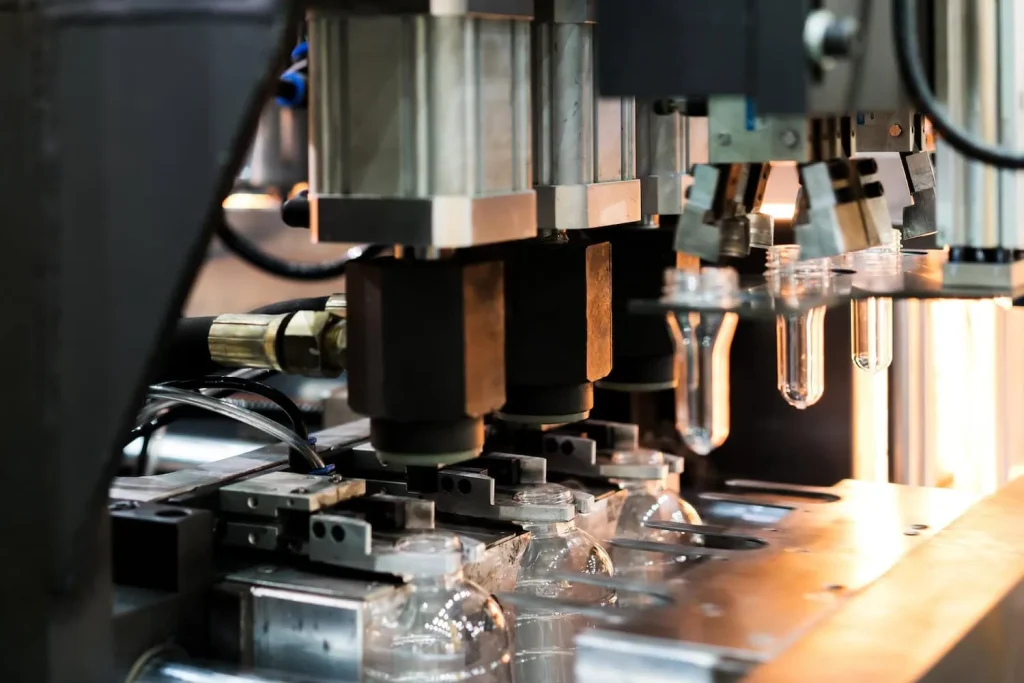
Medical mould manufacturing is a highly specialized field that demands precision, regulatory compliance, and consistent quality. Companies must decide whether to produce moulds internally (in-house) or outsource them to specialized vendors. Each approach has its own advantages and limitations depending on business goals, scale, and technical capabilities.
1. In-House Medical Mould Production
Definition
In-house production refers to designing, manufacturing, and maintaining moulds within the company using internal resources, equipment, and workforce.
Advantages
1. Better Quality Control
- Direct oversight ensures adherence to strict medical standards.
- Easier implementation of validation protocols such as IQ, OQ, and PQ.
2. Intellectual Property Protection
- Sensitive product designs and proprietary technologies remain secure.
3. Faster Communication and Iteration
- Immediate coordination between design, tooling, and production teams.
- Quick modifications during product development or troubleshooting.
4. Customization and Flexibility
- Easier to handle complex or highly customized mould requirements.
- Suitable for R&D-driven organizations.
5. Reduced Long-Term Costs (for High Volume)
- Economical when mould usage is frequent and production volume is high.
Disadvantages
1. High Initial Investment
- Requires significant capital for CNC machines, EDM, CAD/CAM software, and inspection equipment.
2. Skilled Workforce Requirement
- Needs experienced toolmakers, designers, and quality engineers.
3. Maintenance and Overhead Costs
- Ongoing costs for machine maintenance, calibration, and facility management.
4. Limited Scalability
- Expansion requires additional infrastructure and manpower.
2. Outsourcing Medical Mould Production
Definition
Outsourcing involves contracting external vendors or specialized mould manufacturers to design and produce medical moulds.
Advantages
1. Lower Capital Investment
- Eliminates the need for expensive machinery and infrastructure.
2. Access to Expertise
- Vendors often specialize in medical moulds and have advanced technology and experience.
3. Scalability and Flexibility
- Easy to scale production up or down based on demand.
4. Faster Time-to-Market
- Established vendors can deliver moulds quickly due to existing setups.
5. Focus on Core Competencies
- Allows companies to focus on product development, marketing, and assembly.
Disadvantages
1. Reduced Control Over Quality
- Requires strong vendor qualification and auditing systems.
2. Intellectual Property Risks
- Potential risk of design leakage if proper agreements are not in place.
3. Communication Challenges
- Possible delays due to time zones, language barriers, or coordination gaps.
4. Dependency on Suppliers
- Production timelines depend on vendor reliability and capacity.
3. Key Factors for Decision-Making
1. Production Volume
- High volume → In-house is more cost-effective
- Low to medium volume → Outsourcing is preferable
2. Complexity of Mould
- Complex, high-precision moulds may benefit from specialized outsourcing
- Standard moulds can be handled in-house
3. Regulatory Requirements
- Medical moulds require strict compliance (ISO 13485, FDA guidelines)
- In-house production offers better traceability and documentation
4. Cost Considerations
- Compare total cost: capital investment + operational cost vs vendor pricing
5. Time Constraints
- Urgent projects may benefit from outsourcing to experienced suppliers
6. Strategic Control
- Critical or proprietary products favor in-house production
4. Hybrid Approach (Best Practice)
Many companies adopt a hybrid model, combining both approaches:
- In-house:
- Prototype development
- Critical moulds
- Design and validation
- Outsourcing:
- Standard moulds
- High-volume production tools
- Overflow capacity
This approach balances cost, control, and flexibility.
5. Conclusion
Choosing between outsourcing and in-house medical mould production depends on multiple factors such as cost, quality requirements, production scale, and strategic priorities.
- In-house production is ideal for companies seeking control, confidentiality, and long-term cost efficiency.
- Outsourcing is suitable for reducing investment, accessing expertise, and improving scalability.
A well-planned combination of both methods often provides the most efficient and competitive solution in the medical manufacturing industry.