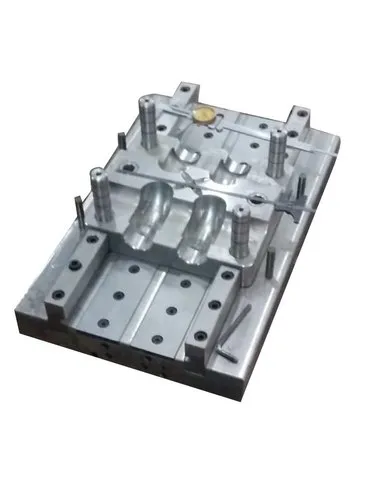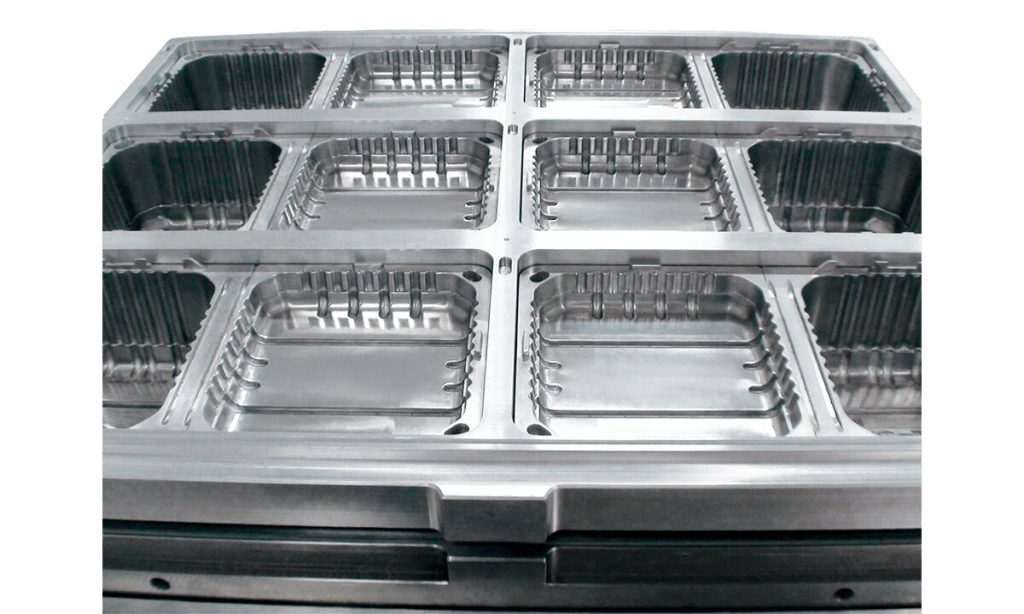
Draft angles in thermoforming moulds are the slight tapers incorporated into the vertical walls and surfaces of a mould to facilitate the easy removal of thermoformed plastic components without causing deformation, surface damage, or excessive friction. These angles are an essential part of mould design, as they help ensure smooth demoulding, maintain dimensional accuracy, and improve production efficiency.
During the thermoforming process, a heated plastic sheet is formed over or into a mould cavity using vacuum, pressure, or mechanical force. As the plastic cools, it may shrink and grip the mould surface. Draft angles provide the necessary clearance to release the formed component smoothly from the mould without sticking or damaging its walls.
Draft angles are particularly important in the design of packaging trays, containers, food packaging, automotive interior panels, plastic housings, and other thermoformed components.
Key Advantages of Draft Angles
- Easy Part Removal: Facilitates smooth release of thermoformed components from the mould.
- Reduced Surface Damage: Minimizes scratches, scuff marks, and surface defects during demoulding.
- Improved Dimensional Accuracy: Reduces the risk of component distortion and deformation during removal.
- Reduced Mould Wear: Minimizes friction and mechanical stress between the mould and the formed component.
- Improved Production Efficiency: Reduces demoulding difficulties and supports shorter production cycles.
- Enhanced Surface Quality: Helps maintain the appearance and finish of thermoformed components.
- Consistent Production: Supports reliable and repeatable part release during continuous manufacturing.
Key Design Considerations
- Draft Angle Selection: Determine suitable draft angles based on component geometry, material properties, mould depth, and surface finish requirements.
- Mould Depth: Deeper mould cavities generally require larger draft angles to facilitate component removal.
- Material Shrinkage: Consider the shrinkage characteristics of the plastic material, as shrinkage can increase contact pressure between the component and mould.
- Surface Texture: Textured or rough mould surfaces may require larger draft angles than smooth surfaces to prevent sticking and surface damage.
- Wall Thickness: Maintain suitable wall thickness and taper transitions to minimize uneven material distribution and distortion.
- Mould Type: Consider whether the component is formed over a male mould (positive forming) or into a female mould (negative forming), as the forming method affects draft requirements.
- Part Geometry: Provide appropriate draft on vertical walls, ribs, recesses, and other features to ensure smooth demoulding.
- Cooling and Ejection: Ensure proper cooling and suitable ejection arrangements to support consistent component release.
Typical Draft Angle Guidelines
| Mould surface | Typical draft angle |
|---|---|
| Smooth vertical walls | 1°–3° |
| Deep mould cavities | 3°–5° |
| Textured surfaces | 3°–7° or more |
| Deep-drawn components | Application-dependent |
These are general starting ranges, not fixed design requirements. The appropriate draft angle depends on the material, geometry, forming method, surface finish, and demoulding arrangement.
Importance of Draft Angles in Thermoforming Mould Design
Proper draft angle design helps prevent sticking, tearing, stretching, and distortion during component removal. Insufficient draft can increase demoulding forces, cause surface defects, and lead to production delays. Excessive draft, on the other hand, may affect the component’s dimensions, usable internal volume, and overall geometry.
A well-designed thermoforming mould incorporates optimized draft angles alongside appropriate cooling, venting, wall thickness, and mould surface finishes. This ensures smooth demoulding, consistent product quality, reduced production defects, and improved manufacturing efficiency.