1. Introduction to Injection Pressure
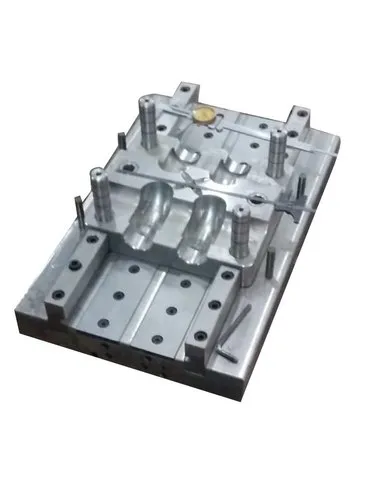
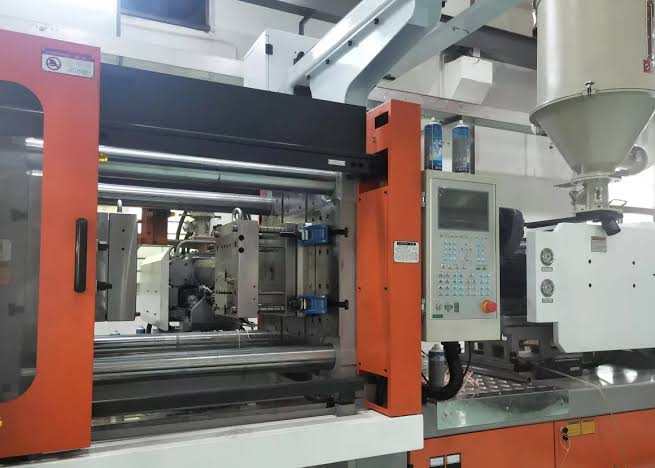
Injection pressure is one of the most important parameters in the injection moulding process. It refers to the pressure applied by the injection moulding machine to push molten plastic material from the heated barrel through the nozzle and into the mould cavity.
The main purpose of injection pressure is to ensure that molten plastic flows properly into every section of the mould and fills the cavity completely before the material begins to solidify.
Injection pressure plays a significant role in determining the quality, strength, appearance, dimensional accuracy, and overall performance of the final moulded product.
In plastic injection moulding, raw plastic material is first heated until it becomes molten. The molten plastic is then injected into a closed mould under controlled pressure. After filling the mould cavity, the material is allowed to cool and solidify before the finished product is removed.
During this process, the correct injection pressure is essential because insufficient pressure may result in incomplete filling, while excessive pressure may cause defects such as flash, excessive internal stress, and mould damage.
Therefore, understanding and controlling injection pressure is necessary for achieving consistent production quality, reducing material waste, and improving manufacturing efficiency.
2. Definition of Injection Pressure
Injection pressure can be defined as:
Injection pressure is the force per unit area applied to molten plastic material by the injection unit of an injection moulding machine to push the material through the nozzle, runner, gate, and into the mould cavity.
It is commonly measured in:
- Bar.
- Megapascals (MPa).
- Pounds per square inch (PSI).
The relationship between pressure and force is:\[ P=\frac{F}{A} \]
Where:
- P = Pressure.
- F = Applied force.
- A = Area over which the force acts.
For example, if a machine applies a force of 10,000 newtons over an area of 0.01 square metres:\[ P=\frac{10,000}{0.01} \]\[ P=1,000,000\ Pa \]
Therefore, the pressure is 1 MPa.
In injection moulding, the pressure required depends on several factors, including plastic material, mould design, product thickness, flow length, injection speed, and temperature.
3. Working Principle of Injection Pressure
Injection pressure works through the injection unit of the moulding machine.
The process involves the following stages:
Step 1: Plastic Material Feeding
Plastic granules are supplied into the hopper of the injection moulding machine.
The granules enter the heated barrel, where a rotating screw transports and melts the material.
Step 2: Plastic Melting
The plastic material is heated through barrel heaters and mechanical friction generated by the rotating screw.
The solid granules gradually melt and become a uniform molten plastic material.
Step 3: Injection of Molten Plastic
After the required quantity of molten plastic has accumulated in front of the screw, the screw moves forward.
This forward movement generates pressure and pushes the molten plastic through the nozzle and into the mould.
Step 4: Filling the Mould Cavity
The molten plastic enters the mould cavity and flows through the runner and gate system.
Injection pressure helps the material reach all sections of the cavity, including narrow and complex areas.
Step 5: Packing and Holding
After the mould cavity is filled, holding pressure is applied for a specified period.
This compensates for material shrinkage during cooling and helps prevent defects such as sink marks and voids.
Step 6: Cooling and Solidification
The plastic material cools inside the mould and gradually becomes solid.
Once sufficient cooling has taken place, the mould opens and the finished product is ejected.
4. Types of Pressure in Injection Moulding
Different types of pressure are involved in the injection moulding process. Each has a specific function.
A. Injection Pressure
Injection pressure is the pressure used to push molten plastic from the injection unit into the mould cavity.
Its main purpose is to fill the mould quickly and completely.
Importance:
- Helps molten plastic flow through the mould.
- Ensures complete cavity filling.
- Supports the production of complex shapes.
- Helps reduce short-shot defects.
- Influences product quality and consistency.
B. Holding Pressure
Holding pressure is applied after the mould cavity has been filled.
It maintains pressure on the molten plastic to compensate for shrinkage as the material cools.
Importance:
- Reduces sink marks.
- Minimises internal voids.
- Improves dimensional accuracy.
- Helps maintain product weight.
- Improves surface quality.
C. Back Pressure
Back pressure is the resistance applied to the rearward movement of the screw while plastic material is being plasticised.
It helps improve the mixing and uniformity of the molten plastic.
Importance:
- Improves melt consistency.
- Helps distribute colour and additives evenly.
- Reduces air entrapment in some conditions.
- Supports consistent material preparation.
D. Clamping Pressure
Clamping force is the force used to keep the two halves of the mould closed during injection and packing.
Although it is technically a force rather than a melt pressure, it is important in the injection moulding process.
Importance:
- Prevents the mould from opening under injection pressure.
- Helps prevent flash formation.
- Maintains proper mould closure.
- Supports dimensional consistency.
5. Factors Affecting Injection Pressure
Injection pressure depends on several machine, material, and mould-related factors.
1. Type of Plastic Material
Different plastic materials have different flow characteristics and viscosity.
For example:
- Polypropylene (PP) generally flows relatively easily under suitable processing conditions.
- Polycarbonate (PC) generally requires careful temperature and pressure control.
- Acrylonitrile Butadiene Styrene (ABS) has flow characteristics that depend on its grade and processing conditions.
- Nylon (PA) requires appropriate temperature and moisture control.
Materials with higher melt viscosity may require greater pressure to fill the mould.
2. Melt Temperature
Melt temperature has a significant effect on the flow behaviour of molten plastic.
When melt temperature increases within the recommended processing range, viscosity generally decreases, allowing the plastic to flow more easily.
If the melt temperature is too low, the material may become difficult to inject and may require higher pressure.
However, excessively high temperatures can cause material degradation.
3. Mould Temperature
Mould temperature affects how quickly molten plastic cools after entering the cavity.
A very cold mould may cause the plastic to solidify quickly, increasing flow resistance and creating incomplete filling.
A properly controlled mould temperature helps maintain suitable flow conditions.
4. Product Thickness
The thickness of the moulded product directly affects the flow resistance.
Thin-walled products generally require careful control of injection speed and pressure because molten plastic can cool quickly while passing through narrow sections.
Thicker products may have different filling and packing requirements.
5. Mould Design
Mould design is another important factor affecting injection pressure.
Important design features include:
- Runner dimensions.
- Gate size and position.
- Cavity geometry.
- Flow path length.
- Venting arrangements.
- Number of cavities.
Poor mould design can increase pressure losses and create uneven material flow.
6. Injection Speed
Injection speed determines how quickly molten plastic enters the mould cavity.
Higher injection speeds may require greater pressure to overcome flow resistance, although the relationship depends on the material and machine settings.
Proper injection speed helps achieve complete filling without causing excessive shear heating or other defects.
7. Screw Design and Machine Capacity
The screw design, injection unit, nozzle dimensions, and machine capacity influence the pressure available to inject molten plastic.
The machine must have sufficient injection capability for the particular mould and material being processed.
6. Importance of Injection Pressure
Injection pressure is essential for producing high-quality plastic products.
Its importance can be explained through the following points.
1. Complete Filling of the Mould
The primary function of injection pressure is to ensure that molten plastic fills the entire mould cavity.
Correct pressure helps the material reach narrow sections, corners, and complex shapes.
If injection pressure is too low, the cavity may not fill completely, resulting in defective products.
2. Improvement in Product Quality
Proper injection pressure contributes to consistent product quality.
It helps maintain uniform material distribution throughout the mould cavity and reduces the possibility of filling-related defects.
3. Reduction of Short Shots
A short shot occurs when molten plastic fails to fill the entire mould cavity.
Insufficient injection pressure, low melt temperature, poor venting, and incorrect injection speed may contribute to this problem.
Proper pressure helps reduce the possibility of incomplete filling.
4. Better Surface Finish
Correct pressure and suitable processing conditions help molten plastic reproduce the surface details of the mould.
This improves the appearance and surface quality of the finished product.
5. Improved Dimensional Accuracy
Injection pressure influences the amount of material entering the mould and the effectiveness of the packing stage.
Proper control helps maintain consistent product dimensions and reduces variations between moulded components.
6. Reduction of Sink Marks
Sink marks are small depressions that develop on the surface of plastic products due to uneven shrinkage during cooling.
Appropriate holding pressure helps supply additional material to compensate for shrinkage and reduce sink marks.
7. Reduction of Internal Voids
Voids are empty spaces that may form inside moulded plastic products.
Suitable packing pressure and holding time help reduce internal void formation, particularly in thicker sections.
8. Increased Production Efficiency
Correct pressure settings help reduce defective products, unnecessary material consumption, and production interruptions.
This improves manufacturing efficiency and reduces overall production costs.
9. Consistent Product Weight
Injection pressure and packing conditions influence the quantity of material retained inside the mould.
Proper control helps maintain consistent product weight from one production cycle to another.
10. Improved Mechanical Performance
Correct processing conditions can help produce components with more uniform structure and fewer internal defects.
This can contribute to better mechanical performance, although the final strength also depends on material selection, mould design, cooling conditions, and product geometry.
7. Effects of Low Injection Pressure
If injection pressure is too low, several problems may occur during the injection moulding process.
Common effects include:
- Short shots: The mould cavity does not fill completely.
- Incomplete filling: Some sections of the product remain unformed.
- Poor surface finish: The plastic may not reproduce fine mould details properly.
- Weld-line weakness: Inadequate filling conditions may contribute to weak joining areas where separate flow fronts meet.
- Dimensional variation: Product dimensions may become inconsistent.
- Poor replication of details: Small features and narrow sections may not form properly.
Low injection pressure can reduce production quality and increase the rejection rate.
However, before increasing pressure, the operator should also check melt temperature, mould temperature, injection speed, material condition, and mould venting.
8. Effects of Excessive Injection Pressure
Excessive injection pressure can also create serious problems.
Common effects include:
- Flash formation: Molten plastic escapes through the parting line or other gaps in the mould.
- Increased internal stress: Excessive packing can introduce residual stresses into the finished product.
- Mould damage: Excessive pressure and clamping-related loads may increase stress on mould components.
- Difficulty in product ejection: Excessive packing may increase shrink-fit or sticking effects.
- Dimensional inaccuracies: Overpacking may cause dimensional variations.
- Increased machine wear: Operating under unnecessarily high loads can increase mechanical stress and energy consumption.
- Burn marks: Excessive injection speed or trapped air can contribute to burning, especially when combined with inadequate venting.
Therefore, injection pressure should not simply be increased to improve filling. It must be optimised according to the material, machine, mould, and product requirements.
9. Difference Between Injection Pressure and Holding Pressure
Injection pressure and holding pressure are closely related but perform different functions.
| Basis | Injection Pressure | Holding Pressure |
|---|---|---|
| Meaning | Pressure used to fill the mould cavity | Pressure maintained after filling |
| Main purpose | Push molten plastic into the mould | Compensate for material shrinkage |
| Application stage | Filling stage | Packing and holding stage |
| Main function | Ensure complete filling | Maintain sufficient material in the cavity |
| Common defects addressed | Short shots | Sink marks and voids |
| Duration | During injection and filling | During the holding period |
Both pressures are important for achieving good-quality moulded products.
10. Methods of Controlling Injection Pressure
Injection pressure must be properly controlled to maintain consistent production.
The following methods are commonly used:
A. Machine Parameter Adjustment
The injection moulding machine allows operators to adjust injection pressure limits and other processing parameters.
These settings should be selected according to the requirements of the mould and plastic material.
B. Pressure Monitoring
Modern injection moulding machines contain pressure sensors and monitoring systems.
These systems help operators observe injection pressure during the production cycle.
C. Material Temperature Control
Maintaining the recommended melt temperature helps achieve suitable material flow.
This can reduce unnecessary pressure requirements.
D. Injection Speed Adjustment
Injection speed should be adjusted to achieve suitable filling time and flow behaviour.
Proper speed control helps avoid incomplete filling, excessive shear heating, and other defects.
E. Mould Maintenance
Regular mould maintenance helps prevent blockages, damaged gates, poor venting, and other conditions that can increase flow resistance.
F. Trial and Testing
Trial moulding helps determine suitable pressure settings.
Operators can examine product quality, dimensions, weight, surface appearance, and other characteristics before finalising the production parameters.
11. Applications of Injection Pressure in Different Industries
Injection pressure is important in various industries that manufacture plastic components.
1. Automotive Industry
Injection moulding is used to manufacture dashboards, interior panels, plastic covers, connectors, and other vehicle components.
2. Packaging Industry
Plastic bottles, caps, containers, lids, and packaging components require proper mould filling and pressure control.
3. Medical Industry
Syringe components, medical device housings, laboratory products, and other plastic medical components require carefully controlled manufacturing conditions.
4. Electronics Industry
Plastic housings, switches, connectors, and electrical enclosures are manufactured using injection moulding.
5. Household Products
Buckets, containers, kitchenware, furniture components, and storage products are common examples of injection-moulded items.
6. Toys and Consumer Products
Plastic toys, decorative components, accessories, and various consumer products depend on proper injection pressure for accurate mould filling.
12. Common Defects Related to Injection Pressure
| Defect | Description | Possible pressure-related cause |
|---|---|---|
| Short shot | Incomplete mould filling | Insufficient filling pressure |
| Flash | Excess plastic escapes from the mould | Excessive pressure or insufficient clamping force |
| Sink marks | Depressions on the surface | Insufficient packing pressure |
| Voids | Empty spaces inside the product | Inadequate packing |
| Warpage | Product bends or distorts | Uneven packing and cooling |
| Burn marks | Dark or burnt areas | Excessive speed, trapped air, or poor venting |
| High residual stress | Internal stress within the product | Excessive pressure or packing |
It is important to understand that most moulding defects have multiple possible causes. Pressure adjustment should be based on systematic inspection rather than guesswork.
13. Relationship Between Injection Pressure and Product Quality
Injection pressure has a direct influence on several important quality characteristics.
| Quality characteristic | Importance of proper pressure |
|---|---|
| Product appearance | Helps achieve a consistent surface finish |
| Product dimensions | Supports dimensional consistency |
| Product weight | Helps maintain consistent material filling |
| Mechanical strength | Helps minimise defects that can weaken components |
| Surface details | Supports accurate reproduction of mould features |
| Internal structure | Helps reduce packing-related voids |
| Production consistency | Reduces variations between moulding cycles |
Proper injection pressure, together with correct temperature, speed, cooling time, and holding pressure, helps achieve reliable product quality.
14. Best Practices for Maintaining Proper Injection Pressure
To maintain suitable injection pressure during production, the following practices should be followed:
- Select the correct plastic material for the product.
- Follow the material manufacturer’s processing recommendations.
- Maintain the appropriate melt temperature.
- Ensure that the mould is properly designed and maintained.
- Select suitable injection speed and pressure settings.
- Adjust holding pressure according to the product requirements.
- Monitor machine parameters regularly.
- Conduct product inspection during production.
- Perform regular mould and machine maintenance.
- Record successful processing conditions for future production.
These practices help improve product quality, minimise defects, and increase manufacturing efficiency.
15. Conclusion
Injection pressure is a critical parameter in the plastic injection moulding process. It is responsible for pushing molten plastic material from the injection unit into the mould cavity and ensuring that the mould is filled properly.
Correct injection pressure helps achieve complete mould filling, improved surface finish, dimensional accuracy, consistent product weight, and reduced manufacturing defects.
However, both insufficient and excessive injection pressure can create problems. Low pressure may result in short shots and incomplete filling, whereas excessive pressure may cause flash, internal stresses, dimensional variations, and unnecessary machine loading.
Therefore, injection pressure must be carefully selected and controlled according to the plastic material, mould design, product geometry, melt temperature, injection speed, and machine capacity.
In conclusion, proper injection pressure control is essential for producing high-quality plastic products, reducing material waste, improving production efficiency, and maintaining consistent manufacturing standards.