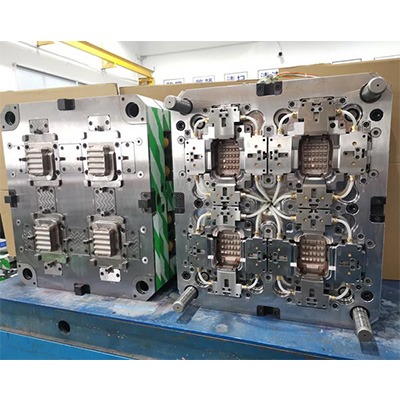
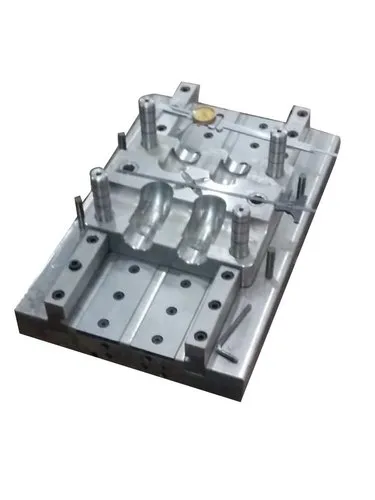
In modern electronics manufacturing, the demand for multifunctional, durable, and aesthetically appealing components has led to the adoption of 2K and Multi-K moulding technologies. These advanced moulding processes involve the use of two or more different materials or colours in a single moulded part, enabling greater design freedom, enhanced performance, and improved functionality.
What is 2K and Multi-K Moulding?
2K Moulding (Two-Component Moulding):
This process involves injecting two different materials—typically two types of thermoplastics or a combination of plastic and rubber—into a single mould in two sequential stages. The result is a single integrated part with multiple properties such as rigidity, flexibility, or colour contrast.Multi-K Moulding (Multi-Component Moulding):
Extending the 2K principle, Multi-K moulding involves three or more materials. It enables more complex designs with multiple functional zones—such as conductive, insulating, soft-touch, or transparent areas—all combined into one part.
Applications in Electronics
2K and Multi-K moulds are widely used in the electronics industry for producing components that combine both mechanical and aesthetic functions. Typical applications include:
Keypads and Buttons – Combining hard plastic for structure and soft elastomer for tactile feel.
Mobile Phone Housings – Integrating multiple colours and textures for visual appeal and grip.
Connector Housings – Combining insulating and conductive materials for better performance.
Wearable Devices – Integrating flexible and rigid areas for comfort and durability.
Control Panels and Switches – Offering visual differentiation, water resistance, and improved ergonomics.
Advantages
Enhanced Product Functionality – Combines multiple properties (e.g., hardness, flexibility, transparency) in one part.
Superior Aesthetics – Enables colour variations and design enhancements without post-painting.
Improved Durability – Reduces part assembly, minimizing weak joints and improving sealing performance.
Cost and Time Efficiency – Eliminates secondary assembly processes, lowering production time and cost.
Compact and Lightweight Designs – Ideal for miniaturized electronic devices requiring multi-functional integration.
Mould Design Considerations
Designing 2K or Multi-K electronic moulds requires precision engineering to ensure material compatibility and process efficiency:
Material Selection: Materials must be chemically and thermally compatible to achieve proper bonding.
Injection Sequence Control: Proper timing between the first and subsequent material injections is essential.
Mould Alignment and Sealing: Accurate positioning ensures no material leakage between shots.
Temperature and Flow Control: Precise thermal management prevents defects like warping or incomplete bonding.
Automation and Control Systems: Use of robotic arms and electronic controls for material switching and part ejection.
Technological Developments
Recent advancements include:
Rotary Platen Systems for faster mould rotation between injection stages.
Index Plate and Core-Back Systems for flexible mould cavity design.
Laser-Structured Surfaces to improve material adhesion.
Advanced Simulation Software for predicting material flow and bonding behaviour.
Conclusion
2K and Multi-K moulding technologies represent the future of electronic component manufacturing, providing unmatched flexibility, precision, and design potential. By combining multiple materials and functions in a single moulding operation, manufacturers can achieve higher-quality, more reliable, and aesthetically superior electronic products—ideal for today’s compact and multifunctional devices.