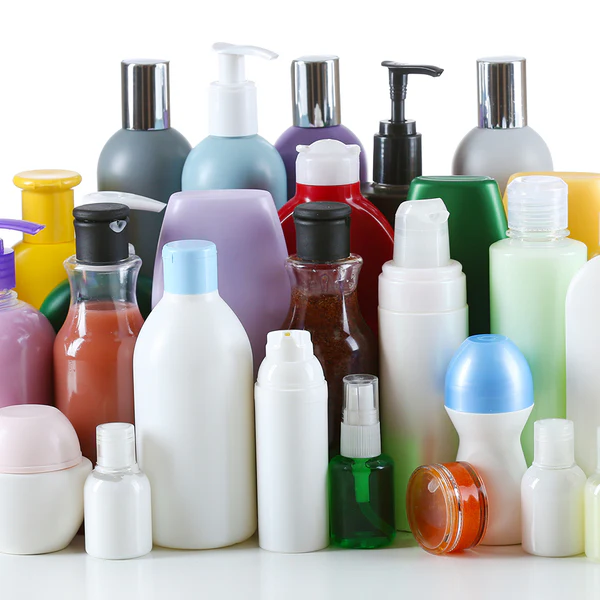
Blow moulding is a widely used manufacturing process for creating hollow plastic parts, especially containers and bottles used in the cosmetic industry. It allows for high-volume production, lightweight packaging, and intricate design features — all essential for cosmetic brands seeking to combine functionality with aesthetic appeal.
1. Introduction to Blow Moulding
Blow moulding involves inflating a heated plastic tube (parison or preform) inside a mould until it takes the shape of the mould cavity. Once cooled, the mould opens, and the formed container is ejected. The process is efficient, cost-effective, and suitable for a range of container shapes and sizes.
2. Types of Blow Moulding Techniques
2.1 Extrusion Blow Moulding (EBM)
Process:
A molten tube of plastic (parison) is extruded vertically into a mould.
The mould closes around the parison and air is blown inside, forming the container shape.
Once cooled, the mould opens and the part is trimmed and ejected.
Advantages:
Suitable for complex shapes and handles.
Cost-effective for medium to large volumes.
Works well with HDPE, LDPE, PP.
Common Uses in Cosmetics:
Lotion bottles, shampoo containers, squeeze bottles.
2.2 Injection Blow Moulding (IBM)
Process:
A preform is injection-moulded around a core rod.
The preform is transferred to a blow mould and inflated.
After cooling, the container is ejected.
Advantages:
Superior precision and finish.
Ideal for smaller, high-quality containers.
No trimming required (less waste).
Common Uses in Cosmetics:
Small perfume bottles, serum vials, travel-size containers.
2.3 Injection Stretch Blow Moulding (ISBM)
Process:
Similar to IBM, but the preform is stretched axially and radially before blowing.
The biaxial orientation enhances strength and clarity.
Advantages:
High clarity and gloss (ideal for premium packaging).
Enhanced barrier properties.
Lightweight yet strong containers.
Common Uses in Cosmetics:
Transparent containers for body oils, luxury skincare products, and perfumes.
3. Material Selection for Cosmetic Containers
Choosing the right plastic material is crucial for blow moulding in cosmetics:
| Material | Characteristics | Common Use |
|---|---|---|
| HDPE | Opaque, chemical resistant | Shampoo and conditioner bottles |
| PET | Clear, glossy, strong | Perfume and lotion containers |
| PP | High heat resistance, lightweight | Cream jars, flip-top bottles |
| LDPE | Soft, squeezable | Tubes, soft bottles |