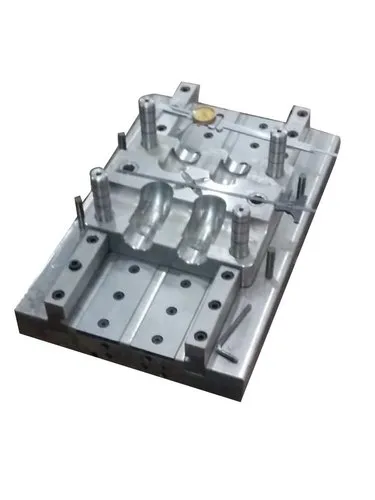
Thermoforming moulds are specially designed tools used to shape heated thermoplastic sheets or films into specific forms. In this process, a plastic sheet is heated until it becomes soft and flexible and is then formed over or inside a mould using vacuum, pressure, or mechanical force.
Thermoforming is widely used because it can produce lightweight products with attractive shapes and consistent dimensions. The mould plays an important role in determining the final shape, surface appearance, and details of the product.
How Thermoforming Moulds Work
The basic thermoforming process generally involves:
- Sheet Preparation – A suitable thermoplastic sheet is selected and positioned in the forming machine.
- Heating – The sheet is heated to the required forming temperature until it becomes flexible.
- Mould Positioning – The heated sheet is brought into contact with the mould.
- Forming – Vacuum, air pressure, or mechanical force pulls or presses the sheet against the mould surface.
- Cooling – The formed material is cooled while maintaining its shape.
- Demoulding – The finished product is carefully removed from the mould.
- Trimming – Excess material around the product is cut away to obtain the required final shape.
Types of Thermoforming Moulds
Common types include:
- Male or Positive Moulds – The heated sheet is formed over the outside of the mould.
- Female or Negative Moulds – The material is formed inside a mould cavity.
- Vacuum Forming Moulds – Vacuum pressure draws the heated sheet tightly against the mould.
- Pressure Forming Moulds – Additional air pressure is used to achieve greater detail and definition.
- Multi-Cavity Moulds – Several products can be formed during a single production cycle.
- Custom Moulds – Designed for specific product shapes, sizes, and designs.
Materials Used for Thermoforming Moulds
Thermoforming moulds can be manufactured from materials such as:
- Aluminium
- Epoxy
- Wood
- Plaster
- Engineering plastics
- Other temperature-resistant materials
The choice of mould material depends on factors such as production volume, forming temperature, required surface finish, product complexity, and mould durability.
Advantages of Thermoforming Moulds
- Suitable for producing lightweight products
- Can create a wide variety of shapes and designs
- Relatively fast production process
- Suitable for prototypes as well as production
- Can provide good surface detail
- Moulds can be comparatively economical for certain applications
- Suitable for large products and shallow or moderately deep shapes
Applications
Thermoforming moulds are commonly used to manufacture packaging trays, containers, disposable products, automotive components, appliance parts, protective packaging, display products, and decorative items.
They can also be useful for producing certain candle containers, decorative packaging, trays, and craft-related products, depending on the material and forming requirements.
Choosing the Right Thermoforming Mould
When selecting or designing a thermoforming mould, consider the type and thickness of the material, required product dimensions, mould temperature, depth of the product, surface finish, production quantity, cooling requirements, and ease of demoulding.
Proper mould design is important to prevent problems such as uneven wall thickness, distortion, wrinkles, trapped air, or difficulty in removing the finished product.
Conclusion
Thermoforming moulds provide an efficient method for shaping heated thermoplastic materials into useful and attractive products. By combining the right material, heating temperature, mould design, forming method, and cooling process, manufacturers can achieve consistent and high-quality results for both small-scale and large-scale production.