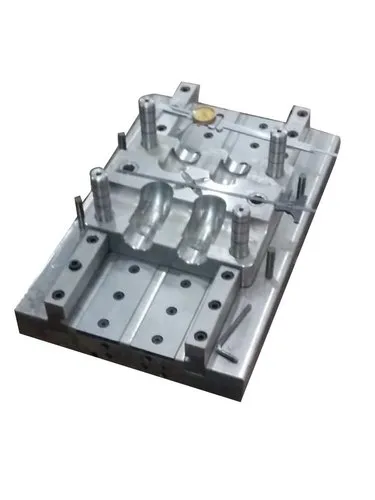
Injection moulds are specially designed tools used to manufacture products by injecting molten or softened material into a mould cavity under pressure. Once the material cools, solidifies, or cures, the mould is opened and the finished product is removed.
Injection moulding is one of the most widely used manufacturing processes because it can produce large quantities of identical products with excellent accuracy, consistency, and surface finish.
How Injection Moulds Work
The basic injection moulding process generally involves:
- Material Preparation – The selected material, such as plastic, wax, or another suitable compound, is prepared for processing.
- Heating – The material is heated until it reaches the required molten or flowable state.
- Injection – The material is injected into the mould cavity under controlled pressure.
- Filling the Cavity – The material flows through the mould and fills the desired shape.
- Cooling or Curing – The material is allowed to cool and solidify or cure inside the mould.
- Mould Opening – The mould halves separate after the product has sufficiently hardened.
- Ejection – Ejector pins or other mechanisms help remove the finished product from the mould.
- Finishing – Any excess material, such as runners or flash, may be trimmed before the product is packed or further processed.
Main Parts of an Injection Mould
An injection mould commonly consists of:
- Mould Cavity – Forms the external shape of the product.
- Core – Creates internal features or shapes.
- Sprue – Main passage through which material enters the mould.
- Runner – Channels material from the sprue toward the cavities.
- Gate – Controls the entry of material into the mould cavity.
- Cooling System – Helps control mould temperature and reduce cooling time.
- Ejector System – Removes the finished product from the mould.
- Guide Pins and Bushes – Ensure accurate alignment of the mould halves.
Types of Injection Moulds
Some commonly used types include:
- Single-Cavity Moulds – Produce one product per injection cycle.
- Multi-Cavity Moulds – Produce several identical products in a single cycle.
- Two-Plate Moulds – A simple and commonly used mould construction.
- Three-Plate Moulds – Used when more complex gating arrangements are required.
- Hot Runner Moulds – Keep material in the runner system heated to reduce material waste.
- Cold Runner Moulds – Allow the runner material to cool along with the product.
- Custom Injection Moulds – Designed specifically for a particular product or application.
Advantages of Injection Moulds
- High production speed
- Excellent product consistency
- Suitable for mass production
- Can produce complex shapes and detailed designs
- Good dimensional accuracy
- Repeatable results from cycle to cycle
- Can produce products with attractive surface finishes
- Automation can reduce production time and labour requirements
Applications
Injection moulding is widely used for producing plastic components, containers, packaging products, household items, automotive parts, electrical components, toys, industrial components, and decorative products.
In the candle and soap-making industry, specialized injection moulding techniques can also be used for producing certain decorative components, accessories, containers, and repeated product shapes, depending on the material and equipment being used.
Choosing the Right Injection Mould
When selecting or designing an injection mould, important factors include the type of material, product size and shape, required production quantity, mould material, cavity design, cooling requirements, injection pressure, and desired surface finish.
A properly designed mould improves production efficiency, reduces defects, and helps maintain consistent product quality.
Conclusion
Injection moulds are an important part of modern manufacturing, allowing manufacturers to produce high-quality, accurate, and consistent products at high production volumes. Understanding mould components, material flow, cooling, injection pressure, and ejection is essential for achieving efficient and reliable injection moulding results.