1. Introduction
In injection moulding, two critical sub-systems that influence the quality and efficiency of part production are mould venting and ejection systems. Both are essential for ensuring the moulded parts are defect-free and produced without damaging the tool or the component.
2. Mould Venting
Definition
Mould venting refers to the process of allowing trapped air and gases to escape from the mould cavity during the injection of molten plastic.
Purpose
To prevent burn marks, short shots, or incomplete filling.
To avoid voids or weld lines caused by trapped air.
To maintain surface finish quality and dimensional accuracy.
Sources of Trapped Air
Air inside the cavity before injection.
Volatile gases released by the plastic during heating.
Common Venting Methods
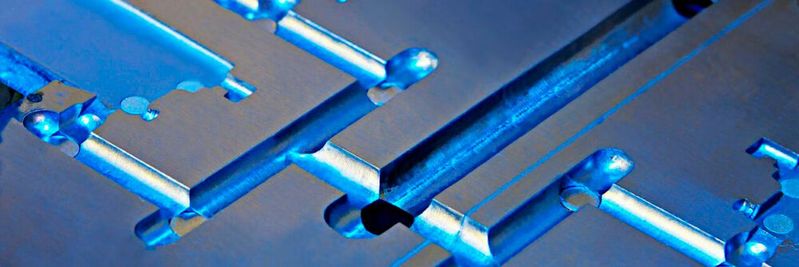
Parting Line Vents: Small gaps (typically 0.01 to 0.05 mm deep) along the mould’s parting line.
Vent Grooves: Channels machined into the cavity wall to guide air out.
Ejector Pin Clearance: Utilized as a natural escape path for air.
Porous Inserts: Made from sintered materials that allow gases to pass through.
Valve Vents: Actively open to release gas and then close before plastic reaches.
Design Considerations
Vent depth must be precise to avoid plastic flash.
Vents should be located at the end of fill or farthest from the gate.
Easy cleaning and maintenance are critical to avoid clogging.
3. Ejection Systems
Definition
The ejection system is the mechanism that removes the solidified plastic part from the mould cavity after cooling.
Purpose
To eject the part without causing damage or deformation.
To ensure fast and consistent cycle times.
To maintain part quality and protect mould surfaces.
Types of Ejection Systems
Pin Ejection
Most common.
Pins push the part out from behind.
Sleeve Ejection
Used for round or tubular parts.
A sleeve surrounds the core and pushes the part off.
Blade Ejection
Thin blades for thin-walled parts or ribs.
Stripper Plate Ejection
A plate pushes the entire part out, good for flat or large parts.
Air Ejection
Uses compressed air to blow the part out.
Hydraulic or Mechanical Lifters
For undercut features requiring complex movements.
Design Considerations
Ejector pins must be positioned to avoid leaving marks on critical surfaces.
Ejection force should be evenly distributed to prevent part warping.
Lubrication and wear-resistance must be accounted for.
Ejector plate movement must be smooth and synchronized.
4. Integration of Venting and Ejection
Both systems must be well-coordinated:
Poor venting may increase holding pressure, making ejection harder.
Inadequate ejection can cause damage that compromises future vent performance.
5. Conclusion
Effective mould venting and ejection systems are crucial for:
Improving product quality
Enhancing mould life
Reducing cycle time
Minimizing defects and rejects
Proper design, placement, and maintenance of these systems significantly contribute to the overall success of the injection moulding process.