1. Introduction
Cosmetic moulding refers to plastic moulding processes where the surface appearance, including color, texture, and uniformity, is critical—particularly in consumer-facing products such as beauty packaging, electronics, or automotive interiors. Achieving consistent and accurate color requires meticulous colour matching and effective dispersion of pigments and additives.
2. Colour Matching
2.1 Definition
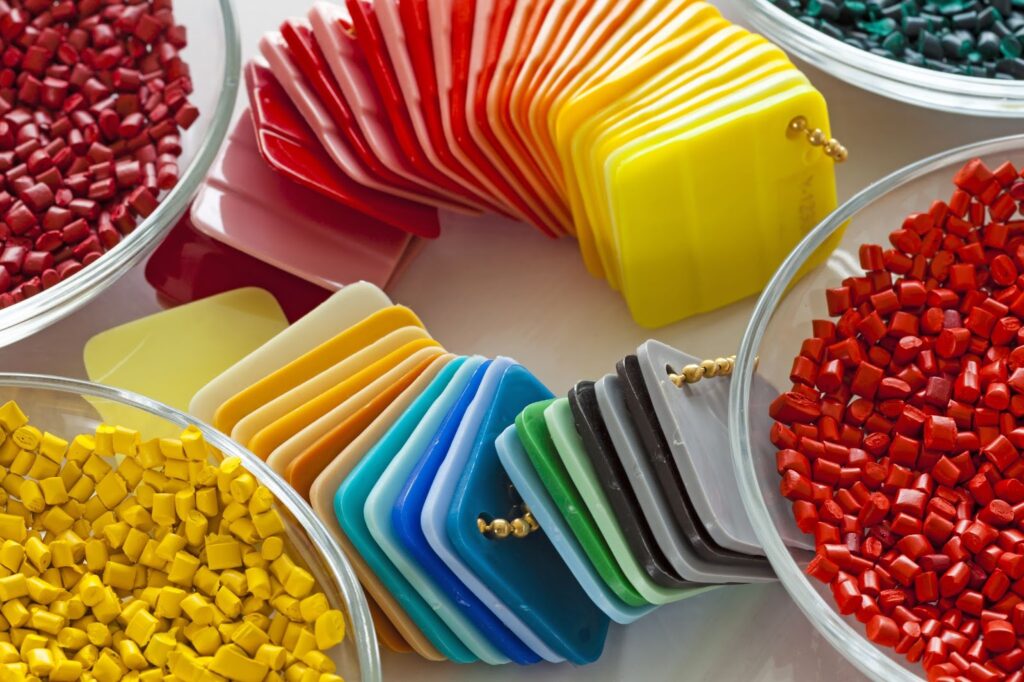
Colour matching is the process of formulating plastic compounds to achieve a desired and consistent color in the final moulded product. It accounts for the polymer base, pigment selection, processing conditions, and product thickness.
2.2 Key Considerations
Base Resin Color: The natural color of the polymer (e.g., milky white in polypropylene, amber in ABS) influences final shade.
Additives Interaction: UV stabilizers, flame retardants, or processing aids may alter color.
Processing Method: Injection pressure, cooling rate, and melt temperature affect final color appearance.
Lighting Conditions: Colour is often matched under standard D65 daylight, but final parts must be evaluated under multiple lighting conditions (metamerism checks).
2.3 Techniques Used
Spectrophotometry: Objective measurement using CIELAB values (L*, a*, b*) to quantify color difference (ΔE).
Visual Evaluation: Trained colorists assess samples under light booths using grey scales and reference standards.
Color Matching Software: Software assists in pigment formulation by predicting color output based on base resin and pigment load.
3. Additive Dispersion
3.1 Importance
Proper dispersion of pigments and additives ensures:
Uniform color appearance (no streaks, swirls, or specks)
Optimal mechanical properties
Consistent gloss and texture
Resistance to UV degradation and thermal aging
3.2 Dispersion Challenges
Agglomeration: Pigment clumps due to inadequate mixing or high pigment loading.
Carrier Compatibility: Pigment masterbatch carrier must be compatible with the base resin.
Process Shear: Too low shear results in poor dispersion; too high may degrade additives.
3.3 Dispersion Methods
Masterbatch Addition: Concentrated pigments/additives in a carrier resin, diluted during moulding.
Pre-compounding: Pigments and base polymer are melt-compounded prior to moulding for uniform dispersion.
Liquid Colour Systems: Offer precise dosing but require specialized equipment and stabilization.
4. Testing and Quality Control
4.1 Color Consistency
ΔE Tolerance: Industry often requires ΔE < 1.0 for high-end cosmetics or visible surfaces.
Lot-to-Lot Comparison: Batch control using standard references.
4.2 Dispersion Quality
Microscopic Analysis: Identifies pigment agglomerates.
Melt Flow Index (MFI): Variation may indicate poor additive distribution.
Color Plate Tests: Thin molded plaques are examined for swirls or specking.
5. Applications in Cosmetic Moulding
Lipstick Tubes, Compacts, Mascara Cases: Require vibrant, uniform, scratch-resistant finishes.
Custom Branding Colors: High color accuracy and repeatability for brand identity.
Transparent and Pearlescent Effects: Require specialized pigments and dispersion techniques.
6. Best Practices
Use high-quality, pre-dispersed masterbatches for critical cosmetic parts.
Maintain tight process control to minimize temperature and shear variation.
Validate color under multiple light sources.
Collaborate closely with pigment suppliers and color matching labs.
7. Conclusion
Effective colour matching and additive dispersion are essential to achieving high-quality cosmetic moulded parts. By integrating robust color measurement tools, dispersion technologies, and consistent processing methods, manufacturers can meet aesthetic and functional demands of modern plastic products.