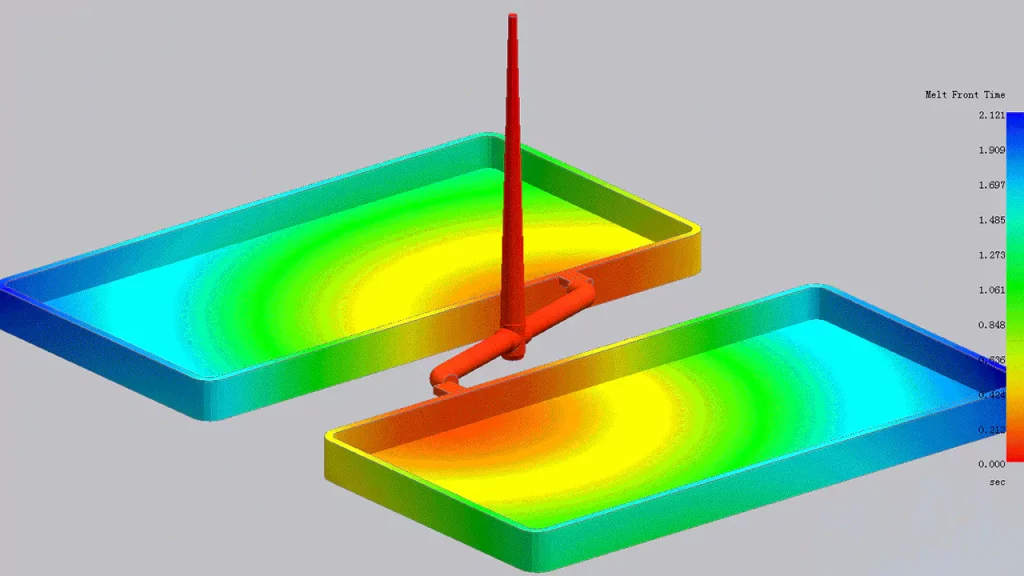
Mold flow analysis is a crucial tool in the die design process, especially in plastic injection molding and die casting industries. It involves the use of simulation software to predict the behavior of molten material as it fills a mold cavity. By analyzing how the material flows, cools, and solidifies within the mold, engineers can optimize the die design before actual production begins.
Key Roles of Mold Flow Analysis in Die Design
1. Optimizing Gate and Runner Design
Mold flow analysis helps in identifying the optimal location, size, and number of gates and runners. Proper gate placement ensures uniform filling, minimizes weld lines, and avoids air traps. This leads to:
Reduced cycle time
Improved part quality
Better aesthetic appearance
2. Predicting and Preventing Defects
Through simulation, potential molding issues can be identified early, such as:
Air traps
Weld lines
Sink marks
Short shots
Warpage and shrinkage
By addressing these issues during the design stage, manufacturers avoid costly redesigns and scrap during production.
3. Ensuring Uniform Material Flow
Mold flow analysis helps achieve balanced filling in multi-cavity molds. Uneven flow can lead to different pressures and temperatures in each cavity, causing inconsistent parts. Analysis ensures:
Consistent quality
Uniform mechanical properties
Efficient packing pressure distribution
4. Optimizing Cooling System Design
The software also evaluates the cooling performance of the mold. Efficient cooling is vital for:
Shorter cycle times
Reduced warpage
Lower residual stress
Properly placed cooling channels based on flow analysis enhance heat dissipation and part stability.
5. Material Selection Support
Different materials behave differently during molding. Mold flow analysis provides insights into how specific materials will fill the mold, allowing designers to:
Choose the best-suited material
Predict flow characteristics, viscosity, and shrinkage
Improve part strength and surface finish
6. Cost Reduction and Time Savings
By simulating and optimizing the process before tooling:
Tool modifications are minimized
Time-to-market is reduced
Production becomes more cost-effective
Tooling trial-and-error is drastically reduced
7. Enhancing Tool Life and Productivity
A well-analyzed and optimized die design results in less wear and tear on the mold:
Reduces maintenance needs
Increases the tool life
Improves overall productivity and OEE (Overall Equipment Effectiveness)
Conclusion
Mold flow analysis plays a pivotal role in modern die design, serving as a bridge between conceptual design and manufacturing. It enables engineers to predict, diagnose, and correct molding issues before production begins, resulting in higher quality parts, reduced waste, and efficient manufacturing processes. In today’s competitive manufacturing environment, integrating mold flow analysis into the die design workflow is not just advantageous—it’s essential.