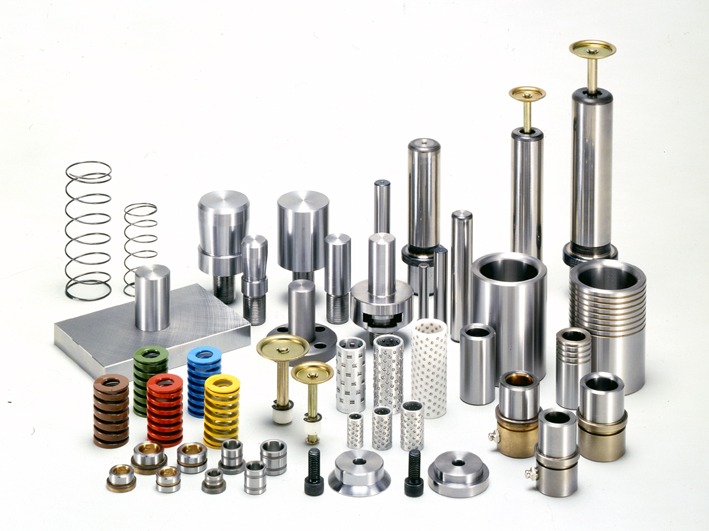
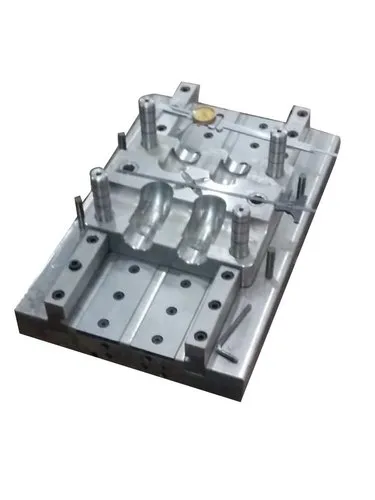
Die and mould bases form the structural foundation for dies and moulds used in manufacturing processes like injection moulding, die casting, and metal stamping. The material selection for these bases is crucial, as it directly affects the tool’s strength, durability, machining performance, and overall cost. The chosen material must withstand high pressures, mechanical loads, thermal cycles, and wear during the manufacturing process.
Key Requirements for Die and Mould Base Materials
High compressive and tensile strength
Good wear resistance
Dimensional stability
Machinability
Resistance to thermal fatigue and corrosion (especially for injection moulds)
Cost-effectiveness and availability
Common Materials Used
1. Mild Steel (e.g., C45, AISI 1045)
Description: Medium carbon steel with good machinability and adequate strength.
Applications: Widely used for standard mould and die bases due to its balance between cost and performance.
Properties:
Tensile strength: ~570 MPa
Good weldability
Low cost
Limitations: Lower hardness and wear resistance compared to alloy steels.
2. Tool Steels
Tool steels are high-performance steels designed specifically for tooling applications. Several types are used based on requirements:
a. P20 (AISI P20)
Description: Pre-hardened tool steel commonly used for plastic mould bases.
Hardness: 28–32 HRC
Advantages:
Good machinability
Uniform hardness throughout the cross-section
Suitable for polishing and texturing
Applications: Injection mould bases, blow moulds
b. H13 (AISI H13)
Description: Chromium-molybdenum hot-work tool steel with high toughness.
Hardness: 44–52 HRC
Advantages:
Excellent resistance to thermal fatigue and shock
Suitable for high-temperature applications
Applications: Die casting moulds, hot forging dies
c. D2 (AISI D2)
Description: High-carbon, high-chromium tool steel with excellent wear resistance.
Hardness: 58–62 HRC
Applications: Suitable for mould components subjected to abrasive wear
Limitations: Difficult to machine after hardening
3. Stainless Steels (e.g., 420 SS)
Description: Corrosion-resistant steels, particularly useful in humid environments or when water cooling is involved.
Applications: Plastic moulds with cooling channels, food-grade or medical moulds
Advantages:
Good corrosion resistance
Polishing ability (suitable for optical parts)
Limitations: Lower toughness and machinability compared to some tool steels
4. Cast Iron
Description: Used in large mould bases or dies requiring high vibration damping.
Applications: Compression moulds, large stamping dies
Advantages:
Excellent damping capacity
Good compressive strength
Limitations: Brittle, poor tensile strength, prone to cracking under impact
5. Aluminium Alloys (e.g., 7075, 2024)
Description: Lightweight materials used in prototype or short-run moulds.
Applications: Prototyping, low-volume production
Advantages:
Excellent machinability
Lightweight
Good thermal conductivity
Limitations:
Lower strength and wear resistance
Not suitable for high-pressure or long-run production
Material Selection Considerations
Production volume: High-volume production justifies the cost of hardened tool steels, while prototypes may use aluminium.
Type of material being formed: Abrasive materials require wear-resistant die bases.
Cooling requirements: Stainless steels may be necessary when water cooling is involved.
Budget constraints: Mild steel may be used where high performance is not essential.
Conclusion
The choice of material for die and mould bases depends on the application’s mechanical, thermal, and operational requirements. Mild steel remains a cost-effective and commonly used option, while tool steels like P20, H13, and D2 offer higher performance for demanding applications. Stainless steel, cast iron, and aluminium alloys also serve specific needs in the tooling industry. A balanced material selection ensures reliable tool performance, extended service life, and optimized manufacturing efficiency.