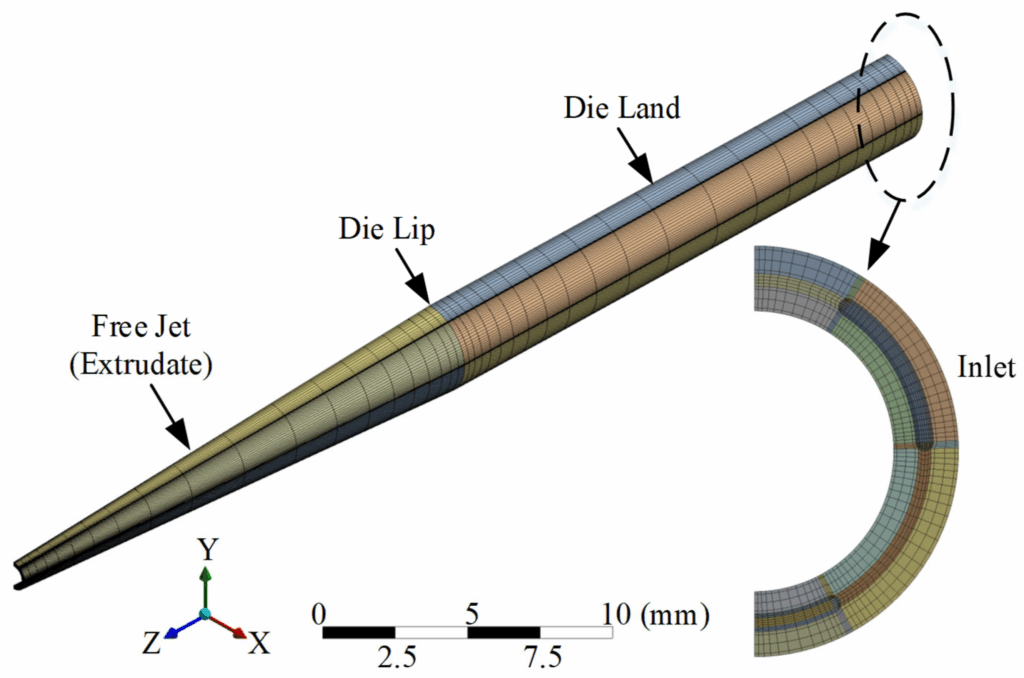
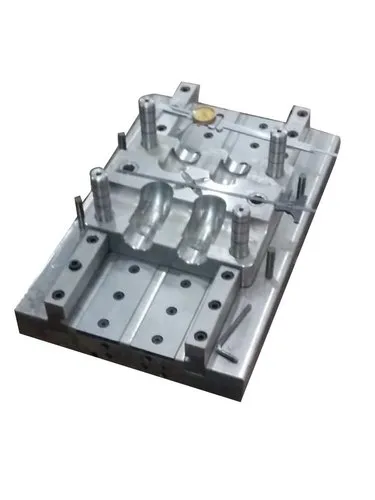
Die design plays a critical role in manufacturing processes like stamping, forging, extrusion, and injection molding. As product demands evolve toward intricate and highly precise components, die design for complex geometries has become increasingly important. This involves creating tooling capable of producing parts with tight tolerances, intricate contours, undercuts, thin walls, and multi-dimensional features.
1. Understanding Complex Geometries
Complex geometries in die design typically refer to parts that have:
Multiple curvatures or contours
Thin walls or deep cavities
Asymmetrical features
Undercuts or re-entrant angles
Tight tolerances and critical surface finishes
Multi-material interfaces or inserts
These geometries pose significant challenges in both the design and manufacturing stages of the die.
2. Key Considerations in Die Design
2.1. Material Selection
Die materials must offer wear resistance, strength, and thermal stability.
For high-volume production of complex parts, tool steels (e.g., H13, D2) and carbide materials are preferred.
For dies used in injection molding or die casting, materials must also handle thermal fatigue and erosion.
2.2. Draft Angles and Undercuts
Adequate draft angles (usually 1–3° or more) must be incorporated to facilitate easy ejection.
Undercuts require side cores, lifters, or collapsible cores, increasing die complexity and cost.
2.3. Parting Line Determination
Proper placement of the parting line is essential to maintain dimensional accuracy and surface quality.
For complex parts, 3D modeling and simulation are used to optimize parting line locations.
2.4. Ejection System
Ejector pins, sleeves, air ejection, or stripper plates must be carefully designed to prevent part damage.
In multi-cavity dies, synchronized ejection systems may be needed.
2.5. Cooling and Heating Systems
Uniform cooling/heating is essential to control warping, shrinkage, and cycle time.
Conformal cooling channels (made via additive manufacturing) are increasingly used in complex die geometries.
3. Advanced Tools and Techniques
3.1. CAD/CAE Software
3D modeling software (e.g., SolidWorks, NX, CATIA) is used for detailed die design.
Finite Element Analysis (FEA) and simulation tools (e.g., AutoForm, DEFORM, Moldflow) help in stress analysis, flow simulation, and defect prediction.
3.2. Additive Manufacturing in Die Design
Complex inserts or conformal cooling systems are now produced using metal 3D printing.
Hybrid manufacturing techniques (CNC + AM) reduce lead time and improve die performance.
3.3. Modular and Collapsible Cores
For parts with deep undercuts or internal features, collapsible cores or unscrewing mechanisms are used.
Modular die designs enable faster maintenance and part changeovers.
4. Manufacturing and Assembly Challenges
Tight Tolerances: Require precision machining and sometimes EDM (Electrical Discharge Machining).
Die Wear: Complex features concentrate stress and may lead to premature die wear. Surface treatments like nitriding or coatings (e.g., TiN, DLC) are used.
Assembly Accuracy: Multi-part dies must be assembled with micron-level precision to ensure part consistency.
5. Case Study Example (Optional)
A die designed for an automotive air intake manifold required multiple side actions, complex internal passages, and tight tolerances on the sealing surfaces. Using conformal cooling and 3D-printed inserts, the cycle time was reduced by 18% and tool life extended by 30%.
6. Future Trends
Digital Twin Technology: Real-time monitoring and virtual validation of die performance.
AI-driven Optimization: Machine learning for predictive maintenance and optimal die design.
Sustainable Die Materials: Use of recyclable and longer-life tool materials to reduce environmental impact.
Conclusion
Designing dies for complex geometries requires a multidisciplinary approach involving material science, mechanical engineering, and advanced simulation tools. As product complexity increases, innovative solutions like additive manufacturing, smart sensors, and AI-enhanced design optimization are transforming the field. A well-designed die not only ensures product quality but also improves manufacturing efficiency and cost-effectiveness.