1. Introduction
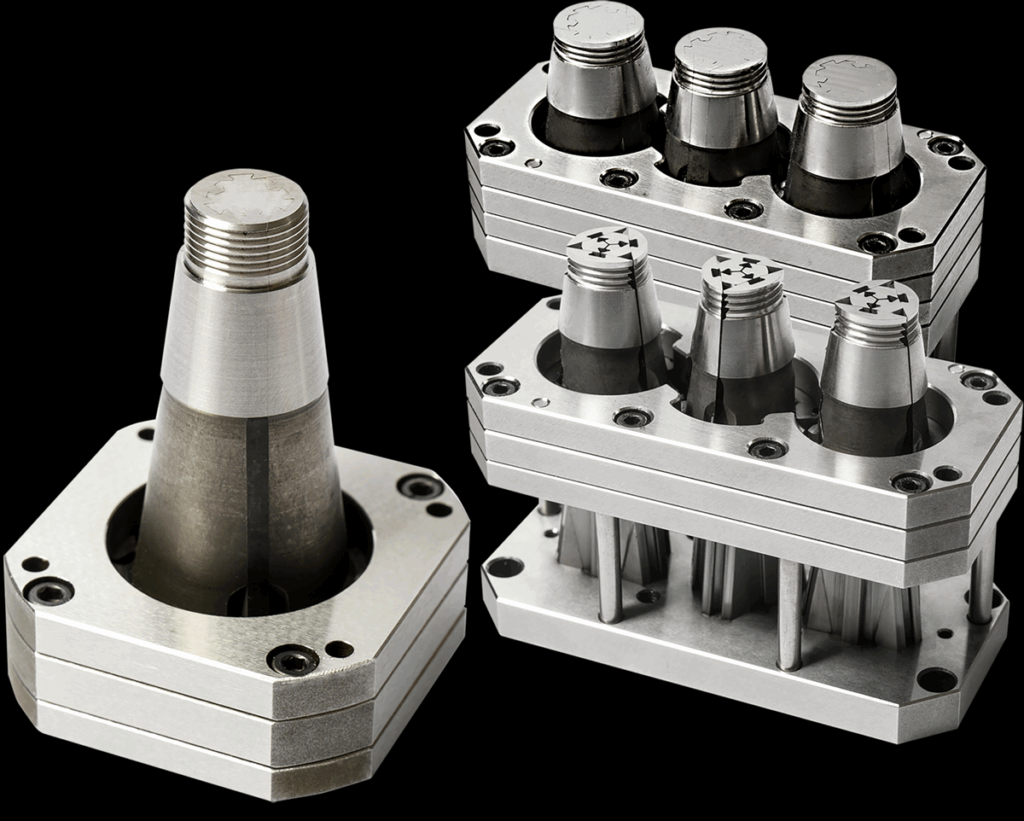
Houseware products such as containers, bottles, storage boxes, and kitchen tools often feature undercuts, internal threads, or complex geometries that cannot be easily demoulded using standard straight-pull core mechanisms. To address this, collapsible cores are employed in die design. These are specially designed mechanisms that collapse inward or retract, allowing easy ejection of the molded part without damage or the need for complex manual operations.
2. Importance of Collapsible Cores in Houseware Moulding
Complex Internal Features: Houseware products often have grooves, holes, or threading inside the part, making ejection difficult.
Aesthetic Requirements: Houseware parts must be free from marks or defects, which collapsible cores help achieve by avoiding side actions that may damage the surface.
High Volume Production: Collapsible cores provide automation and speed in demoulding, essential for mass production in houseware manufacturing.
3. Working Principle of Collapsible Cores
A collapsible core consists of multiple segments (typically 3 or more) arranged around a central axis. When the mould is closed, the core segments expand to form a solid core. Upon mould opening, these segments collapse inward, reducing the core’s diameter and allowing easy part ejection.
Stages:
Mould Closing: The segments expand outward to form the full shape of the internal cavity.
Mould Filling: The molten plastic fills the cavity, forming the part including the undercuts.
Cooling: The part solidifies around the expanded core.
Mould Opening & Core Collapse: The segments retract inward.
Ejection: The part is ejected without obstruction.
4. Design Considerations
a. Material Selection
Use of tool steel with good wear resistance.
Consideration of thermal expansion properties.
b. Segment Geometry
Must accurately form the internal feature.
Should be designed for easy collapse and retraction.
c. Collapse Mechanism
Mechanical: Spring-loaded or cam-actuated.
Hydraulic: For more precise or powerful operations.
d. Cooling Channels
Essential for maintaining dimensional accuracy and reducing cycle time.
Proper cooling around core segments.
e. Tolerance and Finish
High precision needed to avoid flashing or mismatch.
Smooth finish on core segments to ensure part quality.
5. Advantages of Collapsible Cores
Elimination of side cores or unscrewing mechanisms.
Shorter cycle times.
Reduced mould complexity.
Improved part aesthetics and dimensional accuracy.
6. Applications in Houseware Products
Examples of houseware items using collapsible cores:
Storage containers with snap-fit lids.
Soap dispensers with internal threading.
Measuring cups with undercuts.
Kitchen jars with decorative internal ribs.
7. Limitations and Challenges
High initial tooling cost.
Maintenance required due to moving parts.
Size limitation: not suitable for very large undercuts.
8. Conclusion
Collapsible cores offer an efficient and elegant solution to the challenges of moulding houseware products with complex internal features. Proper die design, focusing on precision, cooling, and mechanism reliability, ensures optimal performance and productivity. Despite their complexity, the benefits they bring in terms of design freedom and production efficiency make them a critical component in modern houseware moulding.