1. Introduction
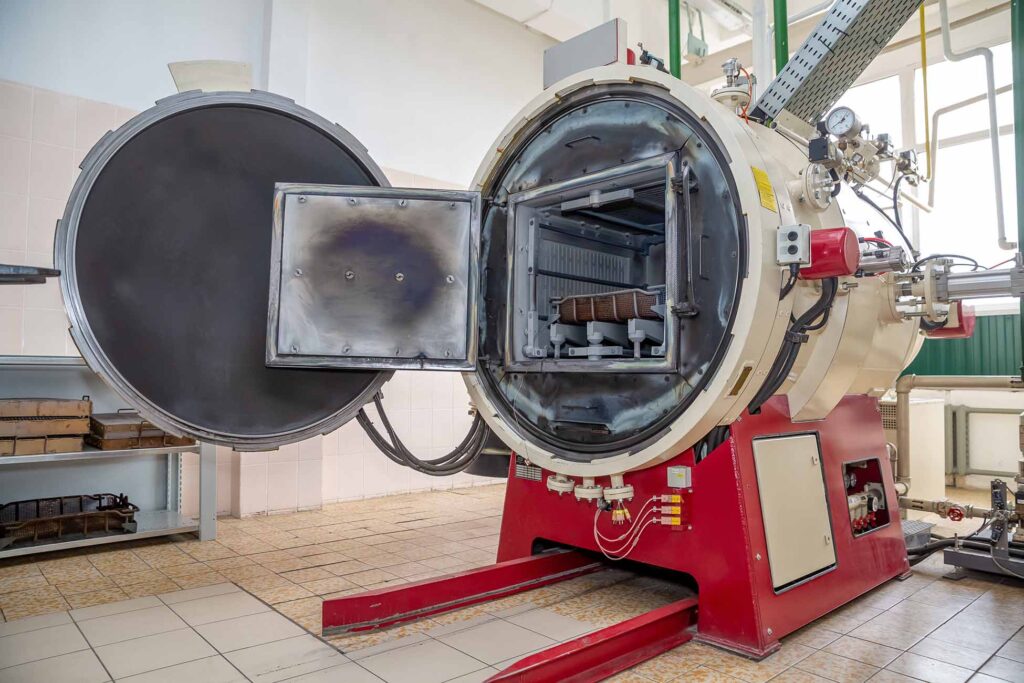
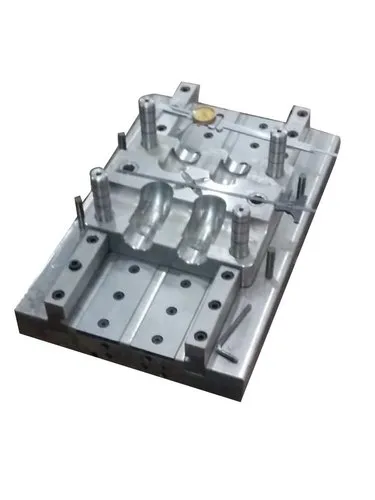
Heat treatment is a critical process in the manufacturing of die components used in tooling for operations such as stamping, forging, extrusion, and die casting. The purpose of heat treatment is to alter the physical and mechanical properties of the die materials to enhance performance, increase wear resistance, improve toughness, and extend tool life.
2. Objectives of Heat Treatment for Die Components
Increase hardness and wear resistance
Improve toughness and impact resistance
Relieve internal stresses from machining or previous treatments
Refine the grain structure of the material
Improve dimensional stability during die operation
3. Common Die Materials
Tool steels (e.g., D2, A2, H13, O1, M2)
High-speed steels
Carbide
Alloy steels
Each of these materials responds differently to heat treatment processes, and the choice depends on the type of die (e.g., forming die, cutting die, extrusion die).
4. Types of Heat Treatment Processes
4.1. Annealing
Purpose: To soften the material, relieve internal stresses, and improve machinability.
Process: Heating the die steel to a specific temperature, holding it for a time, and then cooling slowly in the furnace.
Use Case: Applied before machining or for stress relief after rough machining.
4.2. Normalizing
Purpose: To refine the grain structure and improve uniformity.
Process: Heating above the critical temperature followed by air cooling.
Use Case: Used when a uniform, fine-grained structure is needed before further processing.
4.3. Hardening (Quenching)
Purpose: To increase hardness and wear resistance.
Process: Heating to the austenitizing temperature followed by rapid cooling (quenching) in oil, water, or air.
Critical Point: Requires precise control to avoid cracking or distortion.
Use Case: Essential for cutting dies and forming dies exposed to high stress.
4.4. Tempering
Purpose: To reduce brittleness and internal stress after hardening.
Process: Reheating the quenched component to a lower temperature and then cooling.
Use Case: Applied after hardening to adjust the hardness/toughness balance.
4.5. Case Hardening (Carburizing/Nitriding)
Purpose: To produce a hard surface (case) while maintaining a tough core.
Carburizing: Diffusing carbon into the surface at high temperature.
Nitriding: Introducing nitrogen for a very hard, wear-resistant surface.
Use Case: Suitable for dies that require a hard-wearing surface with a ductile interior.
5. Heat Treatment of Common Die Types
| Die Type | Typical Material | Heat Treatment |
|---|---|---|
| Cutting Dies | D2, A2 | Anneal → Harden → Temper |
| Forming Dies | H13, S7 | Harden → Temper |
| Extrusion Dies | H13, H21 | Preheat → Harden → Temper |
| Die Casting Dies | H13, H11 | Anneal → Harden → Deep Temper |