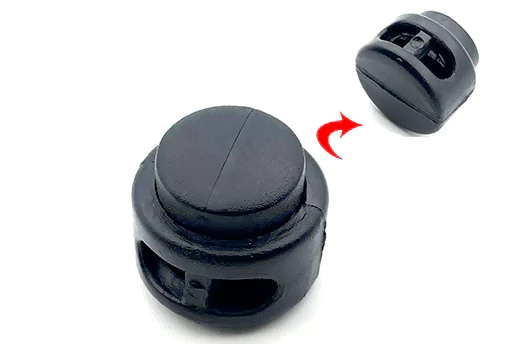
Injection moulding is a critical process in the manufacturing of houseware products such as containers, kitchen utensils, storage boxes, and other consumer goods. Two of the most important design considerations in mould development are the parting line and the ejection system. Optimization of these features directly influences part quality, production efficiency, mould longevity, and cost-effectiveness.
1. Parting Line Optimization
Definition
The parting line is the boundary where two halves of a mould meet. It becomes a visible line on the final product and plays a crucial role in aesthetics, functionality, and mould manufacturability.
Key Considerations
Aesthetic Appeal: In houseware products, appearance matters. Parting lines should be placed where they are least visible or can be integrated into design features such as edges, ribs, or logos.
Functional Integrity: Incorrect placement can lead to flash formation, parting mismatch, or warpage. This compromises product usability and can result in increased post-processing.
Ease of Machining: Simplifying the parting line reduces mould complexity and manufacturing time.
Draft Angle Compatibility: The parting line should accommodate the draft angles required for easy ejection without damaging the part.
Best Practices
Position the parting line along natural contours or sharp edges of the part.
Avoid placing it across critical functional surfaces or decoration zones.
Align the parting line with the direction of ejection to reduce mechanical stress on the part.
In symmetrical parts (e.g., bowls, plates), a central or equatorial parting line often yields optimal results.
2. Ejection System Optimization
Definition
The ejection system is responsible for removing the moulded part from the core side of the mould after solidification. Inadequate ejection can cause part deformation, surface blemishes, or cycle delays.
Common Ejection Methods in Houseware Moulds
Ejector pins: Standard and cost-effective; suitable for most houseware parts.
Sleeve ejectors: Ideal for cylindrical or tubular items.
Air ejection: Useful for lightweight or thin-walled parts to reduce ejection force.
Stripper plates: Preferred for large or flat parts like trays or lids.
Key Considerations
Part Geometry: Thin-walled or deep-draw parts require uniform and balanced ejection.
Material Shrinkage: Consider shrinkage characteristics of commonly used polymers (e.g., PP, PE, ABS).
Surface Finish: Avoid ejector marks on visible surfaces by placing pins on non-aesthetic zones or using textured finishes.
Cooling Balance: Proper ejection reduces warpage caused by uneven cooling.
Best Practices
Use multiple ejector pins symmetrically placed to distribute ejection force evenly.
Ensure a consistent and smooth draft angle to minimize friction during ejection.
Maintain tight tolerances to prevent part sticking and ensure repeatability.
Regularly maintain and polish ejector components to reduce wear and residue buildup.
3. Integration of Parting Line and Ejection Design
Both parting line and ejection design should be considered early in the product design phase to avoid costly mould revisions. Integration ensures:
Fewer part defects
Reduced cycle times
Improved automation compatibility
Lower maintenance costs
4. Common Challenges and Solutions
| Challenge | Cause | Solution |
|---|---|---|
| Flashing at parting line | Poor alignment or wear | Improve alignment; regular maintenance |
| Part sticking in mould | Insufficient draft or weak ejection | Increase draft angle; add more ejector pins |
| Visible ejector marks | Poor pin placement or excessive force | Relocate pins; reduce ejection pressure |
| Warping or deformation | Unbalanced ejection or cooling | Optimize pin layout; improve cooling channels |