1. Introduction to Stack Mould Design
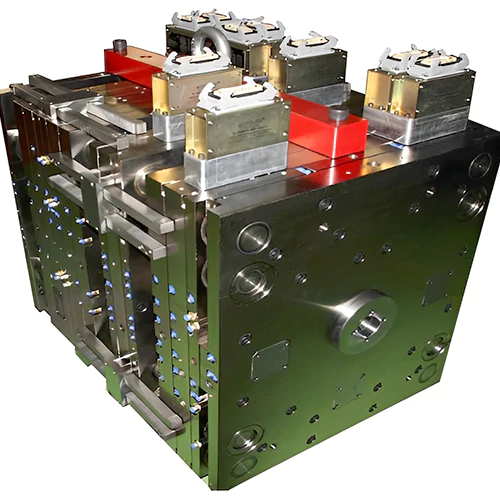
Stack mould design is an advanced moulding technique primarily used in injection moulding processes to increase productivity and optimize space utilization. Unlike conventional single-face moulds, stack moulds use multiple parting lines (or “faces”) arranged in a vertical stack within a single mould base, allowing for the simultaneous production of multiple parts per cycle.
Stack moulds essentially operate as two or more moulds combined into one, doubling or even tripling the output of standard tools, without requiring additional clamping force or machine space.
2. Structure of a Stack Mould
A typical stack mould includes:
Multiple parting planes (e.g., 2-level, 3-level stack)
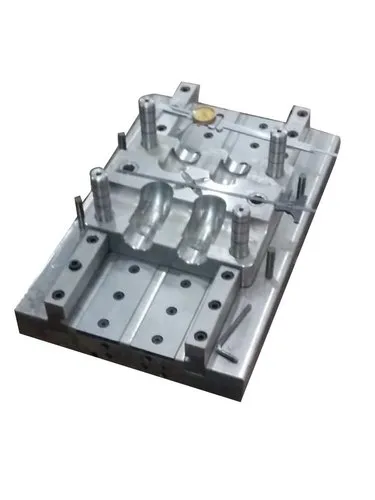
Core and cavity plates arranged back-to-back
Central rotating or moving centre stack (in some designs)
Hot runner system for uniform melt distribution
Ejection system on both mould halves
Cooling systems integrated into all mould layers
The design requires precise alignment and balancing to ensure uniform part quality and to manage the thermal and mechanical loads.
3. Working Principle
The molten plastic is injected into multiple cavities positioned across the stacked levels of the mould. These cavities are filled simultaneously using a hot runner system. After the injection and cooling phases, the parts are ejected from all layers in one cycle. The machine then closes and begins the next cycle.
4. Advantages of Stack Mould Design
Increased Productivity
Doubles or triples part output without increasing cycle time significantly.
More efficient use of machine time.
Space Optimization
Requires the same floor space and clamping force as a single-face mould, allowing high output with compact machine setups.
Energy Efficiency
Consumes less energy per part due to shared heating and clamping operations.
Cost Efficiency
Lower per-part manufacturing cost when high production volumes are required.
Multi-material and Multi-component Capability
Suitable for overmoulding or combining different materials in one cycle with additional design features.
5. Applications of Stack Moulds
Stack moulds are ideal for high-volume production where productivity and efficiency are key. Common applications include:
A. Medical Devices
Syringes
Test tubes
IV components
Single-use medical parts
B. Packaging Industry
Caps and closures
Thin-wall containers
Lids for food and beverage products
C. Consumer Goods
Personal care products (e.g., deodorant sticks, toothbrush handles)
Cosmetic packaging
D. Automotive
Small plastic components
Electrical connectors and housings
E. Electronics
Housings for small devices
Connectors and plugs
6. Design Considerations and Challenges
While stack moulds offer many advantages, they also come with technical challenges, including:
Complexity in mould design and manufacturing
Higher initial tooling cost
Precision required in alignment
Thermal management across stack layers
Balanced filling to avoid defects
Designers must carefully evaluate:
Mould balance
Ejection mechanism
Cooling efficiency
Material flow paths
Maintenance access
7. Conclusion
Stack mould design represents a smart evolution in injection moulding technology, offering significant gains in productivity, efficiency, and cost-effectiveness. It is especially beneficial for high-volume, repeatable manufacturing scenarios in industries like medical, packaging, automotive, and consumer goods. However, successful implementation demands expertise in mould design, advanced engineering, and precision manufacturing.