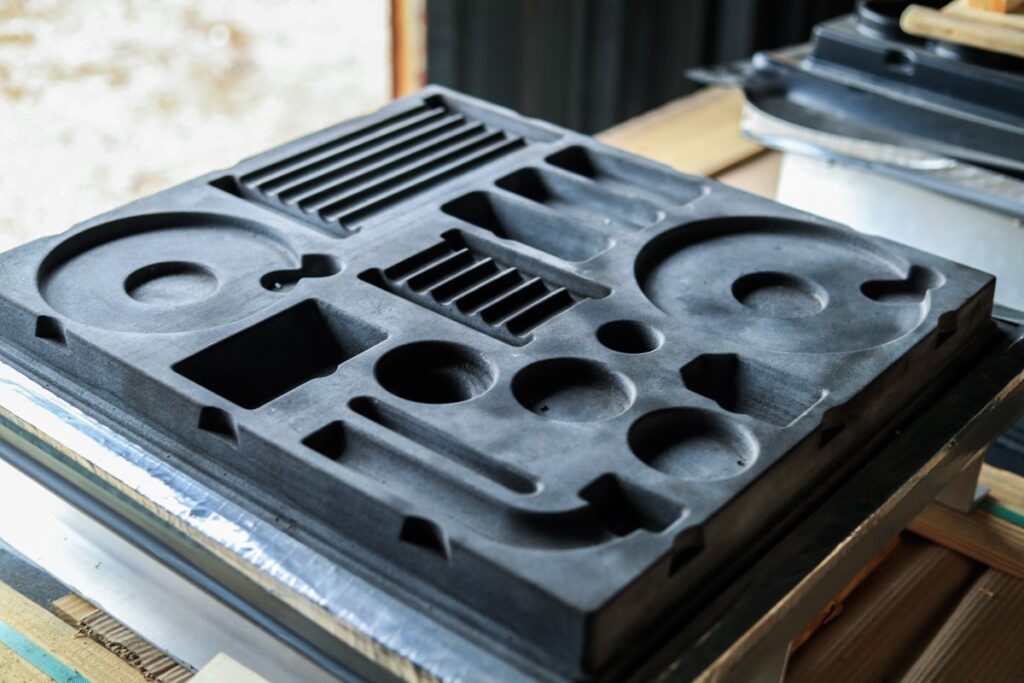
Mould bases are foundational components in mould-making, providing the structural support required during the injection moulding process. Traditionally, these bases are made from heavy-duty tool steels to ensure durability and rigidity. However, with the demand for faster cycle times, easier handling, reduced costs, and energy savings, there is a growing interest in lightweight materials for mould bases.
Benefits of Lightweight Mould Bases
Improved Handling and Installation: Lighter materials reduce the need for heavy lifting equipment and allow for easier mould changes and maintenance.
Faster Machine Cycle Times: Lightweight moulds reduce the inertia on moulding machines, potentially improving cycle times and productivity.
Lower Transport Costs: Reduced weight translates to lower shipping and handling expenses.
Reduced Wear on Machinery: Lighter moulds place less stress on machine components, leading to longer equipment life and lower maintenance costs.
Common Lightweight Materials Used
1. Aluminium Alloys
Properties: Lightweight, excellent thermal conductivity, corrosion-resistant, and easy to machine.
Applications: Used in prototype moulds, low-volume production, and mould components like support plates and cavity inserts.
Popular Grades: 7075, 6061, QC-10.
Limitations: Lower wear resistance and strength compared to tool steels; not suitable for high-pressure or high-volume applications without proper reinforcement.
2. Titanium Alloys
Properties: High strength-to-weight ratio, excellent corrosion resistance, and good thermal properties.
Applications: Specialized or high-performance moulds requiring both strength and weight reduction.
Limitations: Expensive and difficult to machine; typically used in aerospace or medical moulding applications.
3. Beryllium-Copper Alloys
Properties: High thermal conductivity, moderate strength, and relatively low weight.
Applications: Common in core and cavity inserts where heat dissipation is critical.
Limitations: Beryllium is toxic in dust form, requiring careful handling during machining.
4. Composite Materials (e.g., Carbon Fiber Composites)
Properties: Extremely lightweight, high stiffness, corrosion-resistant.
Applications: Emerging use in non-structural mould components, backing plates, or prototype tooling.
Limitations: Not suitable for high-stress parts of the mould; expensive and may require bonding with metals.
Hybrid Approaches
Often, mould designers use a hybrid approach—combining lightweight materials with traditional steels. For example:
Steel inserts in aluminium bases.
Aluminium side plates with steel cavity inserts.
Composite backing plates with metal-facing layers.
This allows for a balance between weight reduction and performance, making the mould both cost-effective and durable.
Challenges and Considerations
Thermal Expansion Mismatch: Lightweight metals like aluminium expand more than steel, which can affect dimensional accuracy.
Strength and Wear Resistance: Lighter materials generally offer lower wear resistance, making them less suitable for abrasive or high-pressure applications without special coatings or treatments.
Cost vs. Benefit Analysis: While some materials reduce weight, they may introduce higher upfront costs or machining complexities.
Conclusion
The use of lightweight materials for mould bases is a growing trend, driven by the need for improved efficiency, lower operating costs, and easier handling. Materials such as aluminium alloys, titanium, beryllium-copper, and composites each offer unique advantages. However, the selection of materials must be carefully matched to the application requirements to ensure performance, safety, and cost-effectiveness.