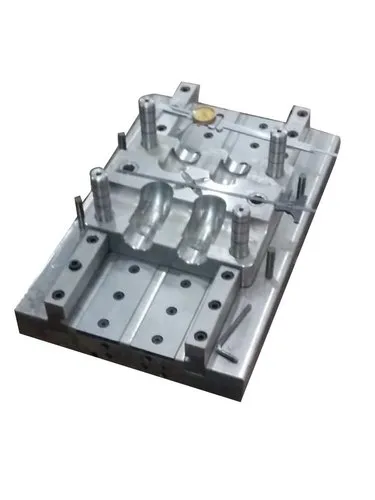
Micro-moulding is a highly specialized manufacturing process used to produce extremely small, precise components often used in medical devices, electronics, automotive sensors, and micro-optics. The die base, which holds and aligns the mould components, plays a critical role in achieving the precision and repeatability required in micro-moulding. However, several unique challenges arise when designing and manufacturing die bases for micro-moulding applications.
1. Precision and Tolerance Control
One of the most critical challenges is achieving ultra-tight tolerances. Even micrometer-level deviations in the die base can lead to:
Misalignment of mould inserts.
Flash formation or incomplete filling of parts.
Inconsistent product dimensions.
Why it’s challenging:
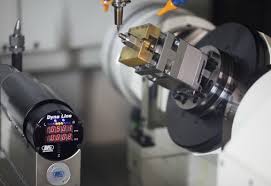
Standard machining methods may not be sufficient. Advanced CNC machining, EDM (electrical discharge machining), and grinding techniques with nanoscale control are required, which increase complexity and cost.
2. Thermal Management
Micro-moulding processes are highly sensitive to temperature variations. Die bases must manage heat effectively to maintain dimensional stability.
Challenges include:
Minimizing thermal expansion that could misalign micro-features.
Incorporating efficient cooling systems within very limited space.
Avoiding hot spots that may affect polymer flow or cycle times.
3. Material Selection and Wear Resistance
Die bases in micro-moulding are subjected to high pressure and repetitive cycles. The material must exhibit:
High dimensional stability.
Resistance to wear and corrosion.
Minimal thermal expansion.
Challenge:
Finding materials that meet all these criteria while still being machinable to micro-scale precision is difficult. Tool steels (like H13 or S7) are often used but may require coatings (like PVD or DLC) to enhance performance.
4. Alignment and Assembly of Micro Components
Micro-mould inserts and core/cavity components must be aligned with extreme precision inside the die base.
Issues faced:
Human error during manual assembly or maintenance.
Limitations in traditional alignment systems (e.g., guide pins) at micro-scale.
Difficulty in visual inspection due to the small size of components.
5. Tooling and Maintenance Complexity
Due to the miniature size of components, routine maintenance and repairs become more difficult:
Cleaning micro-channels or venting systems is labor-intensive.
Handling delicate components requires specialized tools and trained personnel.
Detecting wear or damage is not always visible to the naked eye.
6. Cost and Lead Time
High-precision manufacturing and the use of advanced materials significantly increase the cost and time required to produce die bases for micro-moulding.
Specific issues:
Need for customized tooling and fixtures.
Low tolerance for errors leading to costly rework or scrap.
Limited suppliers with the capability to meet micro-moulding standards.
7. Integration with Micro-Scale Mould Features
Die bases must be compatible with the micro-scale features of the mould, including:
Micro-channels for polymer flow.
Venting for trapped air or gas.
Ejection systems that do not damage delicate parts.
Challenges:
Designing these features into the die base without compromising its structural integrity.
Ensuring repeatable performance over millions of cycles.
8. Metrology and Quality Control
Measuring and inspecting the die base and its components is inherently challenging at micro scales.
Metrology challenges:
Traditional tools (like calipers or CMMs) are often inadequate.
Need for non-contact or high-resolution systems such as optical microscopy, white light interferometry, or micro-CT scanning.
Data interpretation and traceability become more complex.
Conclusion
Micro-moulding die bases represent one of the most demanding aspects of precision manufacturing. From material selection and thermal control to precision alignment and inspection, every detail must be meticulously engineered. Overcoming these challenges requires an integrated approach involving advanced materials, precision machining, micro-metrology, and specialized design knowledge. As micro-moulding technology continues to evolve, so too will the need for more innovative solutions to these persistent challenges.