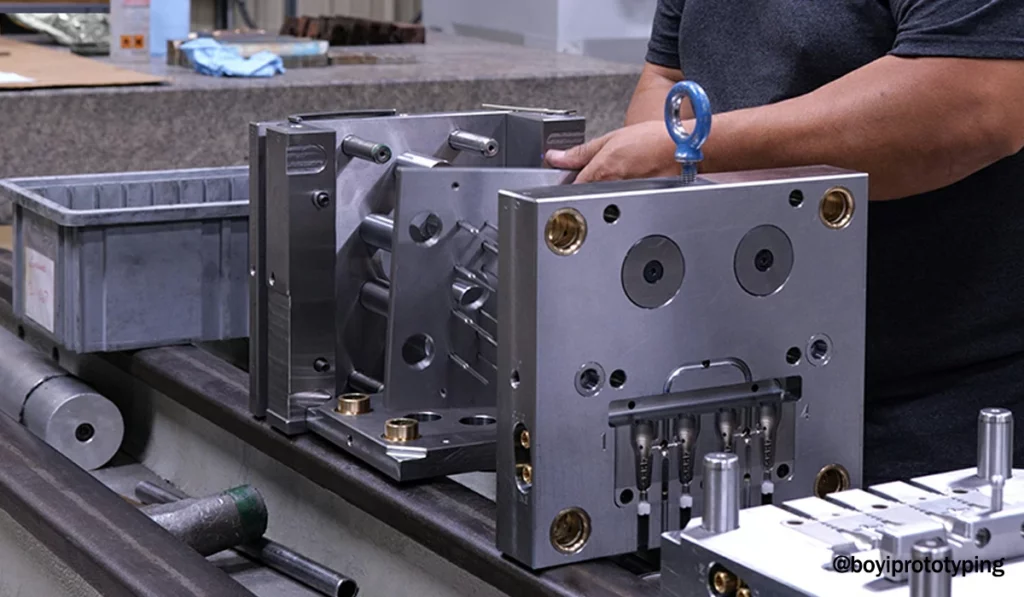
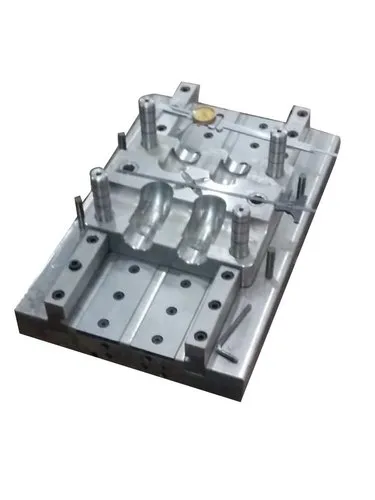
Automotive moulds are essential tools used in manufacturing a wide range of components such as bumpers, dashboards, door panels, lighting housings, and engine covers. The design of these moulds directly impacts part quality, production efficiency, and tooling lifespan. Therefore, a meticulous design approach is critical.
1. Material Selection
Material choice influences durability, thermal performance, and cost-effectiveness.
Mould Material: Common materials include tool steels (e.g., P20, H13), aluminum (for prototype tooling), and sometimes beryllium copper (for inserts).
Component Material: The mould must be compatible with the type of plastic or metal being processed (e.g., PP, ABS, PC, or aluminum alloys).
2. Part Geometry and Complexity
Draft Angles: Adequate draft is needed for easy ejection and to avoid part sticking.
Undercuts and Side Actions: Designs with undercuts require lifters or side cores, increasing mould complexity.
Wall Thickness: Uniform wall thickness ensures even cooling and minimizes warping or sink marks.
3. Mould Type
Injection Moulds: Most common for plastic automotive parts.
Compression Moulds: Often used for thermoset materials or composites.
Die Casting Moulds: For metal automotive parts.
4. Cooling System Design
Efficient cooling is vital for cycle time reduction and dimensional accuracy.
Conformal Cooling Channels: These follow the part geometry and ensure uniform temperature.
Baffles, Bubblers, and Heat Pipes: Used in complex areas for localized cooling.
Thermal Analysis: Simulation tools are used to optimize cooling design.
5. Venting and Gating
Venting: Essential to release trapped air or gases during injection, preventing burn marks and short shots.
Gate Type and Location: Impacts flow pattern, aesthetics, weld lines, and post-processing.
Types: Edge gate, pin gate, submarine gate, hot runner gate.
Hot runner vs. Cold runner: Hot runners reduce waste but add complexity and cost.
6. Tolerances and Surface Finish
High Precision Tolerances: Critical for fit and function of automotive components.
Surface Finish Requirements: Texture or gloss must match aesthetic and tactile expectations, especially for interior parts.
7. Ejection System
Ejector Pins, Sleeves, Lifters: Must be carefully designed to avoid part damage.
Stripper Plates: Common in multi-cavity moulds.
8. Mould Durability and Maintenance
Cycle Life: Automotive tools typically need to withstand hundreds of thousands to millions of cycles.
Ease of Maintenance: Inserts and components should be easily replaceable without dismantling the whole tool.
9. Simulation and Analysis
Before manufacturing:
Moldflow Simulation: Assesses flow, pressure, cooling, and shrinkage.
Structural Analysis: Evaluates mould deflection and stress under pressure.
10. Cost vs. Production Volume
Prototype Moulds: Lower cost, lower durability for small runs.
Production Moulds: Higher investment for long-term use and high-volume production.
11. Environmental and Safety Considerations
Material Recycling: Mould design should facilitate post-consumer recycling when possible.
Ergonomic Design: For parts handled by operators or during assembly.
Regulatory Compliance: E.g., ROHS, REACH, automotive OEM-specific requirements.
Conclusion
Designing automotive moulds is a multi-disciplinary process involving mechanical design, materials science, thermodynamics, and manufacturing expertise. A well-designed mould ensures consistent product quality, lower production costs, and long-term operational efficiency. Integrating simulation tools and adhering to best practices during the design phase significantly enhances the mould’s performance and lifespan.