1. Introduction
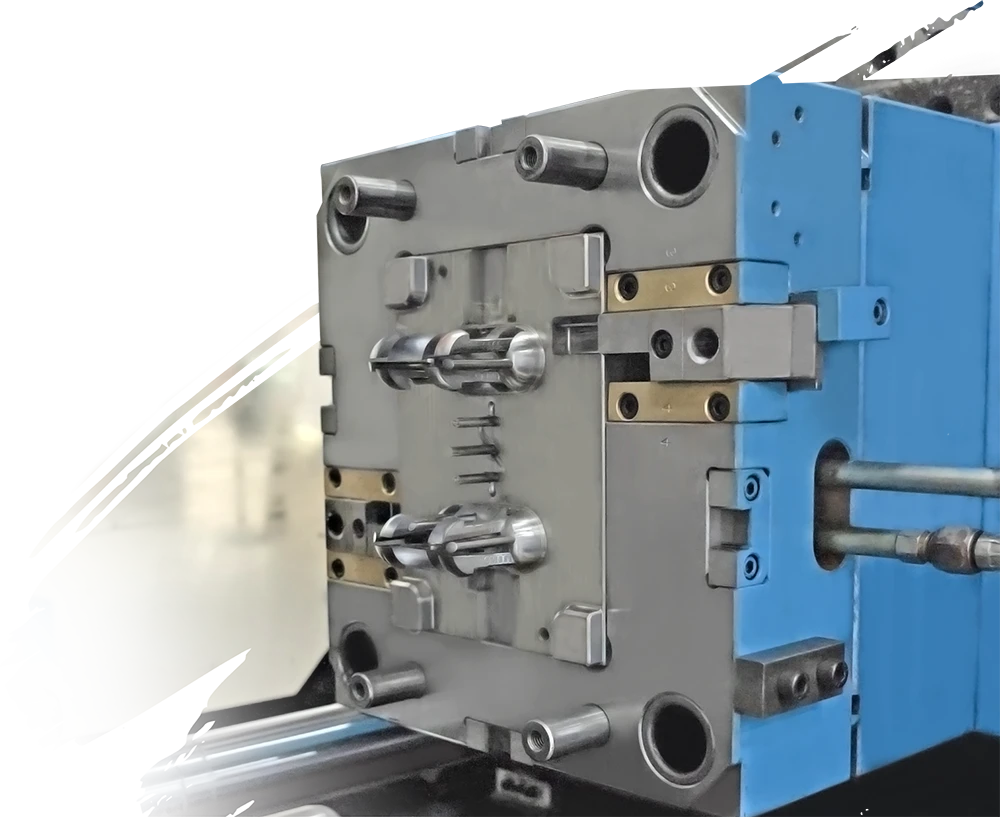
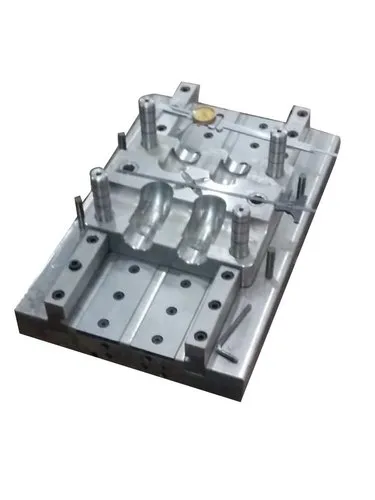
In the manufacturing of electronic components, moulds play a critical role in shaping plastic, metal, or composite materials into precise parts used in devices such as connectors, casings, and micro-mechanical assemblies. The performance, reliability, and longevity of these parts depend heavily on how accurately the mould is made — a factor governed by tolerance and precision.
2. Understanding Tolerance
Tolerance refers to the permissible variation in a physical dimension of a component or mould. It defines how much deviation from the nominal (intended) measurement is acceptable without compromising the part’s functionality.
Example:
If a connector housing requires a pin slot width of 2.00 mm ± 0.02 mm, any width between 1.98 mm and 2.02 mm is acceptable.
Types of Tolerance
Dimensional Tolerance – Limits variation in linear or angular measurements (length, diameter, hole spacing, etc.).
Geometric Tolerance – Controls form, orientation, position, and run-out (flatness, concentricity, parallelism).
Surface Tolerance – Governs surface roughness and finish, which influence electrical insulation and sealing.
3. Understanding Precision
Precision describes the degree of exactness and repeatability achieved during mould fabrication and component production. A highly precise mould ensures consistent product dimensions across multiple cycles, minimizing defects and variation.
Key aspects of precision in electronic moulds:
Toolmaking accuracy: CNC machining, EDM (Electrical Discharge Machining), and polishing accuracy within microns.
Repeatability: Ability to produce identical parts over thousands of injection cycles.
Thermal stability: Controlled temperature ensures minimal expansion or contraction during moulding.
Alignment and fit: Precision in core–cavity alignment prevents flash, short shots, or deformation.
4. Relationship Between Tolerance and Precision
While tolerance sets the acceptable limits of variation, precision determines how closely those limits are maintained in real production.
High precision allows a manufacturer to work within tight tolerances.
Low precision results in greater deviations, requiring looser tolerances to maintain usability.
Balancing both is essential: excessively tight tolerances can increase production costs without significantly improving performance.
5. Factors Affecting Tolerance and Precision in Electronic Moulds
Material Selection:
Thermal expansion coefficients of mould materials affect dimensional stability.Machining Process:
Advanced CNC and EDM techniques improve micrometre-level accuracy.Mould Design:
Proper venting, gating, and cooling channel design minimize warping and shrinkage.Environmental Conditions:
Temperature and humidity variations impact measurement and mould behaviour.Measurement and Inspection Tools:
Use of CMMs (Coordinate Measuring Machines), laser scanners, and optical comparators ensures accurate verification.
6. Importance in Electronics Industry
In electronic component manufacturing, micron-level accuracy is often required for:
PCB connectors and sockets
Micro-switch housings
Sensor enclosures
Semiconductor packaging
Tight tolerances ensure perfect fit, optimal electrical performance, and mechanical reliability.
7. Achieving High Precision and Tight Tolerances
Utilize high-grade tool steel or carbide for stability.
Employ precision machining (CNC, EDM, wire-cut).
Apply advanced surface finishing (lapping, polishing).
Use temperature-controlled moulding environments.
Conduct regular calibration and maintenance of moulds and measuring tools.
8. Conclusion
Tolerance and precision are fundamental to ensuring that electronic moulds produce reliable, high-quality components. By understanding and controlling these parameters, manufacturers can achieve consistent dimensional accuracy, superior performance, and reduced production waste. The synergy between tight tolerances and precise tooling is what defines the excellence of modern electronic mould manufacturing.