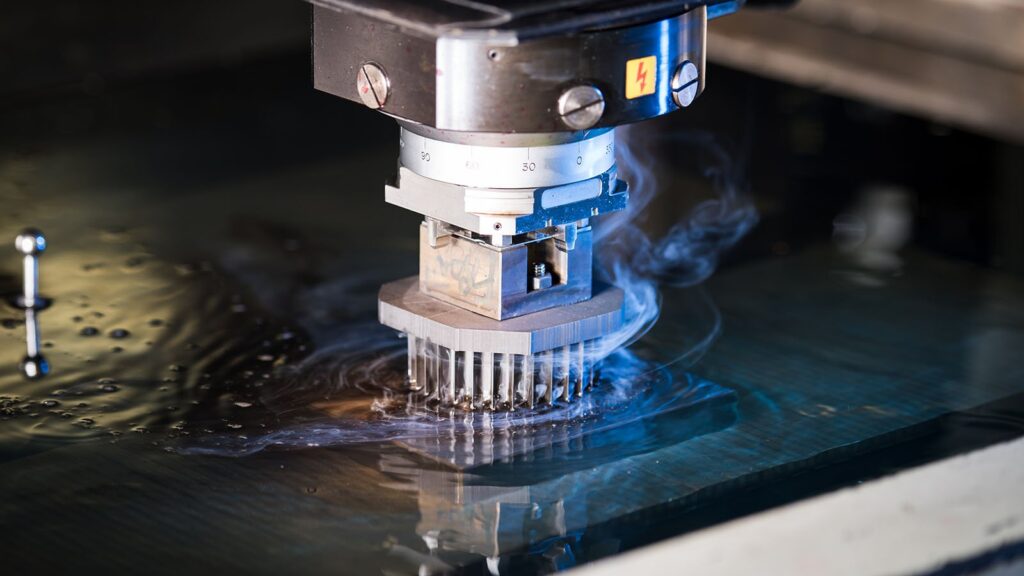
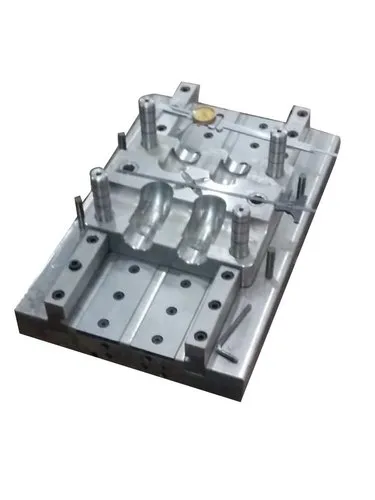
Electrical Discharge Machining (EDM) is a highly precise and non-traditional machining process used extensively in mould making. It allows manufacturers to shape hard metals and alloys that are difficult to machine with conventional methods. EDM uses electrical sparks (discharges) to erode material from the workpiece, creating complex shapes and fine details with exceptional accuracy and surface finish.
Working Principle
EDM operates on the principle of controlled electrical discharges between an electrode (tool) and the workpiece, both submerged in a dielectric fluid. When voltage is applied, a spark jumps across the gap, generating intense heat (up to 12,000°C) that melts and vaporizes small portions of the workpiece material. The dielectric fluid cools the surface and flushes away debris, maintaining process stability.
Types of EDM Used in Mould Making
Die-Sinking EDM
Used for forming complex cavities and contours in moulds.
A custom-shaped electrode (usually made of copper or graphite) mirrors the desired cavity shape.
Ideal for producing moulds for injection moulding, die casting, and precision forming tools.
Wire-Cut EDM
Uses a continuously fed thin wire (brass or copper) to cut profiles through the workpiece.
Commonly used for cutting mould inserts, punches, and intricate outlines with high precision.
Hole-Drilling EDM
Specially designed for drilling small, deep holes used for ejector pins or cooling channels in moulds.
Advantages of EDM in Mould Making
High Precision and Accuracy: Capable of achieving tolerances within microns, essential for high-quality mould components.
Machining of Hard Materials: Can easily machine hardened steel, carbide, and exotic alloys used in mould construction.
Complex Geometries: Enables production of intricate cavities, fine details, and sharp internal corners that are impossible with conventional machining.
Excellent Surface Finish: Produces smooth surfaces, reducing the need for extensive polishing.
No Cutting Forces: Eliminates mechanical stress and deformation on delicate mould features.
Applications in Mould Making
Creating detailed injection mould cavities and die-casting dies.
Machining engraved surfaces, textured patterns, and micro features.
Producing ejector pin holes, cooling channels, and mould inserts.
Repairing worn mould parts through re-machining or reshaping using EDM.
Challenges and Considerations
Electrode Wear: Continuous sparking leads to electrode erosion, requiring compensation or multiple electrodes.
Slower Material Removal Rate: Compared to conventional machining, EDM is relatively slower.
Surface Recast Layer: A thin re-solidified layer forms on the surface, which may need polishing or finishing.
Dielectric Fluid Management: Proper filtration and temperature control are crucial for process stability.
Conclusion
Electrical Discharge Machining (EDM) has revolutionized modern mould making by enabling the production of highly accurate, complex, and durable moulds. Despite being slower than traditional machining, its ability to work with hard materials and create intricate designs makes it an indispensable process in precision mould manufacturing.