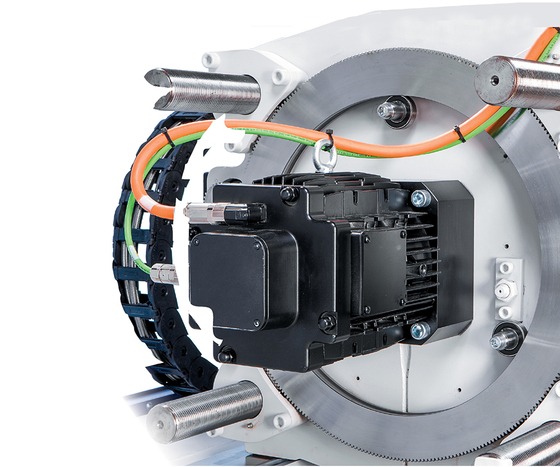
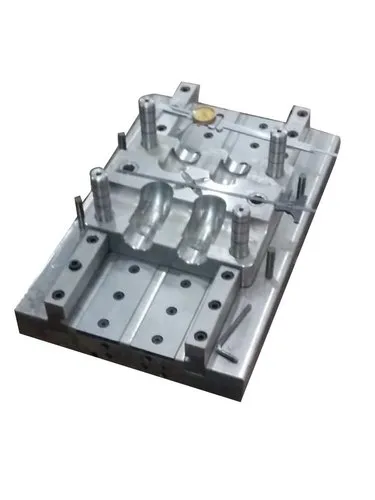
Servo motor control has become a critical technology in modern electronic mould systems, enabling higher accuracy, repeatability, and efficiency in the moulding process. Unlike conventional hydraulic or pneumatic systems, servo-controlled moulds utilize precision electric motors to drive key mould functions, resulting in better part quality and energy savings.
Principle of Servo Motor Control
A servo motor operates through a closed-loop control system that continuously monitors and adjusts motor position, speed, and torque based on feedback signals. In electronic moulds, sensors and controllers ensure that every movement — such as mould opening, closing, ejection, or core pulling — is executed with exceptional precision.
Key components of servo control systems include:
Servo Motor: Provides precise motion control.
Servo Drive/Amplifier: Regulates voltage and current to the motor.
Controller (PLC or Embedded System): Processes feedback and commands motor actions.
Feedback Device (Encoder/Resolver): Measures position and speed for real-time correction.
Applications in Mould Systems
Servo motor control is integrated into several moulding functions, such as:
Mould Opening and Closing: Ensures smooth and accurate movement with minimal shock and noise.
Core Pulling and Ejector Control: Allows synchronized multi-axis movement for complex part geometries.
Injection and Clamping: Provides consistent pressure control, improving dimensional accuracy of parts.
Valve Gate Operation: Enables precise timing for multi-cavity mould filling.
Advantages of Servo Motor Control
High Precision and Repeatability: Accurate control over position and pressure enhances product consistency.
Energy Efficiency: Servo systems consume power only when movement occurs, reducing overall energy use by up to 40–70%.
Reduced Maintenance: Fewer mechanical components mean less wear and lower lubrication needs.
Quieter Operation: Electric drives generate minimal noise compared to hydraulic systems.
Programmable Flexibility: Easy adjustment of speed, torque, and timing through digital control interfaces.
Faster Cycle Times: Improved acceleration and deceleration dynamics shorten moulding cycles.
Integration with Smart Mould Systems
When combined with sensors and embedded controllers, servo-driven moulds become part of an intelligent system capable of:
Real-time monitoring of movement and load.
Automatic correction of process deviations.
Data logging for predictive maintenance and performance analysis.
This integration enhances automation and supports Industry 4.0-level manufacturing.
Conclusion
Servo motor control has revolutionized electronic moulding technology by delivering precise, energy-efficient, and reliable operation. Its adaptability and accuracy make it indispensable for modern moulds used in automotive, medical, packaging, and consumer product manufacturing. As industries continue moving toward smarter and greener production systems, servo-driven electronic moulds will remain at the forefront of innovation.