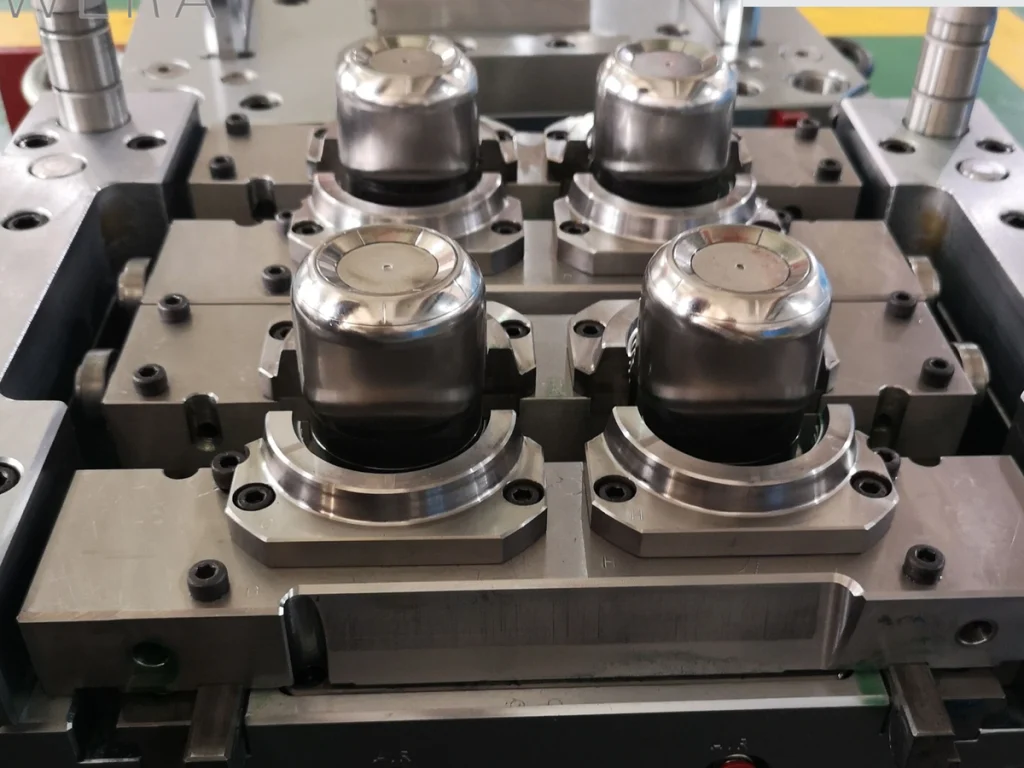
Cosmetic bottles and jars are essential packaging components for products such as creams, lotions, serums, shampoos, and perfumes. The moulds used to manufacture these components must meet high standards of precision, aesthetics, and functionality while ensuring consistent quality at mass-production volumes. Mould design for cosmetic bottles and jars plays a critical role in product appeal, brand identity, and consumer safety.
1. Importance of High-Precision Mould Design
Cosmetic packaging demands excellent surface finish, uniform wall thickness, and accurate dimensions. High-precision moulds ensure:
Smooth, glossy, or matte finishes without defects
Perfect symmetry and dimensional accuracy
Compatibility with closures, pumps, and caps
Consistent appearance across production batches
Any minor defect in mould design can affect the visual appeal and usability of the cosmetic container.
2. Materials Used in Cosmetic Bottle and Jar Moulds
Mould material selection is crucial for durability and finish quality. Commonly used steels include:
Hardened tool steels for long production runs
Stainless steels for corrosion resistance and superior polishability
Pre-hardened steels for faster mould manufacturing and moderate volumes
For transparent or high-gloss containers, mould steel with excellent polishing characteristics is preferred.
3. Mould Types for Cosmetic Packaging
Different cosmetic containers require different moulding solutions:
Injection moulds for jars, caps, and thick-walled containers
Blow moulds for bottles used in lotions, shampoos, and cleansers
Injection blow moulds (IBM) for small, high-precision bottles
Injection stretch blow moulds (ISBM) for PET cosmetic bottles
The choice of mould type depends on product design, material, and production volume.
4. Design Considerations for Cosmetic Bottle and Jar Moulds
Key design factors include:
Uniform wall thickness to avoid sink marks and warpage
Proper draft angles for easy ejection
Well-designed gating systems to prevent flow marks
Efficient cooling channels to reduce cycle time
Venting to eliminate air traps and burn marks
These considerations help achieve defect-free cosmetic packaging.
5. Surface Finish and Aesthetic Requirements
Cosmetic moulds often require premium surface finishes such as:
High-gloss mirror polishing
Fine textures for matte or frosted effects
Custom logos, embossing, or debossing
Advanced polishing and texturing techniques enhance product differentiation and brand value.
6. Multi-Cavity and High-Output Moulds
To meet large-scale demand, cosmetic manufacturers often use:
Multi-cavity moulds for high production efficiency
Hot runner systems to reduce material waste and improve consistency
Balanced runner designs for uniform filling across all cavities
These moulds help achieve cost-effective mass production.
7. Quality and Regulatory Considerations
Cosmetic packaging moulds must support compliance with:
Cosmetic safety and hygiene standards
Material compatibility with cosmetic formulations
Clean production requirements to avoid contamination
Mould designs should allow easy cleaning and maintenance to meet quality expectations.
8. Maintenance and Tool Life
Regular maintenance is essential for long-term mould performance:
Periodic polishing to maintain surface finish
Inspection of cores, cavities, and cooling channels
Use of corrosion-resistant materials to extend mould life
Well-maintained moulds ensure consistent output and reduced downtime.
9. Trends in Cosmetic Bottle and Jar Moulding
Current industry trends include:
Lightweight packaging designs to reduce plastic usage
Moulds for recyclable and bio-based plastics
Custom shapes for premium and luxury cosmetic brands
Integration of sustainable and cost-efficient moulding solutions
10. Conclusion
Moulds for cosmetic bottles and jars are a vital part of the cosmetic manufacturing process, combining precision engineering with aesthetic excellence. High-quality mould design ensures attractive packaging, reliable functionality, and efficient mass production, helping cosmetic brands maintain quality, sustainability, and strong market appeal.