1. Introduction
Thermoforming is a manufacturing process in which a thermoplastic sheet is heated until it becomes soft and formable, then shaped over or into a mould using vacuum, pressure, or mechanical force. After cooling, the formed sheet retains the shape of the mould and is removed for further processing.
The material used to manufacture a thermoforming mould plays an important role in determining product quality, production speed, mould durability, surface finish, and overall manufacturing cost.
Selecting the right mould material requires consideration of several factors, including production volume, forming temperature, heat transfer, mould complexity, dimensional accuracy, surface finish, and budget.
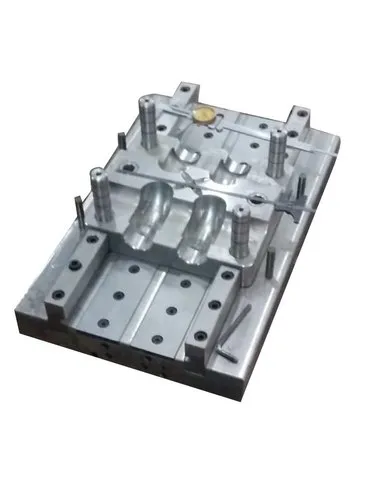
Common materials used for thermoforming moulds include aluminium alloys, cast aluminium, steel, epoxy tooling board, and other specialised tooling materials. Each material has different properties and is suitable for particular applications.
The best mould material is the one that meets the production requirements while providing an appropriate balance of performance, durability, manufacturing time, and cost.
2. Important Factors in Selecting Thermoforming Mould Materials
2.1. Thermal Conductivity
Thermal conductivity describes how efficiently a material transfers heat.
During thermoforming, the heated plastic sheet must cool sufficiently to retain its shape after forming. The mould material influences the rate at which heat moves away from the plastic.
Materials with high thermal conductivity, such as aluminium, are often preferred when rapid and uniform cooling is important.
Importance:
- Reduces cooling time in suitable mould designs.
- Improves production efficiency.
- Helps maintain consistent product dimensions.
- Can reduce temperature differences across the mould surface.
However, actual cooling performance also depends on mould thickness, cooling-channel design, coolant flow, sheet thickness, and the plastic being formed.
2.2. Strength and Rigidity
The mould must withstand the forces generated during vacuum forming, pressure forming, clamping, and handling.
A mould that lacks sufficient strength or rigidity may deform under load, resulting in dimensional inaccuracies.
Important considerations:
- Forming pressure.
- Mould size.
- Wall thickness.
- Unsupported spans.
- Clamping arrangements.
- Operating temperature.
Steel may be appropriate for highly loaded tooling, while aluminium is suitable for many conventional thermoforming applications when the mould is designed correctly.
2.3. Heat Resistance
The mould material must maintain its mechanical properties at the operating temperature.
Although the plastic sheet is heated to its forming temperature, the mould generally operates at a lower temperature or within a controlled thermal range. The exact conditions depend on the polymer, production cycle, and cooling system.
The mould material should resist:
- Thermal deformation.
- Loss of strength at operating temperature.
- Repeated heating and cooling.
- Dimensional changes caused by thermal expansion.
Materials that are suitable at room temperature may not perform equally well under repeated thermal cycling.
2.4. Surface Finish
The mould surface directly influences the appearance and texture of the finished product.
For example, packaging trays may require a smooth surface, while decorative or textured products may need a specific surface pattern.
A suitable mould material should support the required surface finish.
Factors to consider include:
- Ease of polishing.
- Ability to reproduce fine details.
- Surface hardness.
- Resistance to scratching.
- Compatibility with coatings and texturing methods.
Aluminium can be machined and finished to a high standard, while steel may be preferred where greater surface durability is needed.
2.5. Machinability
Machinability refers to how easily a material can be cut, drilled, milled, and shaped into the required mould geometry.
Good machinability can reduce manufacturing time and tooling costs.
Materials such as aluminium and epoxy tooling board are generally easier to machine than hardened steel.
The complexity of the mould design also matters. Deep cavities, intricate details, undercuts, and cooling channels can significantly influence machining time.
2.6. Wear Resistance
Repeated production cycles can cause wear due to friction, handling, cleaning, and contact with the plastic sheet.
Wear resistance is especially important for moulds used in high-volume production or applications requiring precise surface details.
Steel generally offers higher wear resistance than many aluminium alloys and tooling boards, although the exact performance depends on the grade and surface treatment.
2.7. Corrosion Resistance
Moulds may be exposed to moisture, cooling fluids, cleaning agents, and environmental contaminants.
Corrosion can damage the surface and affect product quality.
When corrosion is a concern, manufacturers may consider:
- Corrosion-resistant steel.
- Suitable protective coatings.
- Appropriate storage and maintenance.
- Compatible cleaning agents.
Aluminium can also corrode under certain conditions, so its compatibility with the operating environment should be evaluated.
2.8. Cost
The total cost of a thermoforming mould includes more than the raw material.
It may include:
- Material purchase.
- Machining and fabrication.
- Cooling-system installation.
- Surface finishing.
- Assembly.
- Maintenance.
- Repair and replacement.
- Production downtime.
A low-cost material may be suitable for prototypes but become uneconomical if it wears quickly during long production runs.
Therefore, material selection should consider the total cost over the mould’s expected service life, rather than purchase price alone.
3. Common Materials Used for Thermoforming Moulds
3.1. Aluminium Alloys
Aluminium alloys are among the most widely used materials for thermoforming moulds.
They offer a useful combination of thermal conductivity, machinability, moderate weight, and mechanical strength.
Properties
- High thermal conductivity compared with steel.
- Good machinability.
- Relatively low density.
- Good dimensional accuracy when properly designed and manufactured.
- Suitable for a wide range of mould geometries.
Advantages
1. Efficient heat transfer
Aluminium transfers heat efficiently, which can help reduce cooling time and improve cycle efficiency.
2. Fast machining
Aluminium can generally be machined more quickly than steel, reducing mould manufacturing time.
3. Lower weight
Aluminium moulds are lighter than comparable steel moulds, making them easier to handle in many applications.
4. Good surface finish
Aluminium can be machined, polished, and textured to produce a variety of surface finishes.
Limitations
- Lower wear resistance than many hardened steels.
- Lower stiffness than steel of comparable geometry.
- Can be damaged by aggressive handling or unsuitable cleaning.
- May require surface treatment in demanding applications.
Applications
- Food packaging trays.
- Disposable containers.
- Automotive interior components.
- Consumer product packaging.
- Medium- to high-volume thermoforming, when the alloy and mould design are suitable.
Best suited for: Production moulds where efficient heat transfer, machinability, and a good balance between cost and performance are important.
3.2. Cast Aluminium
Cast aluminium moulds are produced by casting aluminium alloy into a rough mould shape, followed by machining and finishing.
This approach can be economical for large or complex moulds because much of the basic shape is created during casting.
Properties
- Good thermal conductivity.
- Relatively low weight.
- Ability to produce complex initial geometries.
- Suitable for machining and surface finishing.
Advantages
- Can reduce material waste during manufacture.
- Suitable for larger moulds.
- Can accommodate complex shapes.
- Offers good heat-transfer performance.
Limitations
- Properties depend on alloy composition and casting quality.
- Porosity or internal defects may affect performance.
- Critical surfaces still require machining and finishing.
- Dimensional consistency depends on casting quality and process control.
Applications
- Large packaging moulds.
- Automotive thermoforming tooling.
- Industrial trays.
- Large plastic panels.
Best suited for: Large or complex moulds where casting can reduce manufacturing effort while retaining the required performance.
3.3. Steel
Steel moulds are used when high strength, rigidity, wear resistance, or durability is required.
Different steel grades offer different combinations of hardness, toughness, corrosion resistance, and machinability.
Properties
- High strength and rigidity.
- Good wear resistance in suitable grades.
- Good dimensional stability when properly manufactured.
- Lower thermal conductivity than aluminium for most conventional mould-steel comparisons.
- Relatively high density.
Advantages
1. High durability
Steel can withstand repeated production cycles and demanding mechanical conditions.
2. Good resistance to wear
Appropriately selected and treated steel can maintain mould surfaces over extended use.
3. High structural strength
Steel is suitable for moulds requiring substantial rigidity or resistance to deformation.
4. Repair options
Depending on the grade and condition, steel moulds may be repaired through suitable machining, welding, or other specialised processes.
Limitations
- Generally slower to machine than aluminium.
- Heavier than aluminium.
- Can be more expensive to manufacture.
- May require additional surface protection against corrosion.
- Lower thermal conductivity than aluminium may affect cooling performance.
Applications
- High-duty production tooling.
- Moulds requiring high rigidity.
- Selected pressure-forming applications.
- Tooling subjected to repeated mechanical loading.
Best suited for: Applications where strength, wear resistance, and long service life are more important than minimum mould weight or maximum thermal conductivity.
3.4. Stainless Steel
Stainless steel is used when corrosion resistance is an important requirement.
Its suitability depends on the grade, surface condition, operating environment, and required mechanical properties.
Properties
- Corrosion resistance in suitable environments.
- Good mechanical strength in appropriate grades.
- Potential for high-quality surface finishes.
- Good durability under suitable operating conditions.
Advantages
- Reduced risk of corrosion-related surface damage.
- Suitable for applications involving moisture or frequent cleaning.
- Can support polished surfaces.
- Useful for specialised industrial environments.
Limitations
- Often more expensive than conventional steel.
- Some grades are more difficult to machine.
- Thermal conductivity is generally lower than that of aluminium.
- Corrosion resistance varies with the grade and chemical environment.
Applications
- Moulds used in demanding cleaning environments.
- Specialised industrial thermoforming.
- Tooling requiring corrosion resistance.
- Selected high-quality surface applications.
Best suited for: Applications where corrosion resistance justifies the additional material and manufacturing cost.
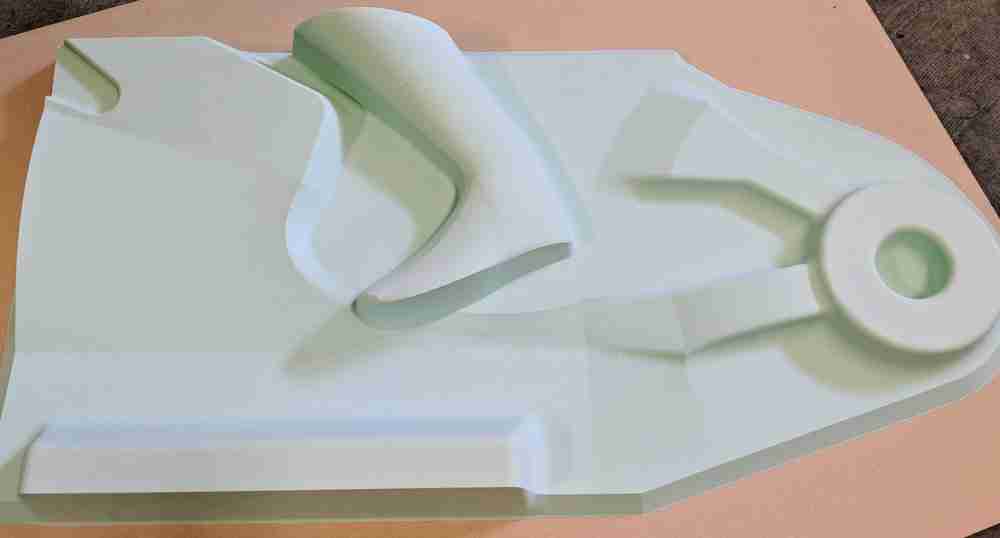
3.5. Epoxy Tooling Board
Epoxy tooling board is an engineered material used to produce prototype moulds, development tooling, and selected low-volume production moulds.
It is available in grades with different densities, mechanical properties, and temperature capabilities.
Properties
- Relatively easy to machine.
- Available in different densities.
- Suitable for producing complex shapes.
- Generally lighter than metal tooling.
- Limited temperature capability compared with most metal mould materials.
Advantages
- Rapid prototype manufacture.
- Reduced machining time.
- Suitable for design testing.
- Useful for complex shapes and product development.
- Can reduce initial tooling costs.
Limitations
- Lower thermal conductivity than aluminium and steel.
- Lower wear resistance than many metals.
- Temperature limits depend on the specific grade.
- May deteriorate under unsuitable pressure or repeated thermal exposure.
Applications
- Prototype thermoforming.
- Product development.
- Short production runs.
- Design validation.
- Selected low-volume forming applications.
Best suited for: Prototype and development work where fast manufacturing and lower initial cost are more important than long-term production durability.
3.6. Wood and Composite Tooling Materials
Wood and selected composite materials have historically been used for basic thermoforming tools, patterns, and experimental tooling.
Their suitability depends on the material, the required precision, and the forming conditions.
Advantages
- Low initial material cost.
- Easy shaping with appropriate tools.
- Suitable for basic prototypes and experimental designs.
Limitations
- Moisture sensitivity in some materials.
- Potential dimensional changes.
- Limited wear resistance.
- Surface quality may be difficult to maintain.
- Heat and pressure resistance can be inadequate for demanding production.
Applications
- Early-stage prototypes.
- Educational demonstrations.
- Experimental forming.
- Certain low-volume, low-temperature applications.
For production tooling, a purpose-made tooling board or metal mould is generally more predictable than untreated wood.
4. Comparison of Thermoforming Mould Materials
| Material | Thermal conductivity | Strength and rigidity | Machinability | Durability | Typical application |
|---|---|---|---|---|---|
| Aluminium alloy | High | Good, depending on alloy and design | Very good | Good in suitable conditions | General production moulds |
| Cast aluminium | High | Good, depending on casting quality | Good after casting | Good in suitable conditions | Large or complex moulds |
| Steel | Moderate to low compared with aluminium | High | Moderate, depending on grade and condition | High in suitable applications | Demanding production tooling |
| Stainless steel | Moderate to low compared with aluminium | High, depending on grade | Variable | High where corrosion resistance is needed | Corrosion-sensitive applications |
| Epoxy tooling board | Low | Grade-dependent; generally lower than metals | Very good | Limited compared with metal tooling | Prototypes and short runs |
| Wood or composite tooling materials | Generally low or variable | Highly material-dependent | Often easy to shape | Usually limited in demanding conditions | Experimental and basic prototype tooling |
These comparisons are general. Actual performance depends on the exact grade, manufacturing method, mould geometry, operating temperature, and production conditions.
5. Choosing a Material According to Production Volume
Production volume is one of the most important factors in material selection.
5.1. Prototype Production
For prototype production, the main goals are usually rapid manufacture, design flexibility, and low initial cost.
Suitable materials may include:
- Epoxy tooling board.
- Aluminium alloys.
- Selected composite tooling materials.
Reasons:
- Shorter manufacturing lead times.
- Easier design modifications.
- Lower initial tooling investment in suitable applications.
Tooling board is particularly useful when the mould geometry is still being evaluated. Aluminium may be preferable if better heat transfer or greater durability is required.
5.2. Low-Volume Production
Low-volume production requires a balance between initial cost and mould life.
Suitable materials may include:
- Aluminium alloys.
- Cast aluminium.
- Higher-performance tooling boards, if their temperature and load limits are appropriate.
The correct choice depends on the number of cycles, material being formed, cavity complexity, and required product quality.
5.3. Medium-Volume Production
For medium-volume production, aluminium is often a practical choice because it combines good thermal conductivity with relatively fast machining.
Steel may be justified when higher stiffness or wear resistance is required.
5.4. High-Volume Production
High-volume production places greater demands on mould durability, dimensional stability, and repeatability.
Suitable materials may include:
- High-quality aluminium alloys.
- Cast aluminium tooling designed for production.
- Steel or stainless steel for selected demanding applications.
Aluminium can perform very well in high-volume thermoforming. Steel is not automatically the better choice simply because production volume is high; thermal performance, mould design, wear, and operating conditions must also be considered.
6. Selecting a Mould Material According to the Plastic Sheet
Different thermoplastics have different forming temperatures, shrinkage behaviour, and surface requirements.
| Plastic material | Common applications | Important mould-material considerations |
|---|---|---|
| Polystyrene (PS) | Disposable trays and packaging | Surface finish, dimensional accuracy, and cooling |
| High-impact polystyrene (HIPS) | Packaging and appliance liners | Good surface quality, rigidity, and production efficiency |
| Acrylonitrile butadiene styrene (ABS) | Automotive trim and housings | Temperature capability, surface finish, and dimensional stability |
| Polyethylene terephthalate (PET) | Packaging trays and containers | Cooling performance, dimensional accuracy, and surface quality |
| Polyvinyl chloride (PVC) | Selected packaging and formed products | Processing conditions, compatibility, and corrosion considerations |
| Polypropylene (PP) | Containers and industrial products | Forming conditions, shrinkage, and dimensional stability |
| Polycarbonate (PC) | Transparent or impact-resistant components | Surface finish, temperature capability, and dimensional accuracy |
The correct mould material cannot be selected from the polymer name alone. Sheet thickness, grade, forming temperature, pressure, product geometry, and production volume must also be considered.
7. The Importance of Cooling-System Design
Cooling performance depends on both the mould material and the cooling-system design.
A mould made from a highly conductive material may still cool inefficiently if its cooling channels are poorly arranged or the coolant flow is inadequate.
Important Cooling Considerations
1. Cooling-channel location
Channels should be positioned to remove heat effectively from areas where the plastic sheet retains heat.
2. Uniform cooling
Uneven cooling may cause warping, shrinkage variations, and dimensional inaccuracies.
3. Coolant flow
The coolant flow rate and temperature influence heat removal.
4. Mould thickness
Excessive material thickness can increase the distance heat must travel before reaching a cooling channel.
5. Material conductivity
Aluminium often transfers heat more effectively than conventional mould steels, but the complete cooling design determines actual performance.
6. Venting
Vacuum-forming and pressure-forming moulds require appropriate venting so that air can escape and the sheet can conform to the mould surface.
Practical Recommendation
For many production thermoforming applications, an aluminium mould with a well-designed cooling system provides an effective combination of heat transfer, machining efficiency, and durability.
8. Surface Finish and Texturing Requirements
The required surface finish should be considered before selecting the mould material.
8.1. Smooth Finish
Smooth surfaces are useful for products requiring a clean appearance, easy cleaning, or a glossy finish.
Suitable materials may include aluminium, polished steel, and stainless steel, depending on the required quality and production conditions.
8.2. Textured Finish
Texturing can produce decorative patterns, matte surfaces, or functional surface features.
Methods may include:
- Mechanical texturing.
- Abrasive blasting.
- Chemical etching.
- Laser texturing.
- Machined surface patterns.
The material must be compatible with the chosen texturing process.
8.3. Fine Details
Products with small ribs, narrow grooves, lettering, and intricate patterns require a material that can reproduce the required geometry accurately.
Material selection should consider machinability, edge strength, and resistance to wear.
8.4. Surface Maintenance
A mould with a high-quality finish can still produce defects if it is scratched, contaminated, or worn.
Regular inspection and suitable cleaning are essential to maintaining consistent product quality.
9. Cost Considerations
The cheapest mould material does not always provide the lowest total production cost.
A material that reduces the initial investment may lead to longer cooling times, frequent maintenance, or early replacement.
Total Cost Factors
Material cost: The price of the raw material.
Machining cost: The time and equipment needed to manufacture the mould.
Finishing cost: Polishing, texturing, coating, and other surface operations.
Cooling cost: The cost of channels, fittings, and cooling-system integration.
Maintenance cost: Cleaning, repairs, surface restoration, and replacement of worn components.
Production cost: The effect of cycle time, scrap rate, and downtime on the cost of each product.
Example
Consider two moulds used to produce the same plastic tray.
- Mould A: Made from epoxy tooling board, with a low initial cost but limited suitability for prolonged production.
- Mould B: Made from aluminium alloy, with a higher initial cost but better heat transfer and greater durability in the intended application.
For a small prototype run, Mould A may be the more economical option.
For repeated production, Mould B may provide a lower overall cost because of its service life and cooling performance.
The actual result depends on the production requirements and the selected grades.
10. Common Mistakes When Selecting Thermoforming Mould Materials
10.1. Choosing Only by Initial Price
A low-cost material may not withstand the required temperature, pressure, or number of production cycles.
Solution: Evaluate total lifecycle cost rather than purchase price alone.
10.2. Ignoring Thermal Conductivity
Poor heat transfer can increase cooling time and reduce productivity.
Solution: Compare thermal conductivity alongside mould thickness and cooling-system design.
10.3. Overlooking Mechanical Strength
A mould that is insufficiently rigid may deform during forming or handling.
Solution: Check the required strength and stiffness for the mould geometry and forming pressure.
10.4. Ignoring Surface-Finish Requirements
Some materials may be difficult to polish or maintain to the required finish.
Solution: Select a material and finishing process that can achieve the specified product appearance.
10.5. Using Prototype Materials for Demanding Production
Tooling boards and other prototype materials may not tolerate prolonged thermal cycling or high mechanical loads.
Solution: Confirm the material’s temperature, pressure, and durability limits before production use.
10.6. Neglecting Maintenance
Even a suitable mould material can deteriorate if the mould is cleaned improperly or exposed to corrosion.
Solution: Establish a maintenance schedule and use compatible cleaning and storage methods.
11. Step-by-Step Procedure for Selecting the Right Material
A systematic selection process helps manufacturers avoid unnecessary costs and performance problems.
Step 1: Define the Product Requirements
Identify the product’s dimensions, shape, wall thickness, surface finish, and tolerance requirements.
Step 2: Identify the Plastic Material
Determine the polymer grade, forming temperature, shrinkage behaviour, and any special processing requirements.
Step 3: Establish the Production Volume
Estimate the number of parts to be produced and the expected mould service life.
Step 4: Determine the Forming Method
Identify whether the process uses vacuum forming, pressure forming, or another thermoforming arrangement.
Step 5: Evaluate Thermal Requirements
Consider the mould operating temperature, cooling time, and need for uniform heat transfer.
Step 6: Assess Mechanical Requirements
Evaluate forming pressure, clamping forces, mould dimensions, and potential deformation.
Step 7: Select Candidate Materials
Compare aluminium alloys, cast aluminium, steel, stainless steel, and tooling boards according to the requirements.
Step 8: Evaluate Machining and Finishing
Consider mould complexity, manufacturing lead time, surface polishing, texturing, and cooling-channel requirements.
Step 9: Calculate Total Cost
Estimate initial tooling cost, maintenance, expected service life, production cycle time, and replacement costs.
Step 10: Validate the Mould
Conduct trial runs to assess product quality, cooling behaviour, release performance, dimensional accuracy, and cycle time.
Adjust the mould design or processing conditions if necessary before full production.
12. Quick Selection Guide
The following guide provides a general starting point for material selection.
| Requirement | Material to consider | Reason |
|---|---|---|
| Rapid prototype development | Epoxy tooling board or aluminium | Fast manufacture and design flexibility |
| Low initial tooling cost | Tooling board or suitable aluminium tooling | Potentially lower manufacturing cost |
| Efficient heat transfer | Aluminium alloy | High thermal conductivity |
| Large mould with complex geometry | Cast aluminium | Complex shapes can be produced before final machining |
| High mechanical rigidity | Steel | High strength and stiffness |
| Corrosion resistance | Suitable stainless steel | Resistance to corrosion in compatible environments |
| Long production life | Aluminium or steel, depending on conditions | Selection can be matched to wear and mechanical requirements |
| High-quality surface finish | Aluminium, steel, or stainless steel | Suitable grades can be polished or textured |
| High wear resistance | Suitable hardened steel | Better resistance to wear in demanding applications |
| Easy machining | Aluminium or epoxy tooling board | Generally easier and faster to machine than steel |
This guide is intended for initial screening. The final selection should be based on the exact material grade, operating conditions, and production requirements.
Conclusion
Choosing the right material for a thermoforming mould is essential for achieving consistent product quality, efficient production, and a reasonable manufacturing cost.
Aluminium alloys are widely used because of their high thermal conductivity, good machinability, and relatively low weight. Steel is suitable for applications requiring greater rigidity and wear resistance, while stainless steel is useful where corrosion resistance is important. Epoxy tooling boards and other specialised materials can provide economical solutions for prototypes and selected low-volume applications.
The final decision should consider production volume, plastic type, forming temperature, mould complexity, cooling performance, surface finish, durability, and total lifecycle cost.
For many conventional production thermoforming applications, aluminium is an excellent starting point. However, demanding mechanical conditions, specialised surface requirements, or particular operating environments may make steel, stainless steel, or another material more suitable.