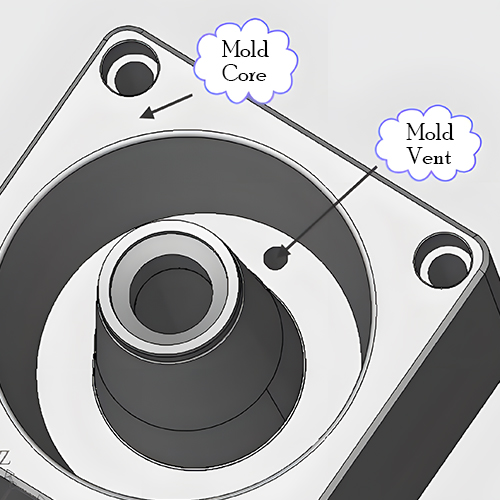
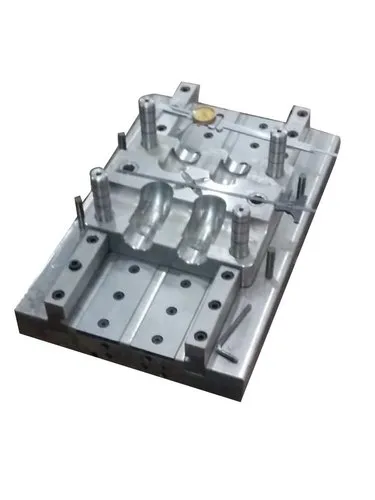
1. Introduction to Mould Venting
Mould venting is the controlled release of trapped air and gases from the mould cavity during the injection moulding process. In cosmetic product moulding—where aesthetics, surface finish, and dimensional accuracy are critical—effective venting is essential to ensure defect-free, visually appealing parts such as lipstick cases, compact powder boxes, caps, jars, and closures.
As molten plastic fills the cavity at high speed, displaced air must escape efficiently. Poor venting can result in visible defects, surface blemishes, and compromised part quality, which are unacceptable in cosmetic packaging.
2. Why Mould Venting Is Critical in Cosmetic Products
Cosmetic components are judged primarily on appearance and tactile quality. Even minor defects can lead to product rejection. Proper mould venting ensures:
High-gloss and uniform surface finish
Elimination of burn marks and air traps
Complete cavity filling for thin-wall cosmetic parts
Consistency across high-cavity moulds
Improved process stability and repeatability
3. Common Venting-Related Defects in Cosmetic Moulding
Poor or inadequate venting can cause several defects, including:
Burn marks (diesel effect): Caused by compressed air overheating during injection
Short shots: Incomplete filling due to trapped air
Flow marks and streaks: Air interference with melt flow
Surface blemishes: Visible on glossy or transparent cosmetic parts
Weld line weakness: Air entrapment at flow fronts
Poor replication of textures and logos
These defects directly impact the visual appeal and perceived quality of cosmetic packaging.
4. Types of Mould Venting Methods
a) Parting Line Vents
Most commonly used venting method
Machined along the mould parting surface
Typical vent depth: 0.01–0.03 mm, depending on material
Ideal for caps, lids, and compact cases
b) Pin Vents (Ejector Pin Venting)
Air escapes around ejector pins
Suitable for deep cavities and core areas
Requires precise pin-to-hole clearance to prevent flash
c) Micro Vents / Fine Vents
Used for high-gloss and transparent cosmetic parts
Invisible to the naked eye
Maintains aesthetics while allowing air escape
d) Vacuum Venting
Actively removes air before injection
Used in premium cosmetic packaging
Improves clarity and eliminates silver streaks
e) Porous Inserts (Sintered Steel)
Allow gas to pass through solid metal
Ideal for complex shapes and deep ribs
Common in high-end cosmetic moulds
5. Vent Design Considerations for Cosmetic Moulds
When designing vents for cosmetic products, the following factors must be considered:
Material type: ABS, PP, PET, SAN, PMMA, Acrylic
Surface finish requirements: Mirror polish, matte, textured
Wall thickness: Thin-wall designs need enhanced venting
Injection speed: High-speed filling increases air entrapment risk
Part geometry: Ribs, snap fits, undercuts, and logos
Proper vent placement is usually at end-of-fill locations and areas where air naturally accumulates.
6. Venting vs Flash Control
In cosmetic moulds, excessive vent depth can cause flash, which is equally unacceptable. Therefore:
Vents must be precisely machined and polished
Regular cleaning is required to prevent clogging
Vent land lengths must be optimized for airflow without melt leakage
Balancing vent efficiency and flash control is a key skill in cosmetic mould design.
7. Maintenance of Mould Vents
Over time, vents can become blocked by:
Material residue
Mold release agents
Cosmetic pigments and additives
Regular maintenance includes:
Vent cleaning during preventive maintenance
Inspection after high-volume production runs
Re-polishing vent areas if surface defects appear
Well-maintained vents ensure consistent cosmetic part quality throughout the mould’s life.
8. Role of Venting in High-Cavity Cosmetic Moulds
In multi-cavity moulds used for mass production of cosmetic packaging:
Uniform venting across all cavities is essential
Uneven venting leads to cavity-to-cavity variation
Balanced vent design improves cycle time and reduces rejection rates
9. Conclusion
Mould venting plays a crucial role in achieving the flawless appearance demanded by cosmetic products. From preventing burn marks to ensuring perfect surface gloss and dimensional consistency, effective venting directly influences product quality, production efficiency, and brand perception. For cosmetic mould manufacturers, precision vent design and maintenance are not optional—they are essential.