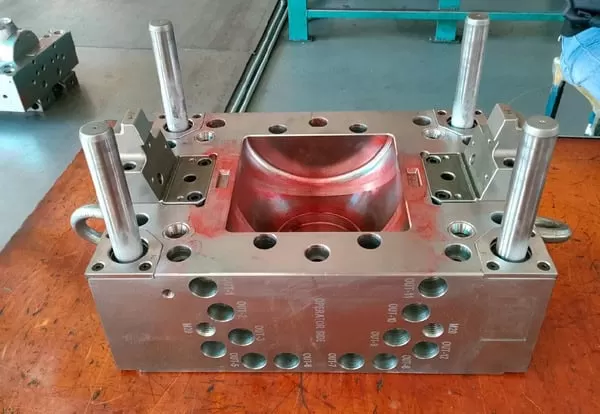
Tool steel selection plays a critical role in the performance, durability, and surface quality of cosmetic injection moulds. Cosmetic packaging demands flawless aesthetics, tight tolerances, and long production runs, making the choice of mould steel a key factor in achieving premium finishes and consistent quality.
Key Requirements for Cosmetic Mould Tool Steels
Cosmetic moulds must meet several demanding criteria:
Exceptional surface finish for high-gloss, mirror, or textured appearances
High corrosion resistance due to contact with additives, pigments, and frequent cleaning
Excellent polishability to achieve Class A cosmetic surfaces
Dimensional stability for thin-wall and precision components
Long tool life under high-volume production conditions
Commonly Used Tool Steels for Cosmetic Moulds
1. Pre-Hardened Tool Steels
Pre-hardened steels are widely used for medium- to high-volume cosmetic moulds due to their balance of machinability and strength.
Typical Grades: P20, P20+Ni, 718, 738
Advantages:
Good machinability
Uniform hardness (28–34 HRC)
Suitable for moderate polishing
Applications:
Cosmetic containers, caps, closures, and external housings
2. Hardened Tool Steels
Hardened steels are chosen for demanding applications requiring extended tool life and higher wear resistance.
Typical Grades: H13, DIN 1.2344
Advantages:
High strength and toughness
Good thermal fatigue resistance
Suitable for complex mould designs
Applications:
High-cavity moulds and precision cosmetic components
3. Stainless Tool Steels
Stainless steels are preferred for cosmetic moulds exposed to corrosive materials or requiring ultra-high polish.
Typical Grades: DIN 1.2083, 420 Stainless Steel
Advantages:
Excellent corrosion resistance
Superior polishability for mirror finishes
Reduced maintenance requirements
Applications:
Lipstick tubes, mascara containers, perfume caps, transparent cosmetic parts
Factors Influencing Tool Steel Selection
Several parameters must be evaluated before finalizing the tool steel:
Plastic material used (ABS, SAN, PMMA, PP, PETG, etc.)
Surface finish requirement (high gloss, matte, texture)
Production volume and expected mould life
Use of colorants or abrasive fillers
Environmental exposure (humidity, cleaning chemicals)
Heat Treatment and Surface Enhancement
Proper heat treatment and surface treatments further enhance tool steel performance:
Vacuum hardening for improved dimensional stability
Nitriding or PVD coatings for increased wear resistance
Polishing and texturing compatibility for premium cosmetic aesthetics
Benefits of Correct Tool Steel Selection
Choosing the right tool steel for cosmetic moulds delivers:
Consistent high-quality cosmetic finishes
Reduced mould maintenance and downtime
Longer tool life and lower total cost of ownership
Improved productivity and repeatability
Conclusion
Tool steel selection is a foundational element in cosmetic mould design and manufacturing. By carefully matching steel properties to product aesthetics, material behavior, and production demands, manufacturers can achieve superior surface quality, extended mould life, and reliable performance—essential for today’s premium cosmetic packaging market.