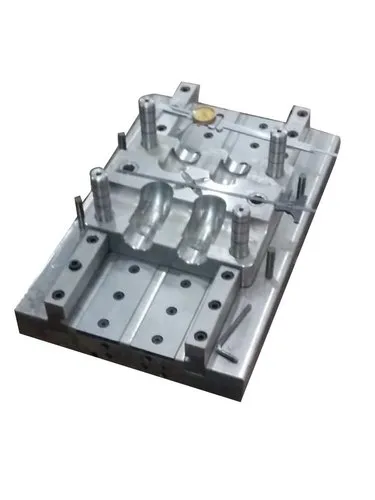
Medical mould manufacturing is undergoing rapid transformation driven by technological innovation, stringent regulatory requirements, and increasing global healthcare demand. The following are the key global trends shaping the industry:
1. Market Growth and Rising Demand
The global medical injection moulding market is experiencing steady growth due to increasing healthcare needs, aging populations, and demand for medical devices. The market was valued at around USD 25 billion in 2025 and is projected to grow significantly with a CAGR of nearly 6%.
- High demand for disposable medical products (syringes, diagnostic kits)
- Expansion of healthcare infrastructure globally
- Growth in minimally invasive procedures
2. Miniaturization and Micro Moulding
One of the most significant trends is the shift toward miniaturization.
- Micro moulding enables production of components with micron-level precision
- Widely used in:
- Microfluidic devices
- Drug delivery systems
- Wearable and implantable devices
This trend is driven by the need for compact, lightweight, and high-performance medical devices.
3. Adoption of Advanced Materials
Material innovation is playing a crucial role in medical mould manufacturing.
- Increased use of:
- Medical-grade polymers (PP, PE, PC)
- High-performance resins (PEEK, LCP)
- Liquid Silicone Rubber (LSR)
- Growing use of metals for strength-critical components
Plastics dominate due to flexibility, cost-effectiveness, and compatibility with sterilization processes.
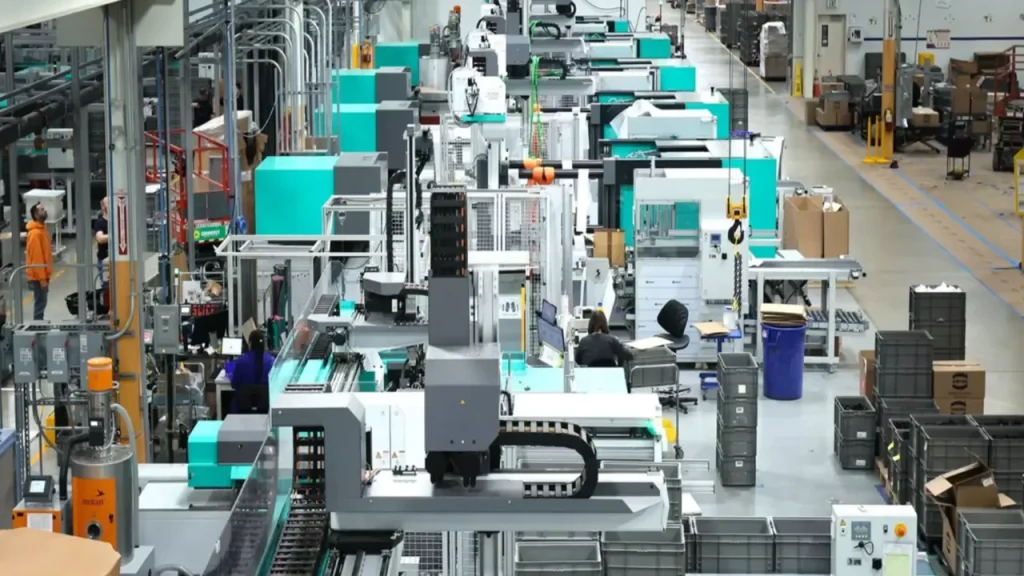
4. Automation and Smart Manufacturing (Industry 4.0)
Automation is becoming essential in medical moulding processes.
- Use of:
- Robotics for part handling and assembly
- Machine vision systems for defect detection
- Real-time process monitoring (pressure, temperature sensors)
- Integration of digital twins and data analytics
These technologies ensure zero-defect production, high repeatability, and regulatory compliance.
5. Cleanroom and Contamination-Control Manufacturing
Medical moulds require strict hygiene standards.
- Production in ISO Class 7/8 cleanrooms
- Automated processes to minimize human contact
- Focus on contamination-free manufacturing
This trend is critical for products used in surgical and diagnostic applications.
6. Sustainability and Eco-Friendly Manufacturing
Sustainability is gaining importance in the industry.
- Use of recyclable and biodegradable materials
- Reduction of material waste using hot runner systems
- Energy-efficient moulding machines
Manufacturers are balancing sustainability with strict medical compliance requirements.
7. Overmoulding and Multi-Material Moulding
Advanced moulding techniques are becoming more common.
- Overmoulding combines multiple materials into a single component
- Improves:
- Ergonomics
- Functionality
- Product durability
Widely used in surgical tools, wearable devices, and diagnostic equipment.
8. Ultra-Precision and Nano-Level Moulding
Demand for high-precision medical components is increasing.
- Applications:
- Lab-on-chip devices
- Microneedles
- Optical diagnostic components
- Requires nano-level accuracy and advanced tooling
Ultra-precision moulding is critical for next-generation medical technologies.
9. Regulatory Compliance and Traceability
Strict global regulations are shaping manufacturing processes.
- Compliance with:
- FDA (USA)
- ISO 13485
- EU MDR
- Increasing focus on:
- Documentation
- Process validation
- Traceability systems (eDHR)
Manufacturers must ensure consistent quality and audit readiness.
10. Regional Shifts and Globalization
Geographical trends are also evolving:
- Asia-Pacific dominates the market with ~42% share
- Countries like India and China are emerging as manufacturing hubs
- Growth driven by:
- Lower production costs
- Skilled workforce
- Government initiatives
11. Customization and Rapid Prototyping
Customization is becoming increasingly important.
- Use of:
- 3D printing for prototyping
- Rapid tooling techniques
- Enables faster product development and shorter lead times
This is especially useful for patient-specific devices and new product launches.
Conclusion
Global medical mould manufacturing is evolving toward high precision, automation, sustainability, and regulatory compliance. The integration of advanced technologies such as micro moulding, smart manufacturing, and innovative materials is transforming the industry. As healthcare demand continues to rise, manufacturers must adopt these trends to remain competitive and meet global standards.