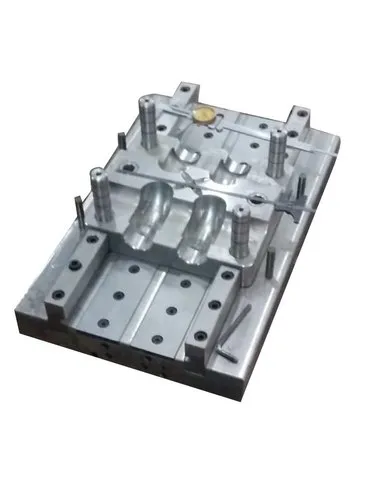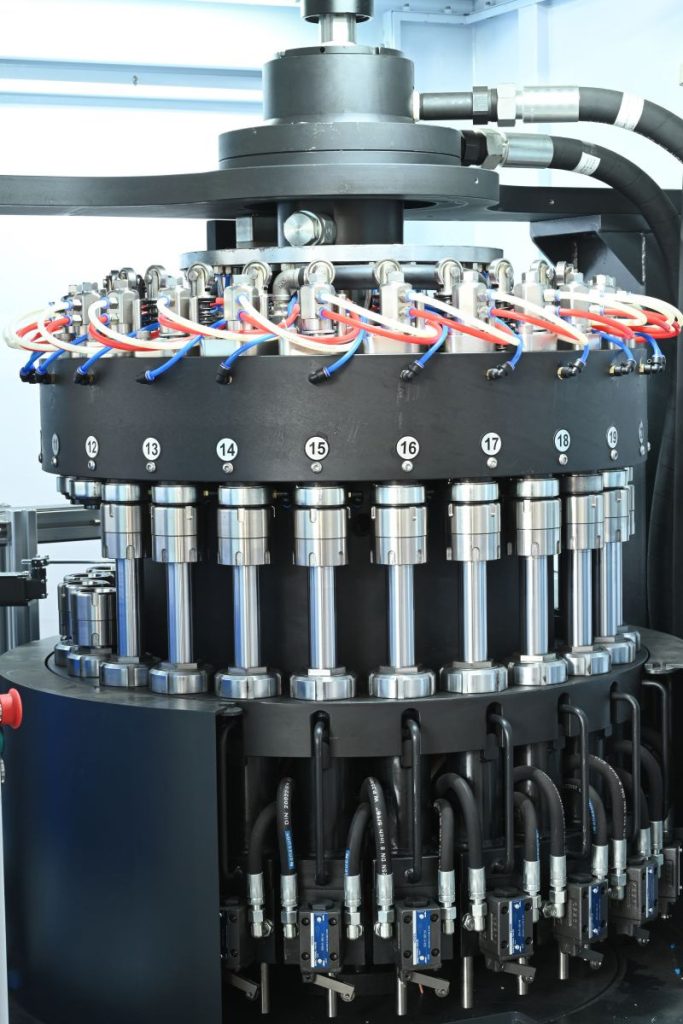
Closed compression moulds are specialized moulding tools used to manufacture plastic, rubber, composite, and other thermoset components by compressing a measured quantity of material inside a closed mould cavity under controlled pressure and temperature.
In this process, the mould is loaded with the required amount of material and then closed using a hydraulic or mechanical press. The applied pressure forces the material to flow and conform to the shape of the cavity. Heat and pressure are maintained for a predetermined period to cure, solidify, or consolidate the material before the mould is opened and the finished component is removed.
Closed compression moulds are commonly used for producing automotive components, electrical and electronic parts, industrial components, handles, housings, composite products, and other precision moulded parts.
Key advantages include:
- Consistent and repeatable component quality
- Suitable for thermoset plastics, rubber, composites, and similar materials
- Good dimensional stability and surface finish
- Reduced material waste compared with some other moulding processes
- Ability to manufacture relatively large and complex components
- Suitable for high-volume and semi-automated production
- Robust mould construction for repeated pressing cycles
The design of a closed compression mould requires careful consideration of material characteristics, cavity geometry, pressure distribution, heating and cooling, venting, flash control, ejection, and mould life. Proper control of temperature and compression pressure is essential to achieve uniform curing, accurate dimensions, and consistent product quality.