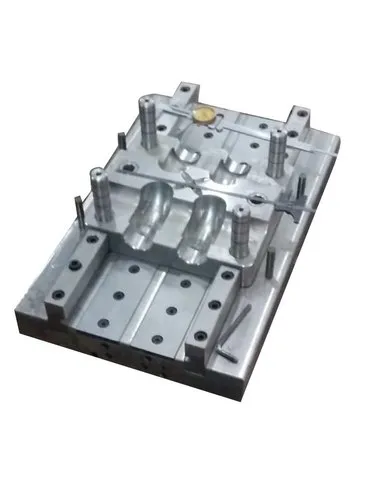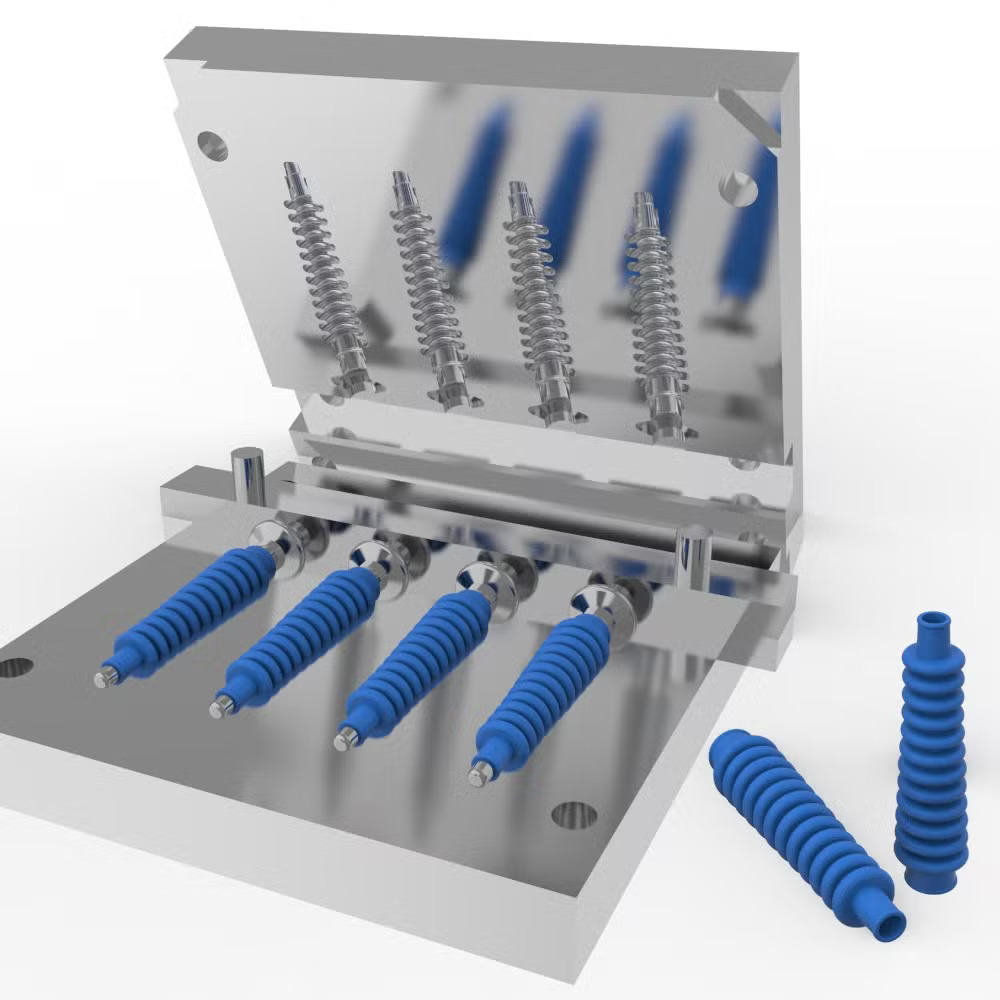
Steel selection for compression moulds is an important engineering consideration because the mould is subjected to repeated mechanical pressure, friction, heating and cooling cycles, and wear during production. The correct steel must provide a suitable combination of strength, hardness, toughness, wear resistance, dimensional stability, corrosion resistance, machinability, and heat-treatment capability.
For candle manufacturing, compression moulds may be exposed to repeated loading as wax or other moulding materials are compressed between the mould components. The steel must therefore maintain the required cavity dimensions and surface finish over a large number of production cycles.
1. Main Requirements of Mould Steel
A suitable steel for compression moulds should have the following properties:
High strength
The mould must withstand the compressive forces generated during moulding without permanent deformation. High-strength steel helps maintain the accuracy of the cavity and core.
Good hardness
The mould surface is exposed to repeated contact and friction during opening, closing, filling, and demoulding. Adequate hardness improves resistance to wear and surface damage.
Wear resistance
Repeated production cycles can gradually wear the cavity, core, guide components, and other contacting surfaces. Good wear resistance helps maintain consistent product dimensions.
Toughness
The mould should not become excessively brittle after heat treatment. Good toughness reduces the risk of cracking, chipping, or sudden failure.
Dimensional stability
Mould components must maintain accurate dimensions during manufacturing and service. Excessive dimensional changes during heat treatment or operation can result in defective products.
Machinability
The selected steel should be practical to machine by milling, turning, drilling, grinding, EDM, and polishing, depending on the complexity of the mould.
Corrosion resistance
If the mould is exposed to moisture, cleaning agents, or humid storage conditions, corrosion-resistant steel can reduce maintenance and surface deterioration.
2. Common Steels Used for Compression Moulds
Different steels can be selected depending on production volume, mould complexity, required surface finish, and operating conditions.
| Steel Type | Typical Characteristics | Suitable Application |
|---|---|---|
| Mild/low-carbon steel | Low cost, easy to machine, relatively low wear resistance | Prototype or low-volume moulds |
| Medium-carbon steel | Higher strength and hardness than mild steel | General-purpose mould components |
| P20 tool steel | Good machinability, strength and polishability | General mould applications |
| H13 tool steel | Excellent toughness and thermal-fatigue resistance | Heated moulds and demanding applications |
| D2 tool steel | High hardness and excellent wear resistance | High-wear mould components |
| 420 stainless steel | Corrosion resistance with good hardness after treatment | Moulds requiring corrosion resistance |
| 440C stainless steel | High hardness and wear resistance with good corrosion resistance | High-performance components |
3. P20 Tool Steel
P20 is a widely used pre-hardened mould steel. It provides a good balance between:
- Strength
- Machinability
- Toughness
- Surface finish
- Cost
It is particularly suitable when the mould does not experience extremely high temperatures or severe abrasive wear.
For many general-purpose compression moulds, P20 can be an economical and practical choice.
4. H13 Tool Steel
H13 is a hot-work tool steel known for its combination of toughness, hardness, and resistance to thermal fatigue.
It is particularly useful when the mould is exposed to:
- Elevated temperatures
- Repeated heating and cooling
- High mechanical loads
- Thermal cycling
Although it may be more expensive than simpler mould steels, H13 is suitable for demanding moulding conditions.
5. D2 Tool Steel
D2 is a high-carbon, high-chromium tool steel with excellent wear resistance.
It is appropriate when the mould experiences significant:
- Abrasion
- Sliding contact
- Repeated mechanical wear
However, because of its high hardness and carbide content, machining and polishing can be more demanding than with P20.
6. Stainless Tool Steels
Where corrosion resistance is important, stainless mould steels such as 420 can be considered.
These steels are useful where the mould needs to withstand:
- Moisture
- Frequent cleaning
- Humid environments
- Corrosive contaminants
They can also provide good hardness after suitable heat treatment.
7. Heat Treatment
Steel selection cannot be separated from heat treatment. The final properties of a mould depend not only on the steel grade but also on how it is processed.
Typical treatments may include:
- Annealing
- Stress relieving
- Hardening
- Tempering
- Nitriding
- Surface coating
Heat treatment can increase hardness and wear resistance, but excessive hardness can reduce toughness and make the mould more susceptible to cracking.
For precision moulds, stress relieving and controlled heat treatment are particularly important because distortion can affect the accuracy of the cavity and core.
8. Surface Treatment
The mould surface can sometimes be improved using treatments such as:
- Nitriding – increases surface hardness and wear resistance.
- Chrome plating – can improve surface hardness and corrosion resistance.
- PVD coatings – can provide a hard, low-friction surface.
- Polishing – improves surface finish and can facilitate demoulding.
The treatment should be selected according to the mould material, production conditions, and desired service life.
9. Factors to Consider When Selecting Steel
The final steel selection should consider:
Production volume → moulding pressure → operating temperature → wear → required surface finish → corrosion exposure → machining requirements → heat treatment → expected mould life → cost.
For example:
- Low production / prototype: economical low- or medium-carbon steel may be sufficient.
- General production: P20 is often a good balance of performance and cost.
- High wear: D2 may be appropriate.
- High temperature / thermal cycling: H13 is a strong candidate.
- Corrosive or wet environment: stainless mould steel may be preferred.
Conclusion
Steel selection for compression moulds is a balance between performance, durability, manufacturability, and cost. The selected steel should have sufficient strength to resist compression, adequate hardness and wear resistance for repeated cycles, sufficient toughness to prevent cracking, and good dimensional stability.
For a typical candle compression mould, the choice may not require an extremely sophisticated tool steel because wax is relatively soft and moulding temperatures are generally modest. In such cases, P20 or another suitable mould steel can provide a practical balance of machinability, durability, surface quality, and cost. For specialized designs, high production volumes, abrasive additives, or more demanding operating conditions, higher-performance steels or surface treatments may be justified.