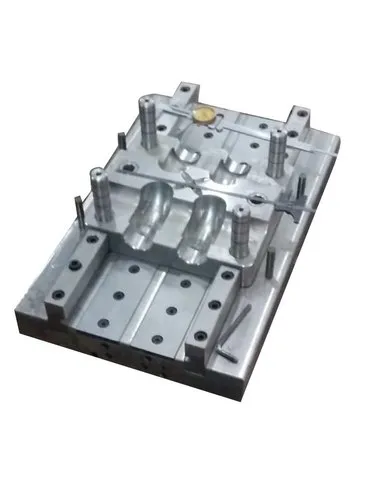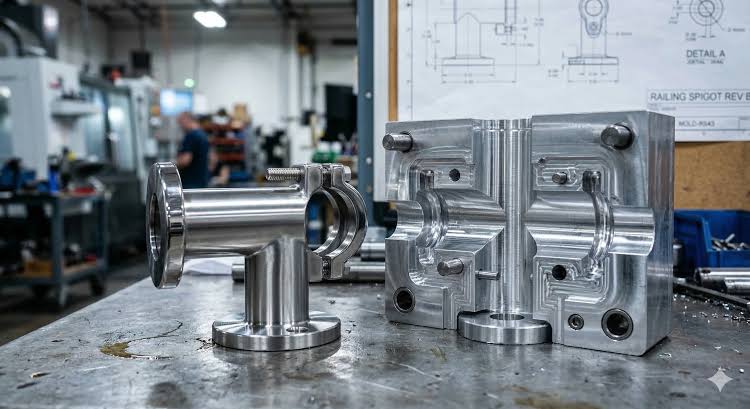
Steel is one of the most widely used materials for manufacturing injection moulds because it offers high strength, good machinability, wear resistance, and the ability to maintain precise cavity dimensions over many production cycles.
The choice of steel directly affects mould life, manufacturing cost, surface finish, corrosion resistance, cooling performance, and the quality of the moulded components. Different steels are selected according to the type of plastic being processed, production volume, operating temperature, mould complexity, and required surface finish.
1. Introduction to Injection Mould Steel
An injection mould consists of several components, including the cavity, core, mould plates, inserts, guide components, and ejector system. These components experience different mechanical, thermal, and chemical conditions during production.
The steel used for each component must withstand the relevant operating conditions.
Important Properties of Injection Mould Steel
1. Hardness
Hardness determines the steel’s resistance to indentation, scratching, and surface deformation. High hardness is especially important for moulds used in high-volume production.
2. Wear resistance
Wear resistance helps the mould retain its dimensions during repeated opening, closing, injection, and ejection cycles. It is particularly important when processing plastics containing glass fibres or other abrasive fillers.
3. Toughness
Toughness is the ability to resist cracking and fracture under mechanical loading. It is important for moulds with thin cores, sharp corners, deep cavities, or complex geometries.
4. Corrosion resistance
Some plastics release corrosive substances during processing, while certain moulding applications involve moisture or corrosive environments. Corrosion-resistant steel helps protect cavity surfaces and maintain product quality.
5. Machinability
Machinability determines how easily the steel can be cut, drilled, milled, and finished during mould manufacture. Good machinability can reduce manufacturing time and cost.
6. Polishability
Polishability is important when moulded products require a smooth, glossy, or optical-quality surface.
7. Thermal conductivity
Thermal conductivity affects how quickly heat moves through the mould. Efficient heat transfer can help reduce cooling time and improve cycle consistency.
8. Dimensional stability
Mould components must maintain their dimensions during heat treatment and repeated thermal cycling. Dimensional stability helps preserve cavity accuracy and prevent defects.
2. Major Types of Steel Used for Injection Moulds
The following are some of the most widely used steel grades and steel families in injection mould manufacturing.
2.1 P20 Steel
P20 is a widely used pre-hardened mould steel, commonly supplied at a hardness of approximately 28–34 HRC, depending on the specification and supplier.
It is generally associated with the AISI P20 designation and related mould-steel grades.
Main Characteristics
- Good machinability in its supplied condition.
- Suitable for many general-purpose plastic injection moulds.
- Good balance of hardness, toughness, and cost.
- Can provide a good mould surface finish.
- Often supplied pre-hardened, reducing the need for additional hardening.
Applications
P20 steel is commonly used for:
- Automotive interior components.
- Appliance housings.
- Plastic containers and covers.
- Electronic equipment housings.
- General-purpose injection mould bases and cavity components.
Advantages
- Good balance between cost and performance.
- Relatively easy to machine.
- Suitable for medium-volume production.
- Can reduce the need for post-machining heat treatment.
Limitations
- Its wear resistance is generally lower than that of highly hardened tool steels.
- It is not inherently stainless.
- It may be unsuitable for highly abrasive plastics or applications demanding exceptional corrosion resistance.
Best suited for: General-purpose moulds requiring good machinability and moderate-to-high production capability.
2.2 H13 Tool Steel
H13 is a chromium-molybdenum-vanadium hot-work tool steel. It is designed to retain useful mechanical properties at elevated temperatures and withstand repeated thermal cycling.
Although it is widely associated with die casting and hot-work tooling, H13 can also be used in demanding injection mould applications.
Main Characteristics
- High toughness.
- Good resistance to thermal fatigue.
- Good resistance to heat-related softening.
- Good wear resistance when properly heat-treated.
- Suitable for applications involving repeated temperature changes.
Applications
- Moulds for high-temperature polymers.
- Components exposed to demanding thermal cycles.
- Certain reinforced-plastic moulds.
- Hot runners and specialised tooling components, where the design and operating conditions are suitable.
Advantages
- Good toughness and resistance to cracking.
- Good performance under thermal cycling.
- Can achieve high hardness through suitable heat treatment.
- Suitable for demanding tooling environments.
Limitations
- Usually requires careful heat treatment to achieve its intended properties.
- Machining hardened H13 can be difficult and expensive.
- It may cost more to manufacture than a standard pre-hardened P20 mould.
Best suited for: Specialised mould components requiring high toughness, thermal-fatigue resistance, and elevated-temperature performance.
2.3 420 Stainless Steel
420 stainless steel is a martensitic stainless steel that can be hardened by heat treatment. It is used for mould components where corrosion resistance and surface finish are important.
The exact properties depend on the specific 420 grade, its chemical composition, and heat-treatment condition.
Main Characteristics
- Corrosion resistance compared with non-stainless mould steels.
- Ability to achieve relatively high hardness through heat treatment.
- Good potential for polishing.
- Useful wear resistance in suitable heat-treated conditions.
Applications
- Moulds for corrosive or moisture-sensitive environments.
- Medical and healthcare-related plastic components, where the full application requirements permit its use.
- Moulds for certain PVC applications.
- Cosmetic packaging components.
- Components requiring a polished cavity surface.
Advantages
- Better corrosion resistance than ordinary non-stainless mould steels.
- Suitable for polished mould cavities.
- Can provide good wear resistance when appropriately hardened.
- Can reduce corrosion-related surface maintenance.
Limitations
- Its machinability depends strongly on the grade and hardness condition.
- Corrosion resistance is not equivalent to that of every other stainless steel; grade selection matters.
- It may be less suitable than a tougher steel for highly impact-loaded mould components.
Best suited for: Moulds requiring a combination of corrosion resistance, hardness, and good surface finish.
2.4 1.2083 Stainless Mould Steel
1.2083 is a European tool-steel designation commonly associated with corrosion-resistant mould steel based on a martensitic stainless-steel composition. It is often compared with 420-type stainless mould steels, although exact equivalence depends on the specification.
It is used extensively in mould applications where corrosion resistance and polishing performance are important.
Main Characteristics
- Corrosion resistance.
- Good polishability in suitable grades and conditions.
- Ability to achieve useful hardness through heat treatment.
- Suitability for precision mould cavities.
Applications
- Medical and pharmaceutical plastic components.
- Cosmetic packaging moulds.
- Moulds for corrosive plastics.
- Transparent or high-gloss plastic products, where the selected grade and finish meet the requirements.
Advantages
- Helps protect mould surfaces against corrosion.
- Suitable for high-quality cavity polishing.
- Can support precise surface finishes.
- Useful for moulds exposed to moisture or corrosive residues.
Limitations
- May require more specialised machining and heat treatment than pre-hardened P20.
- The final polishing result depends on steel quality, cleanliness, heat treatment, and finishing procedures.
- Not all products require the additional cost of stainless mould steel.
Best suited for: Precision moulds that require corrosion resistance and a high-quality polished surface.
2.5 1.2311 Steel
1.2311 is a European mould-steel grade commonly associated with the P20 family. It is typically supplied in a pre-hardened condition.
It is used in many general-purpose plastic injection moulds because it offers a practical balance between machinability, strength, and cost.
Main Characteristics
- Good machinability in the supplied condition.
- Suitable hardness for many general-purpose mould applications.
- Good toughness.
- Good dimensional stability during machining when appropriate practices are followed.
- Useful surface-finishing capability.
Applications
- Automotive plastic parts.
- Appliance housings.
- General consumer products.
- Plastic packaging components.
- Mould plates, cores, and cavities.
Advantages
- Can often be machined without additional hardening.
- Suitable for medium-volume production.
- Offers a good balance of mechanical properties and cost.
- Widely used in conventional mould manufacturing.
Limitations
- Not inherently corrosion-resistant.
- May not provide enough wear resistance for some highly abrasive applications.
- Its suitability for high-gloss polishing depends on steel quality and the required finish.
Best suited for: General-purpose moulds where machinability and production cost are important.
2.6 1.2738 Steel
1.2738 is a pre-hardened plastic mould steel closely related to the P20 family. It contains alloying additions, including nickel, that help support its properties in larger mould blocks.
It is frequently considered for larger injection moulds where reasonably consistent properties through the section are important.
Main Characteristics
- Pre-hardened supply condition.
- Good machinability.
- Good toughness.
- Suitable properties for large mould components.
- Useful performance in general-purpose plastic moulding.
Applications
- Large automotive moulds.
- Dashboard and interior trim moulds.
- Large appliance housings.
- Large plastic covers and panels.
- Moulds with substantial cavity and core blocks.
Advantages
- Suitable for large mould dimensions.
- Can reduce the need for additional hardening.
- Offers a useful combination of toughness and machinability.
- Can help simplify mould manufacturing for large components.
Limitations
- Not inherently stainless.
- Wear resistance may be insufficient for highly abrasive plastics in demanding applications.
- Large mould blocks still require careful machining and stress-management practices.
Best suited for: Large plastic injection moulds requiring good toughness and practical machinability.
2.7 S7 Shock-Resistant Tool Steel
S7 is an impact-resistant tool steel known for its toughness. Although it is not a universal choice for injection mould cavities, it can be useful for specialised mould components subjected to substantial mechanical shock.
Main Characteristics
- High toughness.
- Good impact resistance.
- Can be heat-treated to achieve useful hardness.
- Suitable for certain heavily loaded tooling applications.
Applications
- Specialised tooling components.
- Inserts exposed to impact or concentrated mechanical loads.
- Certain cores and components where fracture resistance is particularly important.
Advantages
- Helps resist cracking under impact loading.
- Can be useful for components with demanding mechanical requirements.
- Offers a different balance of toughness and hardness from many conventional cavity steels.
Limitations
- Not generally the first choice for corrosion-sensitive moulds.
- Machining and heat treatment must be matched to the intended application.
- It may not offer the most economical combination of polishing, wear resistance, and corrosion resistance for a standard mould cavity.
Best suited for: Specialised components where impact resistance is a primary requirement.
2.8 D2 Tool Steel
D2 is a high-carbon, high-chromium cold-work tool steel known for its high wear resistance after suitable heat treatment.
It is not the default choice for every injection mould, but it may be considered for specialised inserts or tooling components that experience substantial abrasive wear.
Main Characteristics
- High achievable hardness.
- Strong abrasive-wear resistance.
- High carbide content.
- Lower toughness than many more impact-resistant tool steels in comparable hardened conditions.
Applications
- Specialised wear-resistant inserts.
- Components exposed to abrasive materials.
- Certain tooling applications where dimensional wear is a major concern.
Advantages
- High wear resistance.
- Can maintain dimensions well under suitable wear conditions.
- Useful for selected high-wear components.
Limitations
- Can be difficult to machine after hardening.
- Its toughness may be insufficient for some thin or impact-loaded mould features.
- It is not equivalent to stainless mould steel and should not be selected when strong corrosion resistance is required.
Best suited for: Specialised high-wear components where toughness requirements and machining constraints are properly evaluated.
3. Comparison of Common Injection Mould Steels
The following table provides a general comparison. Actual properties vary with the steel specification, supplier, cleanliness, heat treatment, and supplied condition.
| Steel Grade | Main Strength | Corrosion Resistance | Wear Resistance | Typical Applications |
|---|---|---|---|---|
| P20 | Machinability and balanced performance | Low | Moderate | General-purpose moulds |
| H13 | Toughness and thermal-fatigue resistance | Low | Moderate to high, depending on condition | Demanding thermal applications and specialised components |
| 420 stainless | Corrosion resistance and hardenability | Good, depending on grade and environment | Moderate to high, depending on hardness | Polished and corrosion-sensitive moulds |
| 1.2083 | Corrosion resistance and polishability | Good, depending on grade and environment | Moderate to high, depending on condition | Precision and high-gloss moulds |
| 1.2311 | Machinability and cost-effectiveness | Low | Moderate | General-purpose moulds |
| 1.2738 | Suitability for large mould blocks | Low | Moderate | Large automotive and appliance moulds |
| S7 | Impact resistance and toughness | Low | Application-dependent | Specialised, impact-loaded components |
| D2 | Abrasive-wear resistance | Limited in typical mould environments | High | Specialised high-wear inserts |
Note: The terms low, moderate, good, and high are qualitative comparisons, not guaranteed performance ratings. A particular steel grade may perform differently depending on its heat treatment and operating environment.
4. Pre-Hardened Steel vs. Through-Hardened Steel
Injection mould steels can also be classified according to how they are supplied and heat-treated.
4.1 Pre-Hardened Steel
Pre-hardened steel is supplied in a hardened and tempered condition suitable for many mould-manufacturing operations.
Advantages
- Often requires no additional hardening after machining.
- Can simplify the manufacturing process.
- Reduces the risk of dimensional changes associated with a later hardening operation.
- Suitable for many medium-volume moulds.
Limitations
- The supplied hardness may not be sufficient for highly abrasive applications.
- Some finishing operations may be more difficult than when machining softer steel.
- Large or specialised moulds may require different steel and heat-treatment strategies.
Examples: P20, 1.2311, and 1.2738 in common pre-hardened supply conditions.
4.2 Through-Hardened Steel
Through-hardened steel is heat-treated to achieve the required hardness through a substantial portion of its cross-section.
Advantages
- Can provide higher hardness and wear resistance.
- Suitable for demanding mould components.
- May offer longer service life in applications where abrasion is a major concern.
Limitations
- Heat treatment can cause distortion or dimensional changes.
- Additional machining and finishing may be required.
- Manufacturing costs can increase.
- Hardness must be balanced against toughness.
Examples: H13, 420 stainless mould steel, and D2 can be used in heat-treated conditions appropriate to their intended applications.
The precise heat treatment depends on the steel grade and the requirements of the mould.
5. Factors Affecting Steel Selection for Injection Moulds
Selecting the correct steel requires more than comparing hardness values.
5.1 Type of Plastic
Different plastics place different demands on mould steel.
- Polypropylene (PP): Often suitable for general-purpose mould steels, depending on the production requirements.
- Polyethylene (PE): Commonly processed in general-purpose moulds.
- ABS: Frequently moulded using pre-hardened mould steels.
- Polycarbonate (PC): May require good cavity finishing and careful mould-temperature control.
- PVC: Can release corrosive substances under certain processing conditions, so corrosion resistance and process control are important.
- Glass-fibre-reinforced plastics: Can cause increased abrasive wear, making wear-resistant steels or specialised surface treatments worth considering.
The specific formulation, processing temperature, fillers, and production conditions should be considered before choosing a grade.
5.2 Production Volume
The expected number of moulding cycles influences the required wear resistance and mould life.
- Low production volume: A machinable pre-hardened steel may be economical.
- Medium production volume: A balanced mould steel may provide a suitable combination of cost and durability.
- High production volume: Higher wear resistance, corrosion resistance, and maintenance requirements may justify a more specialised grade.
These are general guidelines rather than strict rules. A low-volume mould may still need specialised steel if the material being moulded is abrasive or corrosive.
5.3 Required Surface Finish
The mould surface determines the finish of the moulded product.
For example:
- Textured surfaces require suitable steel and controlled texture processing.
- Glossy surfaces require steel that can achieve and retain the required polish.
- Optical components may require specialised steel quality, precision machining, and polishing.
- Decorative surfaces may need both corrosion resistance and long-term surface stability.
Steel grade alone does not guarantee a good finish. Material cleanliness, heat treatment, machining, and polishing procedures are also critical.
5.4 Corrosion Exposure
If moisture, corrosive processing residues, or particular plastic formulations threaten the mould surface, stainless mould steel may be beneficial.
However, corrosion resistance should be evaluated against the actual environment. Stainless steel is not immune to all forms of corrosion, and suitable maintenance remains important.
5.5 Mould Complexity
Thin cores, deep cavities, sharp corners, and small inserts can be vulnerable to cracking or distortion.
For these components, toughness and dimensional stability may be as important as hardness.
5.6 Manufacturing Cost
The total cost of mould steel includes more than its purchase price.
Consider:
- Raw material cost.
- Machining time.
- Heat-treatment cost.
- Polishing requirements.
- Expected mould life.
- Maintenance and repair.
- Potential production downtime.
A less expensive steel may be economical for a simple, low-volume mould, while a more specialised grade may be more cost-effective for demanding production.
6. Common Steel Selection Examples
| Moulding Requirement | Steel Option to Consider | Reason |
|---|---|---|
| General-purpose plastic parts | P20 or 1.2311 | Good machinability and balanced performance |
| Large automotive components | 1.2738 | Suitable properties for large mould blocks |
| Corrosion-sensitive applications | 420 stainless or 1.2083 | Improved corrosion resistance |
| High-quality polished surfaces | Suitable grades of 1.2083 or 420 stainless | Potential for corrosion resistance and fine polishing |
| Repeated thermal cycling | H13 for suitable specialised components | Good thermal-fatigue resistance |
| High abrasive wear | D2 or another suitable wear-resistant tool steel | High wear resistance in appropriate applications |
| Impact-loaded specialised components | S7 | High toughness and impact resistance |
These are starting points for material selection, not universal recommendations. Final selection should be confirmed against the mould design, plastic formulation, expected production volume, required finish, and supplier data.
7. Maintenance of Injection Mould Steel
Even a high-quality mould steel requires proper maintenance to achieve its expected service life.
Cleaning
Remove plastic residue and contamination using cleaning methods compatible with the steel, surface finish, and mould components.
Corrosion Prevention
Dry the mould after cleaning and apply an appropriate corrosion preventive when the mould will be stored or exposed to moisture.
Surface Inspection
Inspect cavity surfaces, cores, and inserts for scratches, corrosion, wear, and other defects.
Lubrication
Lubricate guide pillars, bushes, and other moving components according to the mould manufacturer’s instructions.
Temperature Control
Use appropriate mould-temperature control to reduce excessive thermal variation and help maintain consistent production conditions.
Storage
Store moulds in a clean, dry environment. Protect polished cavity surfaces from contact damage and contamination.
Conclusion
The main steel grades used for injection moulds include P20, H13, 420 stainless steel, 1.2083, 1.2311, 1.2738, S7, and D2. Each grade offers a different combination of machinability, toughness, wear resistance, corrosion resistance, and polishability.
- P20 and 1.2311 are common choices for general-purpose moulds.
- 1.2738 is often considered for large mould blocks.
- H13 is useful for demanding thermal conditions and specialised tooling components.
- 420 stainless steel and 1.2083 are suitable candidates when corrosion resistance and surface finish are important.
- D2 may be considered for specialised high-wear components.
- S7 may be appropriate when impact resistance is a primary requirement.
Ultimately, the best steel is the one that meets the mould’s technical requirements while providing an acceptable manufacturing cost, service life, and maintenance burden.