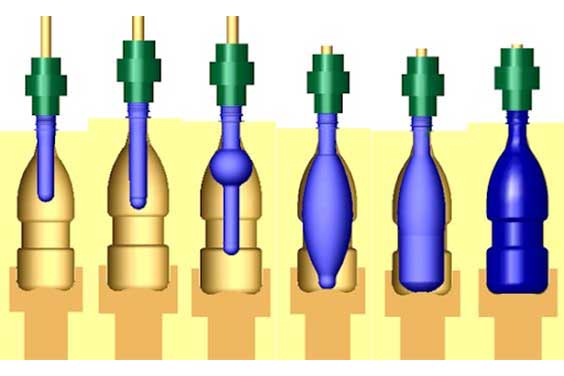
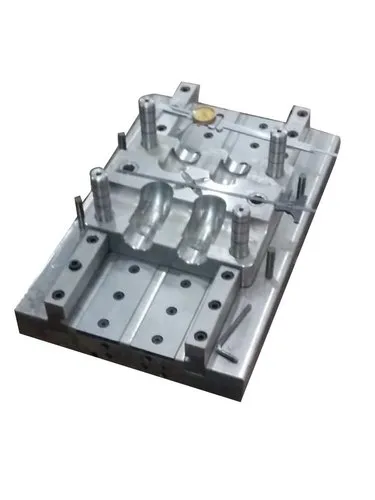
| Definition | A manufacturing process used to create hollow plastic parts by inflating a heated plastic tube inside a mould. | A process where molten plastic is injected into a mould cavity to form solid plastic parts. |
| Product Type | Typically used for hollow objects like bottles, containers, and tanks. | Used for solid parts such as automotive components, toys, and electronics housings. |
| Material Used | Commonly uses thermoplastics like HDPE, LDPE, PET, and PP. | Also uses thermoplastics like ABS, PP, PS, and PC. |
| Mould Design | Simpler and cheaper compared to injection moulds. | More complex and expensive due to precision and complexity. |
| Wall Thickness Control | Less precise; wall thickness may vary. | High precision and control over wall thickness. |
| Cycle Time | Generally shorter, especially for small bottles. | Longer due to the cooling and solidification process. |
| Tooling Cost | Lower initial cost. | Higher initial cost due to complex moulds. |
| Production Volume | Best suited for high-volume production of hollow items. | Ideal for high-volume production of detailed, solid parts. |
| Process Types | Includes extrusion blow moulding, injection blow moulding, and stretch blow moulding. | Includes standard injection moulding and variations like overmoulding and insert moulding. |
| Surface Finish | Usually moderate, may require secondary finishing. | Excellent surface finish, often needs little post-processing. |