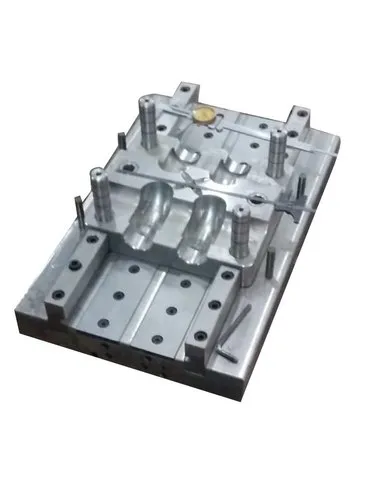
A Complete Guide to Temperature Distribution, Product Quality, and Process Efficiency
Uniform heating is one of the most important factors in successful compression moulding. It ensures that the mould and moulding material receive consistent heat throughout the process, helping the material flow, cure, or solidify as required.
In compression moulding, material is placed inside a heated mould cavity, and pressure is applied to shape it. The material is then processed under controlled temperature and pressure conditions before the finished component is removed.
If heating is uneven, different areas of the component may experience different processing conditions. This can lead to incomplete curing, surface defects, dimensional variations, internal stresses, and inconsistent product quality.
The primary purpose of uniform heating is to achieve consistent material properties, accurate dimensions, a good surface finish, and repeatable production results.
1. What Is Uniform Heating?
Uniform heating refers to maintaining a sufficiently consistent temperature across the mould and its cavity during the moulding process.
Ideally, all critical regions of the mould should remain within the specified temperature range throughout the required processing cycle.
Uniform heating does not necessarily mean that every point must have exactly the same temperature. Small variations may occur because of mould geometry, heater placement, material properties, and heat transfer conditions.
The objective is to keep temperature differences within acceptable limits for the material and component being manufactured.
Factors affecting uniform heating
Several factors influence temperature distribution in a compression mould:
- Heater placement and spacing
- Mould material and thickness
- Heating channel design
- Temperature controller accuracy
- Thermocouple or sensor placement
- Mould geometry
- Contact between mould components
- Heat loss to the surroundings
- Production cycle duration
- Frequency of mould opening and closing
Careful design, installation, and maintenance help reduce unwanted temperature variations.
2. Why Is Uniform Heating Important?
2.1 Ensures Consistent Curing
For thermosetting plastics and rubber compounds, heating activates the curing process. The material must receive sufficient heat for the required period to develop its intended properties.
If one section of the mould is colder than another, the material in that region may cure more slowly or remain insufficiently cured when the part is removed.
Uneven curing can result in:
- Soft or weak areas
- Inconsistent hardness
- Reduced mechanical strength
- Dimensional instability
- Poor resistance to heat or chemicals
- Variations between finished components
Uniform heating helps the material reach the required curing condition throughout the component.
Important: Excessive temperature can also cause overcuring or thermal degradation in susceptible materials. The goal is not simply to maximise heat, but to maintain the correct temperature profile.
2.2 Improves Material Flow
During compression moulding, the material must spread through the cavity before curing or solidification prevents further movement.
Temperature influences the viscosity and flow characteristics of many moulding materials.
If the mould is too cold in certain areas, the material may become more resistant to flow or may not fill narrow sections completely.
This can cause:
- Incomplete filling
- Rounded or missing edges
- Poor reproduction of surface details
- Uneven material distribution
- Defects around ribs and narrow features
Uniform heating promotes more consistent flow, provided the material is processed within its recommended temperature range.
2.3 Reduces Internal Stresses
Uneven heating can create temperature differences between sections of a component. These differences may cause parts of the material to cure, cool, or shrink at different rates.
The resulting internal stresses may contribute to cracking, warpage, or dimensional instability.
Uniform heating helps reduce these differences and supports more consistent material behaviour.
However, heating is only one factor affecting internal stress. Material formulation, component geometry, pressure, cooling conditions, and demoulding practices also play important roles.
2.4 Improves Dimensional Accuracy
Accurate dimensions are essential for components that must fit with other parts or meet precise engineering specifications.
Uneven mould temperatures can cause variations in curing, shrinkage, and thermal expansion.
As a result, components may exhibit:
- Differences in length or width
- Variations in thickness
- Warped surfaces
- Uneven edges
- Inconsistent hole or feature dimensions
Maintaining a controlled temperature distribution helps improve dimensional repeatability.
2.5 Enhances Surface Finish
Uniform heating contributes to a consistent surface appearance by supporting more predictable material flow and curing.
Uneven temperatures may contribute to:
- Dull or glossy patches
- Uneven surface texture
- Localised scorching
- Incomplete surface reproduction
- Surface blisters in combination with trapped gases or other material-related issues
A clean mould, suitable release agent, correct material preparation, and appropriate pressure are also necessary for achieving a good surface finish.
3. Problems Caused by Uneven Heating
Uneven heating can create different defects depending on the material and the direction and magnitude of the temperature variation.
| Defect | How uneven heating may contribute |
|---|---|
| Incomplete filling | Colder regions may restrict material flow or cause premature solidification or curing. |
| Inconsistent curing | Different sections may receive different effective curing conditions. |
| Warpage | Uneven curing, shrinkage, or cooling can distort the component. |
| Surface defects | Local temperature differences can affect material flow and surface reproduction. |
| Cracking | Temperature-related stress or uneven material properties may contribute to cracking. |
| Dimensional variation | Differences in thermal expansion, curing, or shrinkage may affect final dimensions. |
| Localised scorching | Hot spots may expose material to excessive temperatures. |
| Longer cycle times | Cold regions may require additional processing time to reach the required condition. |
These defects do not always result from uneven heating alone. Proper troubleshooting should also examine material quality, mould design, pressure, venting, and the processing cycle.
4. Uniform Heating and Different Moulding Materials
The importance of uniform heating varies depending on the type of material being processed.
4.1 Thermosetting Plastics
Thermosetting materials undergo a chemical curing reaction when heated.
Uniform heating helps ensure that the reaction proceeds consistently throughout the component.
If the temperature is too low, curing may be incomplete. If it is too high, the material may cure prematurely or degrade.
Common applications include electrical components, appliance parts, industrial housings, and moulded handles.
4.2 Rubber Compounds
Rubber compounds generally require controlled heating to achieve the required degree of vulcanisation or curing.
Uneven heating can produce differences in hardness, elasticity, strength, and dimensional stability.
For rubber components such as seals, gaskets, and vibration-control parts, consistent curing is essential for reliable performance.
4.3 Thermoplastic Materials
Some thermoplastic materials can be processed using compression moulding. Their behaviour differs from that of thermosetting materials because they soften when heated and solidify as they cool.
Uniform heating helps produce consistent softening and material distribution. Controlled cooling is also important for reducing residual stress, shrinkage differences, and warpage.
4.4 Composite Materials
Compression moulding is used for fibre-reinforced composites and other engineered material systems.
Uniform heating helps control resin flow, consolidation, and—where applicable—curing.
Temperature variations may lead to uneven resin distribution, incomplete consolidation, or differences in material properties.
The appropriate heating cycle depends on the resin system, reinforcement, component thickness, and tooling design.
5. How to Achieve Uniform Heating
Uniform heating requires a combination of suitable mould design, reliable temperature control, proper maintenance, and consistent operating procedures.
5.1 Use Proper Heater Placement
Heaters should be positioned to provide adequate heat to all critical mould regions.
Poor heater placement may create hot and cold spots.
During mould design, engineers should consider:
- Cavity geometry
- Mould thickness
- Distance between heaters and the cavity
- Heat transfer through the mould material
- Temperature-sensitive component features
A well-designed heating arrangement helps maintain a more consistent temperature distribution.
5.2 Use Accurate Temperature Controllers
Temperature controllers regulate the heating system and help maintain the required setpoint.
However, the displayed temperature may not represent the temperature throughout the entire mould.
A controller may indicate the correct temperature while some cavity regions remain too cold or become too hot.
For this reason, suitable sensor placement and periodic verification are important.
5.3 Position Temperature Sensors Correctly
Thermocouples and other temperature sensors provide information about mould temperature.
Their location influences the readings they produce.
Sensors should be installed at representative positions based on the mould design and the manufacturer’s recommendations.
For complex moulds, temperature measurements at multiple locations may be necessary to identify localised hot and cold spots.
5.4 Allow Sufficient Preheating Time
A mould should reach its specified operating condition before production begins.
Starting production before the mould has stabilised may cause the first components to experience different conditions from those produced later.
The required preheating time depends on:
- Mould size and mass
- Heating system capacity
- Mould material
- Heater placement
- Target operating temperature
- Temperature-control method
Production should begin only when the relevant mould regions have reached the required conditions.
5.5 Maintain Consistent Mould Temperature
The mould temperature should remain within the approved process window during production.
Frequent temperature fluctuations may result from:
- Unstable heater control
- Poor sensor contact
- Heater failure
- Excessive heat loss
- Inconsistent production cycles
- Incorrect controller settings
Monitoring temperature trends helps identify these issues before they cause a large number of defective components.
5.6 Maintain the Heating System
Routine maintenance helps preserve heating performance.
Recommended checks include:
- Inspecting heaters for damage
- Checking electrical connections
- Verifying temperature sensors
- Testing controller performance
- Inspecting heating channels, where fitted
- Checking insulation
- Looking for signs of uneven heating
Maintenance should follow the equipment manufacturer’s instructions and applicable safety procedures.
6. The Role of Mould Material in Heat Distribution
The mould material affects how heat moves through the tool and how evenly the cavity temperature can be maintained.
Important properties include thermal conductivity, heat capacity, and thermal expansion.
| Property | Importance |
|---|---|
| Thermal conductivity | Determines how readily heat travels through the mould material. |
| Heat capacity | Influences how much energy is needed to raise the mould’s temperature. |
| Thermal expansion | Affects dimensional changes as the mould heats and cools. |
| Thermal stability | Influences the mould’s ability to maintain its properties during repeated heating cycles. |
For example, mould materials with higher thermal conductivity can distribute heat more readily, but the final temperature distribution still depends on the complete mould design, heater layout, and operating conditions.
Selecting a mould material therefore requires consideration of the material being processed, production requirements, tooling geometry, and expected service life.
7. Uniform Heating and Production Efficiency
Uniform heating improves more than just product quality. It can also influence manufacturing productivity and operating costs.
Reduced scrap
When temperature distribution is stable, fewer parts may be rejected for incomplete curing, warpage, surface defects, or dimensional variation.
More consistent cycle times
A mould with cold regions may require additional time to achieve the required processing condition. Improving temperature uniformity can help establish a more predictable cycle.
Lower finishing costs
Reducing flash, surface defects, and dimensional variation may decrease the amount of trimming, rework, and inspection required.
Improved tooling life
Consistent heating can reduce undesirable thermal gradients and associated stresses in the mould. However, tooling life also depends on material selection, mechanical loading, maintenance, and operating conditions.
Better process repeatability
Stable temperature conditions make it easier to reproduce acceptable components across different production runs.
8. How to Check Temperature Uniformity
Temperature uniformity should be verified rather than assumed.
Step 1: Stabilise the mould
Allow the mould to reach its specified operating condition before taking measurements.
Step 2: Measure multiple locations
Use suitable calibrated temperature-measurement equipment to evaluate relevant regions of the mould.
Measurements may include:
- The centre of the cavity
- The cavity edges
- Thick mould sections
- Areas near heaters
- Areas farthest from heaters
- Regions associated with recurring defects
The exact measurement locations depend on the mould design.
Step 3: Record the results
Create a temperature map showing the measured values at different locations.
This helps identify hot spots, cold spots, and recurring temperature patterns.
Step 4: Compare readings with process requirements
Determine whether the measured variation falls within the acceptable limits for the material and component.
There is no single temperature-uniformity tolerance suitable for every compression moulding application.
Step 5: Correct the source of variation
Depending on the findings, corrective actions may include:
- Replacing faulty heaters
- Repairing temperature sensors
- Adjusting heater control
- Improving insulation
- Correcting heating-system settings
- Revising the heating-channel arrangement
- Allowing additional stabilisation time
After making changes, repeat the measurements to confirm that the temperature distribution has improved.
Safety note: Infrared thermometers can be useful for checking accessible surfaces, but their readings depend on surface emissivity, viewing angle, and other factors. They may not accurately represent the temperature inside the mould or at the cavity surface. Use an appropriate measurement method for the application.
9. Troubleshooting Uneven Heating
The following table summarises common heating problems and their possible solutions.
| Problem observed | Possible cause | Recommended action |
|---|---|---|
| One side of the part is undercured | Cold region in the mould | Measure temperature across the mould and inspect the heating system. |
| Repeated scorching in one area | Localised hot spot | Verify temperature at the affected location and check heater control. |
| Parts vary between cycles | Temperature instability | Check sensors, controllers, heaters, and cycle consistency. |
| Excessive warpage | Uneven heating or cooling | Map mould temperatures and review the cooling or demoulding procedure. |
| Poor flow in certain regions | Local temperature too low or unsuitable charge placement | Check temperature distribution and material placement. |
| Surface appearance varies across the part | Uneven temperature, contamination, or inconsistent release | Inspect the mould surface, temperature profile, and release procedure. |
| Long or inconsistent cycle times | Slow heating or cold spots | Verify heater performance and allow adequate stabilisation. |
The recommended action should always be confirmed through controlled trials and inspection of the resulting components.
10. Best Practices for Maintaining Uniform Heating
To achieve consistent results in compression moulding, manufacturers should establish a standard heating and monitoring procedure.
Key practices include:
- Follow material specifications: Use the recommended mould temperature and processing cycle for the particular material.
- Preheat consistently: Allow the mould to reach a stable operating condition before production.
- Monitor multiple locations: Check critical regions instead of relying on a single temperature reading.
- Maintain heating equipment: Inspect heaters, sensors, controllers, and insulation regularly.
- Keep the mould clean: Material deposits can interfere with heat transfer and affect surface quality.
- Control charge placement: Consistent placement helps produce repeatable material flow.
- Record process data: Document temperature, pressure, time, material batch, and defect observations.
- Investigate recurring defects: Use defect location and temperature measurements to identify possible hot or cold spots.
- Validate changes: Confirm improvements through repeatable production trials.
- Train operators: Ensure that operators understand the relationship between temperature distribution and product quality.
Conclusion
Uniform heating is essential for achieving reliable and repeatable results in compression moulding. It supports consistent curing or softening, improves material flow, helps maintain dimensional accuracy, and reduces the risk of defects such as warpage, incomplete filling, surface imperfections, and inconsistent material properties.
Achieving uniform heating requires suitable mould design, correctly positioned heaters and sensors, reliable temperature control, sufficient preheating, and regular maintenance.
The key principle is to control the temperature throughout the mould—not merely at the controller’s setpoint. By measuring temperature at critical locations and correcting the causes of hot and cold spots, manufacturers can improve product quality, reduce material waste, and increase production efficiency.