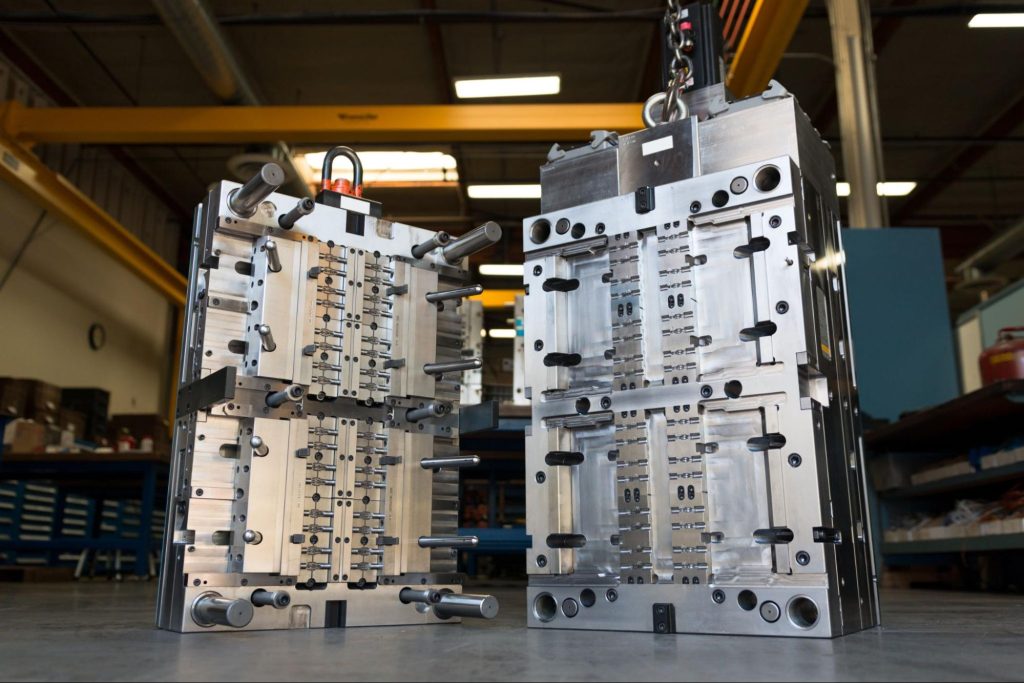
In the stationery manufacturing industry, injection mould design plays a critical role in productivity, cost efficiency, and product quality. Two commonly used mould types are multi-cavity moulds and family moulds. Each has distinct advantages and limitations depending on production requirements, product design, and business strategy.
1. Multi-Cavity Moulds
Definition
A multi-cavity mould contains multiple identical cavities, producing the same part in each cycle. For example, a pen cap mould may have 8, 16, or even 32 identical cavities.
Key Features
- Produces identical parts in every cavity
- High production output per cycle
- Balanced runner and cooling systems required
- Suitable for mass production
Advantages
- High Productivity: Ideal for large-volume stationery items like pens, caps, rulers, and sharpeners
- Consistency: Ensures uniform quality across all parts
- Lower Cost per Unit: Economies of scale reduce per-piece manufacturing cost
- Automation Friendly: Works well with high-speed automated systems
Limitations
- High Initial Investment: More cavities increase tooling cost
- Complex Balancing: Requires precise runner and cooling balance
- Less Flexibility: Only one product type can be produced at a time
2. Family Moulds
Definition
A family mould contains different cavities for producing multiple related parts in a single cycle. For example, a pen body, cap, and clip can be moulded together.
Key Features
- Produces different components in one shot
- Designed for parts that are assembled together
- Requires careful design to balance filling and cooling
Advantages
- Reduced Assembly Time: All components produced simultaneously
- Lower Tooling Cost (in some cases): One mould instead of multiple tools
- Inventory Efficiency: Minimizes mismatch in component availability
- Flexibility: Useful for small to medium production volumes
Limitations
- Balancing Challenges: Different part sizes and shapes can lead to uneven filling
- Quality Variation Risk: Smaller or larger parts may have defects if not balanced properly
- Limited Scalability: Not ideal for very high production volumes
- Maintenance Complexity: Wear and tear may differ across cavities
3. Key Comparison
| Aspect | Multi-Cavity Mould | Family Mould |
|---|---|---|
| Product Type | Single identical part | Multiple different parts |
| Production Volume | High | Medium to low |
| Tool Cost | High | Moderate |
| Cycle Efficiency | Very high | Moderate |
| Flexibility | Low | High |
| Balancing Complexity | Medium | High |
4. Application in Stationery Industry
Multi-Cavity Moulds Used For:
- Ball pen components (caps, barrels)
- Pencil parts
- Erasers
- Standardized rulers
Family Moulds Used For:
- Complete pen sets (body + cap + clip)
- Geometry box components
- Marker assemblies
- Small stationery kits
5. Selection Guidelines
Choosing between multi-cavity and family moulds depends on:
- Production Volume: High demand favors multi-cavity moulds
- Product Complexity: Assemblies favor family moulds
- Cost Considerations: Initial investment vs long-term savings
- Machine Capacity: Clamp force and shot size limitations
- Quality Requirements: Tighter tolerances may favor single-product moulds
Conclusion
Both multi-cavity and family moulds are essential in stationery mould manufacturing, each serving different production needs. Multi-cavity moulds excel in high-volume, standardized production, while family moulds provide flexibility and efficiency for assembling multiple related parts. A well-informed selection based on production goals, cost, and product design ensures optimal manufacturing performance and profitability.