Sustainability in Die and Mould Manufacturing

Sustainability in die and mould manufacturing refers to the adoption of environmentally responsible practices, materials, and technologies throughout the design, production, and lifecycle of dies and moulds. As global industries face growing pressure to reduce carbon footprints and comply with environmental regulations, die and mould manufacturers are increasingly focusing on sustainable operations without compromising on […]

Sustainability in Die and Mould Manufacturing Read More »

Collapsible Core Moulds

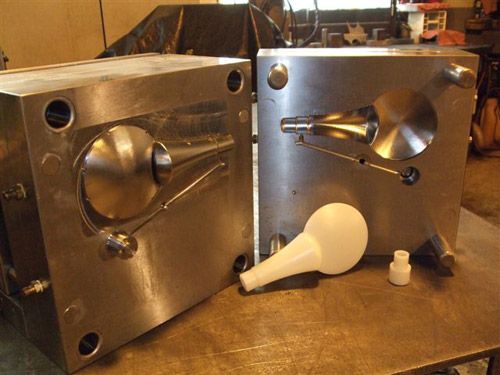
Collapsible core moulds are specialized tooling components used in injection moulding to produce undercuts or complex internal features in plastic parts, which cannot be demoulded using traditional straight-pull moulds. These cores collapse inward after moulding to allow easy ejection of the part. Purpose and Application: In plastic part design, internal features such as threads, grooves,

Collapsible Core Moulds Read More »

Challenges in mass production of houseware moulds

Mass production of houseware moulds—used in manufacturing everyday items like kitchen utensils, storage containers, and plastic household products—plays a crucial role in the consumer goods industry. However, this process presents a variety of technical, logistical, and economic challenges. Below are some of the key issues faced in this field: 1. Design Complexity and Customization Frequent

Challenges in mass production of houseware moulds Read More »

Smart Moulds with Sensor Integration

The rise of Industry 4.0 has driven the manufacturing sector toward smarter, data-driven processes. In this context, Smart Moulds with Sensor Integration are revolutionizing moulding technologies by incorporating real-time data acquisition, monitoring, and control within the mould itself. These smart moulds use embedded sensors to enhance product quality, reduce cycle times, and minimize downtime. What

Smart Moulds with Sensor Integration Read More »

Unscrewing Moulds for Threaded Parts

In plastic injection moulding, producing threaded components—such as bottle caps, closures, and threaded connectors—poses unique challenges. Unlike standard moulded parts that can be ejected using simple ejector pins or sleeves, threaded parts often require unscrewing mechanisms to safely remove the part without damaging the threads. This is where unscrewing moulds come into play. These specialized

Unscrewing Moulds for Threaded Parts Read More »

Recyclable materials and die design adaptation

1. Introduction In modern manufacturing, sustainability is a core focus. The use of recyclable materials plays a key role in reducing environmental impact, conserving resources, and meeting regulatory standards. However, integrating recyclable materials into production processes often requires significant adaptations in die design to ensure product quality and process efficiency. 2. Recyclable Materials in Manufacturing

Recyclable materials and die design adaptation Read More »

Lightweight Materials for Mould Bases

Mould bases are foundational components in mould-making, providing the structural support required during the injection moulding process. Traditionally, these bases are made from heavy-duty tool steels to ensure durability and rigidity. However, with the demand for faster cycle times, easier handling, reduced costs, and energy savings, there is a growing interest in lightweight materials for

Lightweight Materials for Mould Bases Read More »

Stack Mould Design and Its Applications

1. Introduction to Stack Mould Design Stack mould design is an advanced moulding technique primarily used in injection moulding processes to increase productivity and optimize space utilization. Unlike conventional single-face moulds, stack moulds use multiple parting lines (or “faces”) arranged in a vertical stack within a single mould base, allowing for the simultaneous production of

Stack Mould Design and Its Applications Read More »

Global market trends for houseware moulds

First, to clarify: by “houseware moulds” I interpret moulds used in producing houseware / household goods — this includes moulds for kitchenware, bakeware, tableware, storage containers, cleaning tools, etc. These moulds might be injection moulds, casting moulds, silicone / rubber moulds, metal or ceramic moulds, etc. Key Market Drivers Growing Demand for Houseware ProductsThe overall

Global market trends for houseware moulds Read More »

High-Speed Die Manufacturing Techniques

Die manufacturing plays a critical role in high-volume production processes, particularly in industries such as automotive, aerospace, electronics, and consumer goods. As demand for faster turnaround times, greater precision, and cost-efficiency increases, the adoption of high-speed manufacturing techniques for dies has become essential. High-speed die manufacturing integrates advanced materials, CNC machining, CAD/CAM integration, and additive

High-Speed Die Manufacturing Techniques Read More »

Scroll to Top