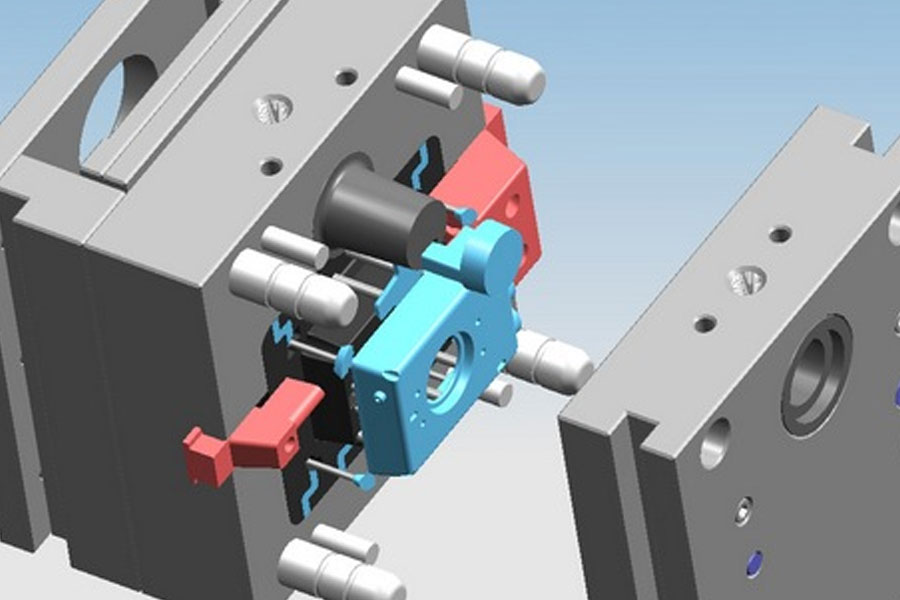
Die design is a crucial step in the manufacturing of plastic houseware products such as containers, bowls, storage boxes, buckets, and kitchenware. The primary goal is to ensure mass production of defect-free, aesthetically appealing, and dimensionally accurate parts. Below are the core principles involved:
1. Understanding Product Requirements
Functionality: The die must be designed considering how the product will be used — whether it holds food, liquid, or is exposed to temperature variations.
Aesthetics: Surface finish, color uniformity, and minimal visible defects (like weld lines or sink marks) are essential for consumer products.
Ergonomics: Handles, grips, and edges must be comfortable for users, influencing cavity shape and design.
2. Material Selection
Plastic Type: Common materials include PP (Polypropylene), HDPE, ABS, and PET. Each has specific flow, shrinkage, and cooling characteristics.
Additives Compatibility: The die should accommodate materials with colorants, UV stabilizers, or fillers that might affect flow and cooling.
3. Parting Line and Die Configuration
Clear Parting Line: Position it to minimize flash and preserve appearance. For houseware, it’s often placed on a non-visible side.
Core and Cavity Design: Clear differentiation of male (core) and female (cavity) parts based on product geometry and ease of ejection.
4. Wall Thickness Uniformity
Consistent Wall Thickness: To prevent warping, sink marks, and incomplete filling.
Draft Angle: Provide adequate draft (1–3° typically) for easy part ejection without damaging surfaces.
5. Gating System Design
Gate Type and Location: Must allow smooth and complete filling while avoiding weld lines in critical visual areas.
Types of Gates: Pinpoint, submarine, or edge gates are chosen based on product size and shape.
6. Venting and Air Traps
Venting Channels: Essential for releasing trapped air and avoiding burn marks or short shots.
Placement: Strategically placed on thin wall sections and ends of flow paths.
7. Cooling System Design
Efficient Cooling: Uniform and fast cooling reduces cycle time and improves dimensional stability.
Cooling Channels: Designed around thick sections, near cores, and in high-heat zones.
8. Ejection System
Type of Ejectors: Pins, sleeves, blades, or stripper plates based on part shape and surface.
Location and Balance: Even distribution avoids part deformation during ejection.
9. Mold Material and Surface Finish
Material Choice: Hardened steel for long life; aluminum for prototyping or short runs.
Surface Texturing: For aesthetic finish (matte, gloss, patterned) using polishing or EDM.
10. Allowance for Shrinkage
Shrinkage Compensation: Design die cavity slightly larger based on the shrink rate of the chosen plastic (typically 0.5–2%).
11. Maintenance and Durability Considerations
Ease of Maintenance: Inserts and removable components should be used in high-wear areas.
Corrosion Resistance: Especially if processing hygroscopic or chemically reactive plastics.
Conclusion
Designing dies for plastic houseware products is a balance of technical precision and user-centric thinking. A well-designed die leads to high-quality parts, reduces waste, and optimizes production efficiency. By adhering to these principles, manufacturers can meet both aesthetic and functional demands in the competitive houseware market.