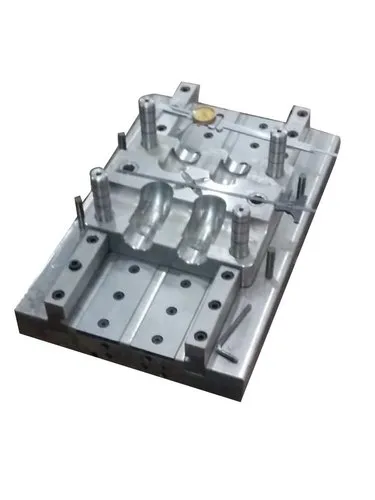
Rapid prototyping plays a crucial role in medical mould development by enabling faster design validation, reduced development cycles, and improved product quality. In the highly regulated medical industry, where precision and compliance are critical, rapid prototyping helps manufacturers test concepts, identify flaws early, and ensure that moulds meet stringent requirements before full-scale production.
Importance in Medical Mould Development
Medical components such as syringes, diagnostic devices, surgical instruments, and implantable parts require high accuracy and consistency. Rapid prototyping supports:
- Early detection of design issues
- Faster time-to-market
- Reduced tooling risks and costs
- Improved communication between design and manufacturing teams
Common Rapid Prototyping Techniques
- 3D Printing (Additive Manufacturing)
- Technologies such as SLA, SLS, and FDM are widely used
- Suitable for complex geometries and fine details
- Helps in creating functional and visual prototypes
- CNC Machining
- Produces high-precision prototypes using actual production materials
- Ideal for testing mechanical properties and tolerances
- Vacuum Casting
- Used for small batch production
- Provides parts with properties close to injection-moulded components
- Soft Tooling
- Uses aluminum or soft steel moulds for low-volume production
- Bridges the gap between prototyping and mass production
Applications in Medical Mould Development
- Design Validation: Ensuring part geometry meets functional requirements
- Fit and Assembly Testing: Verifying compatibility with other components
- Ergonomic Evaluation: Assessing usability of medical devices
- Regulatory Testing: Supporting pre-clinical trials and documentation
- Material Selection: Testing different biocompatible materials
Benefits
- Reduced Development Time: Faster iterations accelerate product launch
- Cost Efficiency: Minimizes expensive rework in final tooling
- Enhanced Design Accuracy: Improves precision before mould manufacturing
- Risk Mitigation: Identifies defects early in the design stage
- Customization: Enables patient-specific or application-specific designs
Challenges
- Material Limitations: Prototype materials may differ from production-grade materials
- Surface Finish Differences: May not fully replicate injection-moulded finishes
- Regulatory Compliance: Prototypes must still align with medical standards
- Cost for Complex Prototypes: Advanced techniques can be expensive
Best Practices
- Select the appropriate prototyping method based on application
- Use biocompatible materials where possible
- Integrate rapid prototyping early in the design phase
- Collaborate closely between design, tooling, and quality teams
- Maintain proper documentation for regulatory approval
Future Trends
- Increased use of biocompatible 3D printing materials
- Integration of digital simulation and prototyping
- Adoption of AI-driven design optimization
- Growth in patient-specific medical devices
Conclusion
Rapid prototyping is an essential tool in modern medical mould development. It enhances design accuracy, reduces risks, and accelerates product development while ensuring compliance with strict medical standards. By leveraging advanced prototyping technologies, manufacturers can deliver high-quality, reliable, and safe medical products efficiently.