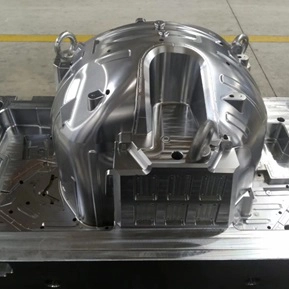
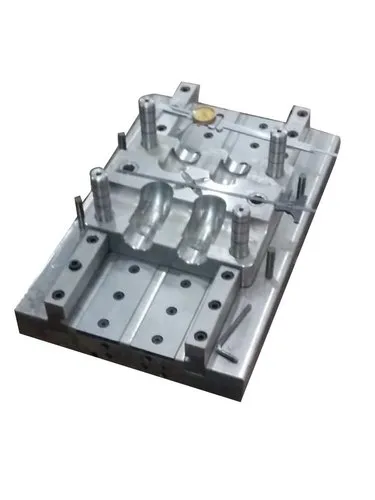
In the automotive industry, moulds play a crucial role in shaping and forming various vehicle components. These moulds are used in processes like injection molding, die casting, compression molding, and blow molding to manufacture both exterior and interior parts of vehicles. The selection of mould type depends on the component material, design complexity, production volume, and performance requirements.
1. Injection Moulds
Purpose: Used for manufacturing plastic components.
Process: Molten plastic is injected into a mould cavity, cooled, and ejected in the desired shape.
Common Applications:
Bumpers
Dashboards
Door panels
Grilles
Consoles
Headlamp housings
Advantages:
High precision
Fast cycle time
Suitable for mass production
2. Compression Moulds
Purpose: Used for forming composite materials and thermosetting plastics.
Process: Material is placed in a heated mould cavity, compressed, and cured under heat and pressure.
Common Applications:
Interior trim parts
Structural components
Insulation panels
Engine covers
Advantages:
Strong, lightweight parts
Good surface finish
Suitable for high-strength components
3. Blow Moulds
Purpose: Used for hollow plastic parts.
Process: Heated plastic is blown into a mould to form a hollow shape.
Common Applications:
Fuel tanks
Air ducts
Washer fluid reservoirs
Coolant overflow bottles
Advantages:
Efficient for hollow shapes
Lightweight components
Cost-effective for large volumes
4. Die Casting Moulds (Dies)
Purpose: Used for metal components, especially aluminum, magnesium, or zinc parts.
Process: Molten metal is forced into a steel mould under high pressure.
Common Applications:
Engine blocks
Transmission housings
Wheel rims
Brackets and structural supports
Advantages:
High strength
Excellent dimensional accuracy
Suitable for complex geometries
5. Sheet Metal Stamping Dies
Purpose: Used for shaping metal sheets through stamping, bending, and forming.
Process: A press machine forces sheet metal into the die to form specific shapes.
Common Applications:
Body panels (doors, hoods, roofs)
Chassis parts
Fenders
Frames
Advantages:
Fast and repeatable production
Good for large parts
Strong and durable products
6. Thermoforming Moulds
Purpose: Used for forming thermoplastic sheets into specific shapes by heating and pressing.
Process: Heated plastic sheets are pressed into a mould using vacuum or pressure.
Common Applications:
Interior panels
Trunk liners
Packaging trays
HVAC duct covers
Advantages:
Lower tooling cost
Short lead times
Suitable for large, thin-walled parts
7. Rubber Moulds
Purpose: Used for forming rubber or elastomeric components.
Process: Rubber is placed in the mould and vulcanized under heat and pressure.
Common Applications:
Seals and gaskets
Bushings
Mounts
Weather strips
Advantages:
Excellent flexibility
Good for vibration dampening
Resistant to wear and tear
Conclusion
Automobile manufacturing relies on a wide range of moulds to produce high-quality parts efficiently and cost-effectively. Each type of mould is optimized for specific materials and production techniques, ensuring that modern vehicles meet the demands of performance, safety, and design. Understanding the different mould types helps manufacturers choose the right process for their components, ultimately impacting the vehicle’s quality and performance.