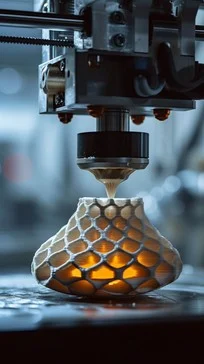
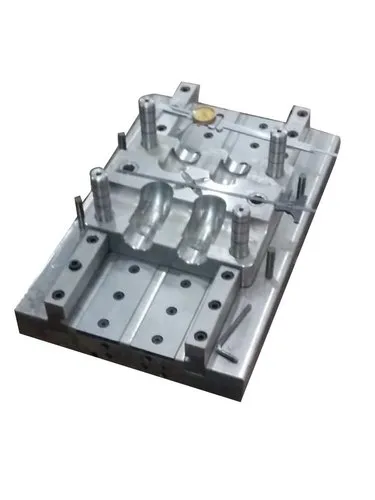
The packaging industry is continually evolving, and one of the most significant technological advancements in recent years is the integration of 3D printing into cap and closure prototyping. From beverage bottles to pharmaceutical containers, caps and closures play a vital role in product integrity, user convenience, and brand identity. Using 3D printing in the development of these components has revolutionized the way prototypes are created and tested.
1. Why 3D Printing for Cap and Closure Prototyping?
Traditionally, prototyping caps and closures involved costly and time-consuming methods such as CNC machining or injection molding. These processes often required expensive tooling and weeks of lead time, limiting innovation and agility. 3D printing offers a faster, more cost-effective solution by enabling rapid prototyping without the need for hard tooling.
Key advantages include:
Speed: Rapid turnaround times—prototypes can be created in hours instead of days or weeks.
Cost Efficiency: Eliminates tooling costs, making it affordable to iterate designs.
Design Flexibility: Complex geometries and internal threads can be easily printed.
Functional Testing: Allows testing of fit, function, sealing, ergonomics, and usability before mass production.
2. Applications in the Development Process
3D printing supports various stages of the cap and closure design process:
Conceptual Prototyping: Early visualization and form-factor testing using PLA or other inexpensive materials.
Fit and Functional Testing: Engineering-grade materials allow for real-world simulations including torque testing, snap-fit, and hinge movement.
Consumer Feedback Models: High-fidelity prints using SLA or PolyJet technologies for consumer focus groups and stakeholder presentations.
Low-Volume Production: Suitable for pre-production or market testing runs before committing to full-scale manufacturing.
3. Common 3D Printing Technologies Used
Different 3D printing technologies offer distinct benefits for prototyping:
FDM (Fused Deposition Modeling): Cost-effective and widely used for initial mockups.
SLA (Stereolithography): Offers high resolution and surface finish—ideal for presentation models.
PolyJet: Enables multi-material and multi-color printing, simulating overmolded closures or soft-touch grips.
SLS (Selective Laser Sintering): Produces durable, functional prototypes suitable for mechanical testing.
4. Materials for Prototyping Caps and Closures
The choice of material is critical for accurately simulating production closures. Some commonly used materials include:
ABS and PLA: Great for basic form and fit evaluation.
Nylon (PA12): Durable, flexible, and suitable for functional testing.
Photopolymer Resins: Used in SLA for detailed, presentation-quality models.
TPU/TPE: Useful for flexible components or closures requiring a rubber-like feel.
5. Industry Impact and Case Examples
Many leading packaging manufacturers are now integrating 3D printing in their R&D processes:
Beverage Industry: Rapid development of tamper-evident closures with ergonomic enhancements.
Pharmaceuticals: Prototyping child-resistant closures with precision threads.
Cosmetics: Creation of luxury closure designs with intricate detailing and complex curves.
The ability to produce, test, and revise multiple iterations in a fraction of the time significantly enhances innovation and reduces time-to-market.
6. Challenges and Considerations
While 3D printing offers numerous advantages, there are some limitations:
Material mismatch: 3D printed materials may not perfectly match injection-molded plastics.
Tolerance issues: Threaded or snap-fit closures may require post-processing for optimal performance.
Scale limitations: 3D printing is less suitable for high-volume production but ideal for development stages.
7. Future Outlook
As 3D printing technology continues to advance, its role in cap and closure development will expand further. With innovations like multi-material printing, biodegradable prototyping materials, and AI-driven design optimization, the packaging industry is poised for even greater agility and creativity in product development.
Conclusion
3D printing has transformed cap and closure prototyping into a faster, more flexible, and cost-effective process. By enabling rapid iterations and functional testing, it allows manufacturers to bring better, more innovative products to market in less time. As adoption grows, it will continue to drive efficiency and innovation across the packaging sector.