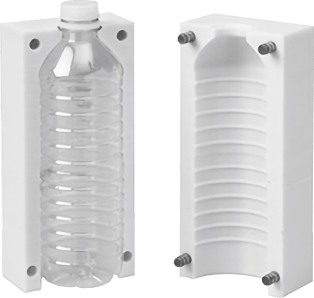
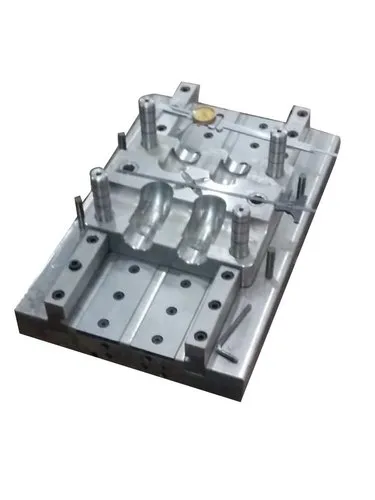
Blow molding is a widely used manufacturing process for producing hollow plastic parts such as bottles, containers, and automotive components. Before committing to full-scale production, prototyping is essential to validate the design, functionality, and manufacturability of blow molded products. The right prototyping techniques can significantly reduce development time, cost, and risk.
1. Importance of Prototyping in Blow Molding
Prototyping in blow molding helps:
Evaluate product aesthetics and ergonomics.
Detect and correct design flaws.
Assess material behavior and wall thickness distribution.
Verify mold design and part functionality.
Reduce time-to-market by streamlining production iterations.
2. Common Prototyping Techniques
A. 3D Printing (Additive Manufacturing)
Process: Layer-by-layer material deposition using technologies like FDM, SLA, or SLS.
Applications: Create non-functional or low-pressure functional prototypes for initial form and fit testing.
Advantages: Fast, low-cost, and ideal for early-stage design validation.
Limitations: Cannot replicate exact blow molding properties (e.g., uniform wall thickness).
B. CNC Machining
Process: Material is removed from a solid block using computer-controlled machines.
Applications: Used to create precise prototypes, especially for mold inserts or high-fidelity parts.
Advantages: High accuracy, surface finish, and material selection.
Limitations: Time-consuming and more expensive for complex geometries.
C. Vacuum Forming / Thermoforming
Process: A heated plastic sheet is formed over a mold using vacuum.
Applications: Useful for evaluating shape and surface features, particularly for larger parts.
Advantages: Quick turnaround and economical.
Limitations: Does not replicate the blow molding process or internal geometry.
D. Soft Tooling (Prototype Molds)
Process: Creating temporary molds from aluminum or other low-cost materials.
Applications: Enables short-run blow molding to test material flow, wall thickness, and structural performance.
Advantages: Allows realistic testing using actual blow molding machines.
Limitations: Limited mold life and higher cost than non-functional prototyping.
E. Blow Mold Simulation Software
Process: Uses CAD and CAE tools to simulate the blow molding process.
Applications: Predicts wall thickness distribution, cooling behavior, and potential defects.
Advantages: Eliminates physical prototyping in early design stages; helps optimize mold design.
Limitations: Requires skilled personnel and reliable input data.
3. Choosing the Right Prototyping Method
The best technique depends on:
Stage of product development: Early-stage concepts may use 3D printing; late-stage testing may require soft tooling.
Functionality requirements: If mechanical performance must be tested, blow molded prototypes are essential.
Budget and timeline: 3D printing is fast and cheap; soft tooling involves more time and cost but yields more realistic results.
4. Hybrid Approaches
Often, companies use a combination of techniques:
Start with 3D printing for visual and ergonomic evaluation.
Use soft tooling for functional blow molded prototypes.
Apply simulation software to refine designs before toolmaking.
5. Emerging Trends
Digital twin technology for virtual prototyping.
Advanced 3D printing materials that better mimic blow molded plastics.
AI-powered simulations to accelerate design iterations.
Conclusion
Effective prototyping is crucial for the successful development of blow molded products. By selecting the right technique—or a combination of methods—manufacturers can ensure better product quality, reduce development risks, and accelerate time-to-market. As prototyping technologies evolve, so too does the ability to innovate in blow molding design and production.