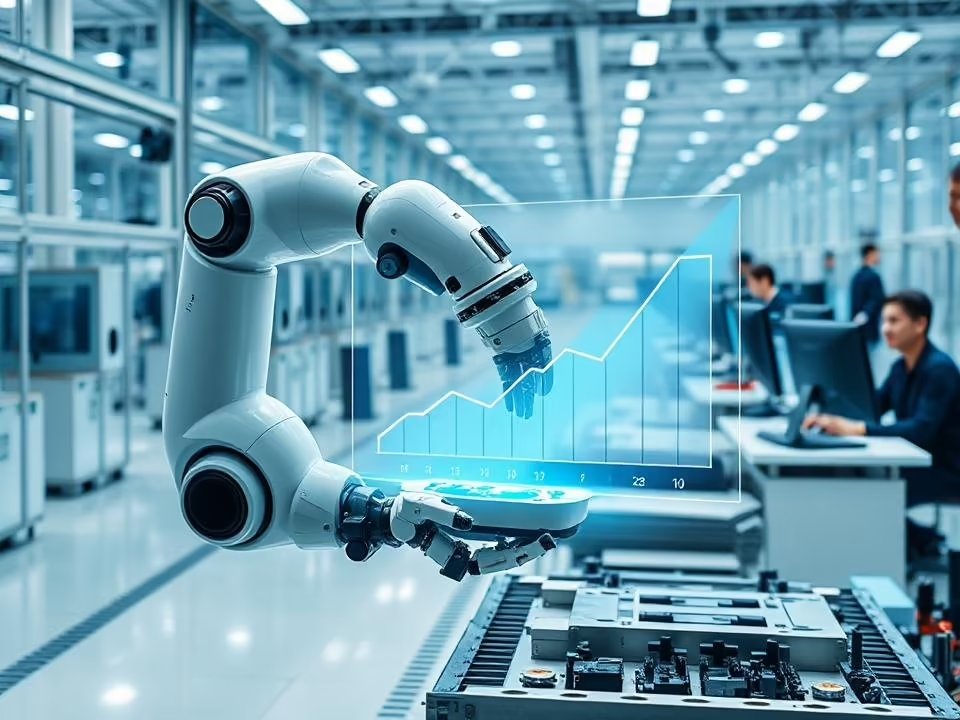
Closure manufacturing – the production of caps, lids, and seals for bottles, containers, and jars – is a critical segment of the packaging industry. With increasing demand for efficiency, consistency, and quality, the integration of Artificial Intelligence (AI) and Automation is transforming traditional manufacturing processes. These technologies not only streamline production but also significantly reduce waste, errors, and downtime.
1. Role of Automation in Closure Manufacturing
Automation involves the use of machinery and control systems to perform tasks without human intervention. In closure manufacturing, automation has found applications in:
Injection Molding and Compression Molding:
Robotic arms for part handling and ejection.
Precision control systems for consistent quality.
Assembly and Lining Machines:
Automated lining of closures with induction or foam liners.
In-line cap wadding and sealing.
Inspection and Sorting:
High-speed vision systems for defect detection (e.g., short shots, flashes, warping).
Automated rejection and sorting mechanisms.
Packaging and Palletizing:
Robotic packaging lines that reduce manual labor and speed up delivery cycles.
Integration with warehouse automation systems.
2. Artificial Intelligence Applications
AI enhances automation by introducing intelligent decision-making capabilities through data analysis, pattern recognition, and machine learning. Key AI applications in closure manufacturing include:
a. Predictive Maintenance
AI algorithms monitor machine performance using IoT sensors.
Predicts equipment failures before they occur, reducing downtime.
Extends machine lifespan and reduces repair costs.
b. Quality Control and Defect Detection
Machine vision systems trained with AI detect subtle defects in real-time.
Deep learning models continuously improve with more data.
Enhances precision in color, dimension, and shape recognition.
c. Process Optimization
AI analyzes production data to optimize molding parameters (temperature, pressure, cycle time).
Reduces material waste and improves energy efficiency.
d. Demand Forecasting and Inventory Management
AI tools predict demand trends based on historical and real-time data.
Helps in just-in-time production, minimizing overproduction and understocking.
3. Benefits of AI and Automation
Higher Throughput: Machines operate faster and more consistently than manual labor.
Improved Quality: Real-time monitoring and adjustments reduce the rate of defects.
Cost Efficiency: Less labor, lower energy consumption, and reduced material waste.
Worker Safety: Reduces human exposure to repetitive, hazardous tasks.
Data-Driven Decision Making: Enables continuous improvement and strategic planning.
4. Challenges and Considerations
High Initial Investment: Capital costs for AI and automation systems can be significant.
Workforce Reskilling: Need to train employees to work alongside smart systems.
Integration Complexity: Ensuring compatibility with legacy systems and existing processes.
Cybersecurity: Protecting manufacturing systems from potential digital threats.
5. Future Outlook
The future of closure manufacturing lies in smart factories — where AI, robotics, IoT, and cloud computing converge. Upcoming trends include:
Autonomous production lines with minimal human intervention.
AI-powered design optimization for closures (e.g., lightweighting, sustainability).
Real-time supply chain integration, enabling agile responses to market changes.
Sustainable manufacturing supported by AI-driven energy management.
Conclusion
AI and automation are not just enhancing closure manufacturing — they are redefining it. By embracing these technologies, manufacturers can achieve greater efficiency, reliability, and innovation, ensuring competitiveness in a rapidly evolving market.