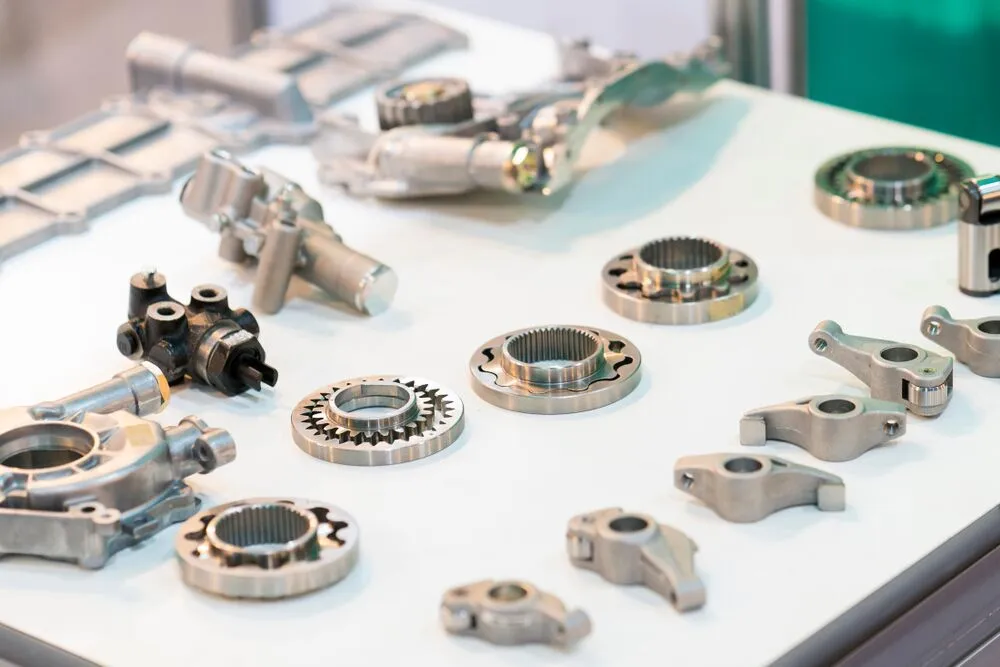
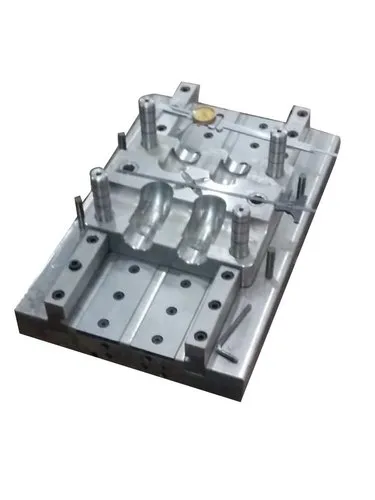
Surface finishing is a critical process in the manufacturing of houseware dies, directly impacting the performance, durability, and aesthetic quality of the final products. Houseware items—such as cookware, utensils, and kitchen tools—often demand smooth, clean, and defect-free surfaces. Proper surface finishing of the dies used in their production ensures high-quality replication, longer tool life, and reduced maintenance.
Below are key surface finishing techniques commonly used for houseware dies:
1. Polishing
Purpose:
To achieve a mirror-like surface finish that ensures the produced items are smooth and visually appealing.
Methods:
Mechanical Polishing: Uses abrasive tools or cloth wheels with polishing compounds. Ideal for removing minor surface imperfections.
Electropolishing: An electrochemical process that smooths and brightens metal surfaces by removing a thin layer. Useful for hard-to-reach geometries.
Advantages:
Improves surface gloss.
Reduces product adhesion to dies.
Enhances corrosion resistance.
2. Grinding
Purpose:
To remove surface irregularities and shape the die to precise dimensions.
Types:
Surface Grinding: Utilized for flat or shallow surfaces.
Cylindrical Grinding: Used for rounded or contoured surfaces.
Advantages:
High dimensional accuracy.
Prepares surface for further finishing processes like polishing or coating.
3. Honing and Lapping
Purpose:
To improve dimensional precision and create an ultra-smooth finish, especially in cavity areas.
Details:
Honing: Uses abrasive stones to correct surface geometry.
Lapping: Involves rubbing the die surface with an abrasive slurry between two surfaces.
Benefits:
Excellent surface uniformity.
Enhances mold release characteristics.
4. Shot Peening / Bead Blasting
Purpose:
To improve surface hardness and introduce compressive stresses that reduce fatigue.
Application:
Used to clean die surfaces and provide a textured finish.
Common in stainless steel or aluminum dies.
Benefits:
Increases surface durability.
Helps prevent crack propagation.
5. Coating and Surface Treatments
Types:
Nitriding: A heat treatment process that diffuses nitrogen into the die surface to enhance hardness.
PVD (Physical Vapor Deposition) Coating: Deposits thin, hard coatings like TiN or CrN.
Chrome Plating: Provides a hard, wear-resistant, and corrosion-resistant surface.
Advantages:
Increases die life.
Improves surface lubricity and release properties.
6. EDM Surface Texturing
Purpose:
Used for creating functional or decorative textures directly on die surfaces.
Details:
Achieved via spark erosion with a shaped electrode.
Allows for precise control over texture depth and pattern.
Benefits:
Ideal for creating matte finishes or anti-slip textures.
Enables design flexibility in houseware products.
Conclusion
Selecting the appropriate surface finishing technique for houseware dies depends on the specific material of the die, the type of houseware being produced, and the desired surface characteristics. A well-finished die not only ensures superior product quality but also extends the tool’s operational life, reduces production defects, and enhances overall manufacturing efficiency.