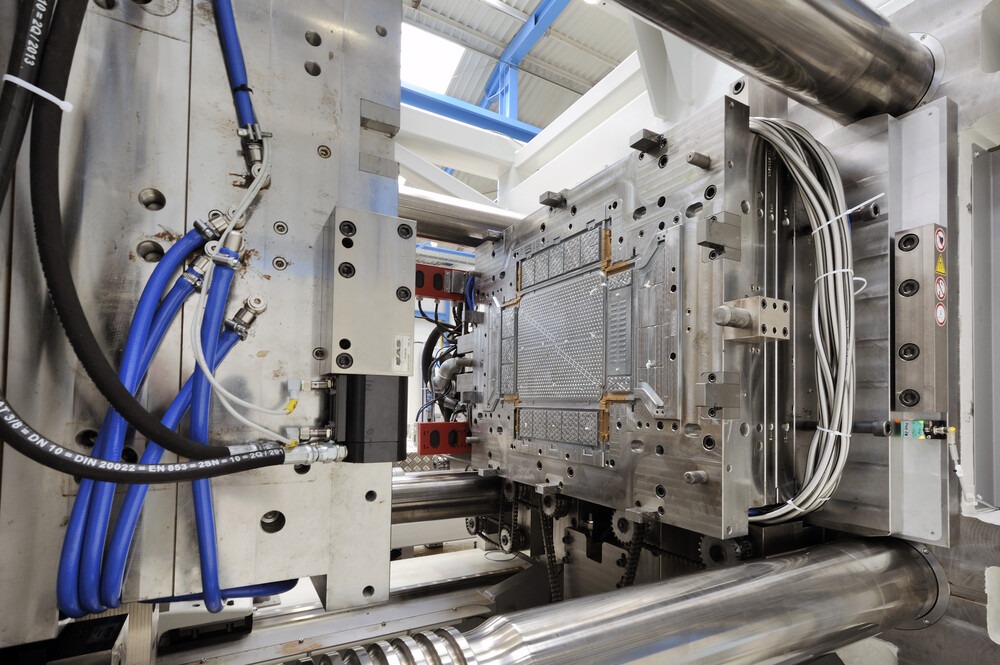
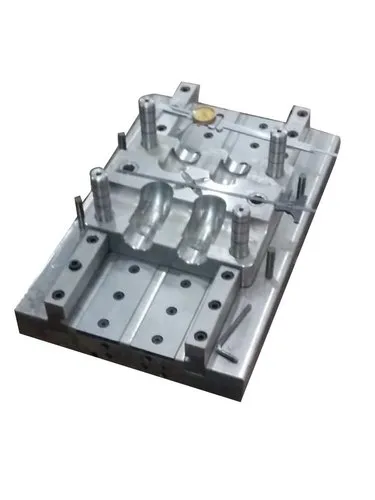
Injection moulds are critical tools in the plastic manufacturing industry, used to shape molten plastic into desired forms. The manufacturing of these moulds requires high precision, durability, and cost-efficiency. Various methods and technologies are employed to achieve these goals. Below are the primary manufacturing methods used in the production of injection moulds:
1. CNC Machining (Computer Numerical Control)
Overview:
CNC machining is the most widely used method for manufacturing injection mould components. It involves computer-controlled removal of material from a solid block (usually steel or aluminum).
Key Processes:
Milling: Used to create flat surfaces, slots, and contours.
Turning: Used for cylindrical parts such as ejector pins or sleeves.
Drilling: For creating holes for ejector pins, cooling channels, etc.
Advantages:
High precision and repeatability
Suitable for complex geometries
Compatible with various metals
2. Electrical Discharge Machining (EDM)
Overview:
EDM is used to machine hard metals and produce complex shapes that are difficult to achieve with conventional machining.
Types:
Sinker EDM: Uses an electrode to create intricate cavities in the mould core or cavity.
Wire EDM: Uses a thin wire to cut through metal and is ideal for making precise, narrow cuts.
Advantages:
High precision on intricate details
Capable of machining hardened steel
No mechanical stresses during machining
3. Grinding and Polishing
Overview:
After machining, mould components are often ground and polished to achieve the required surface finish and dimensional accuracy.
Processes:
Surface Grinding: For achieving tight tolerances and flat surfaces.
Polishing: Improves surface finish, often required for optical or aesthetic parts.
Advantages:
Enhances part release from the mould
Improves surface appearance of final plastic parts
4. Additive Manufacturing (3D Printing)
Overview:
Used increasingly in rapid tooling and prototyping, especially for low-volume production or for making conformal cooling channels.
Techniques Used:
Selective Laser Sintering (SLS)
Direct Metal Laser Sintering (DMLS)
Fused Deposition Modeling (FDM) (for non-functional or temporary components)
Advantages:
Faster development cycles
Enables complex internal geometries
Cost-effective for prototypes
5. Heat Treatment
Overview:
Heat treatment is applied to mould materials to improve their hardness, strength, and wear resistance.
Common Treatments:
Hardening and Tempering
Nitriding
Case Hardening
Advantages:
Increases tool life
Enhances surface hardness
6. Surface Coating and Treatment
Overview:
Surface coatings are applied to improve wear resistance, reduce friction, and prevent corrosion.
Examples:
Chromium Plating
Titanium Nitride (TiN) Coating
PVD/CVD Coatings
Advantages:
Improved part ejection
Increased corrosion resistance
Enhanced durability
7. Assembly and Fitting
After all individual components are manufactured, they are assembled with high precision.
Processes Involved:
Component alignment and fitting
Checking tolerances
Integration of inserts, cores, ejector pins, cooling lines, etc.
Conclusion
The manufacturing of injection moulds involves a combination of subtractive (CNC, EDM), additive (3D printing), and finishing techniques (grinding, polishing, coating) to achieve the desired tool quality. Selection of the appropriate methods depends on factors like production volume, part complexity, material type, and required surface finish. Continuous advancements in automation and digital manufacturing are further enhancing mould production efficiency and accuracy.