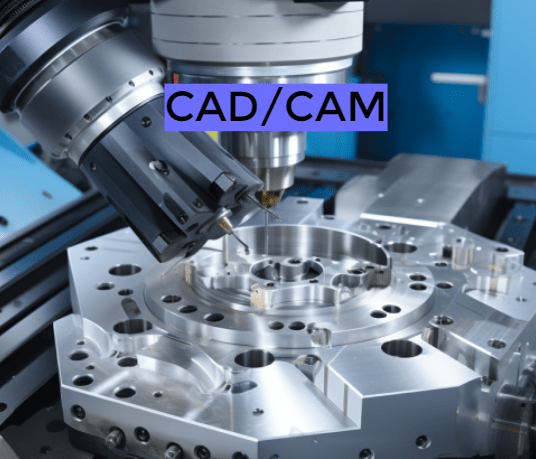
The automotive industry relies heavily on precision-engineered components for performance, safety, and aesthetic quality. One of the critical aspects in manufacturing automotive parts—especially plastic and metal components—is the design and creation of moulds. CAD (Computer-Aided Design) and CAM (Computer-Aided Manufacturing) technologies have revolutionized the mould design and manufacturing processes, bringing accuracy, efficiency, and flexibility to the industry.
What is CAD/CAM?
CAD (Computer-Aided Design) involves the use of software to create detailed 2D or 3D models of parts and assemblies.
CAM (Computer-Aided Manufacturing) uses the CAD model data to generate toolpaths and instructions for CNC (Computer Numerical Control) machines to manufacture the components.
Importance of Moulds in the Automotive Industry
Moulds are used to manufacture a wide range of automotive components such as bumpers, dashboards, headlamps, engine covers, door panels, and more.
These moulds must be designed with high precision to ensure proper fit, finish, and functionality of the parts.
High-quality moulds reduce production time, minimize defects, and ensure consistency in mass production.
Role of CAD in Mould Design
3D Modelling of Components:
CAD allows designers to create accurate 3D models of automotive parts and visualize the final product before manufacturing.
Mould Design Automation:
Specialized CAD tools can automatically generate mould cavities, cores, and parting lines.
Standard components such as ejector pins, cooling channels, and sliders can be integrated quickly.
Design Validation:
Simulation tools within CAD software allow for mold flow analysis to identify potential defects such as air traps, weld lines, and shrinkage.
Helps optimize gate location and cooling system design.
Design Iteration:
Quick modification and testing of designs enable faster development cycles and improved product quality.
Role of CAM in Mould Manufacturing
Toolpath Generation:
CAM software generates the precise toolpaths required to machine complex mould geometries on CNC machines.
Machining Simulation:
Virtual simulations help detect collisions, optimize cutting strategies, and reduce errors before actual machining.
Precision and Surface Finish:
CAM ensures high-precision machining with tight tolerances, essential for automotive components.
High-quality surface finish reduces post-processing efforts.
Reduced Lead Time:
Integration of CAD and CAM shortens the development cycle from design to production, accelerating time-to-market.
Benefits of CAD/CAM in Automobile Mould Design
Increased Accuracy and Precision
Faster Design and Manufacturing Cycles
Cost-Effectiveness Through Reduced Errors
Enhanced Product Quality and Consistency
Easy Modifications and Reusability of Designs
Improved Collaboration Across Design and Manufacturing Team