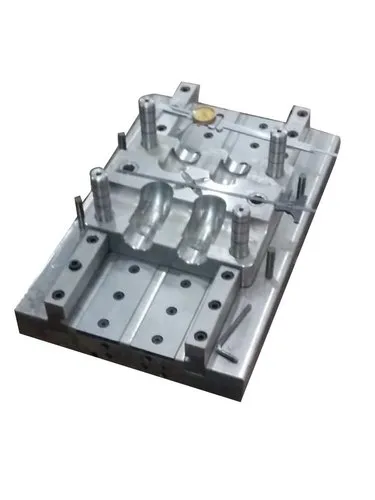
A thermoforming mould is a specially shaped tool used to form heated thermoplastic sheets or films into a desired shape. The plastic sheet is heated until it becomes soft and flexible, then placed over or into the mould. Vacuum, air pressure, or mechanical force is used to press the material against the mould surface.
Once the material cools and becomes rigid, it retains the shape of the mould and is removed as the finished product.
How Does a Thermoforming Mould Work?
The basic process is:
- Heat the Sheet – A thermoplastic sheet is heated until it becomes flexible.
- Position the Sheet – The heated sheet is placed over or inside the mould.
- Apply Pressure or Vacuum – Vacuum or air pressure draws the sheet tightly against the mould surface.
- Form the Product – The sheet takes the shape and details of the mould.
- Cool the Material – The formed sheet is cooled while maintaining its shape.
- Remove the Product – The finished product is released from the mould.
- Trim the Edges – Excess material is cut away to achieve the required dimensions.
Types of Thermoforming Moulds
1. Positive (Male) Mould
The heated sheet is formed over the outside surface of the mould.
2. Negative (Female) Mould
The heated sheet is formed inside a mould cavity.
3. Vacuum Forming Mould
Vacuum pressure pulls the heated material against the mould.
4. Pressure Forming Mould
Compressed air is used in addition to vacuum to achieve more detailed shapes and surfaces.
Materials Used for Thermoforming Moulds
Thermoforming moulds can be made from materials such as:
- Aluminium
- Epoxy
- Wood
- Plaster
- Engineering plastics
- Other heat-resistant materials
The appropriate material depends on the production quantity, forming temperature, product design, required surface finish, and mould life.
Advantages of Thermoforming Moulds
- Can create a wide variety of shapes
- Suitable for lightweight products
- Can reproduce surface patterns and details
- Useful for prototypes and production
- Relatively economical for certain applications
- Suitable for large and shallow products
- Allows customized product designs
Applications
Thermoforming moulds are commonly used for packaging trays, containers, disposable products, automotive components, protective packaging, appliance parts, decorative products, and display items.
Conclusion
A thermoforming mould is an important tool for converting heated thermoplastic sheets into specific shapes and designs. Proper mould design, heating temperature, forming pressure, and cooling are essential for producing accurate and high-quality finished products.