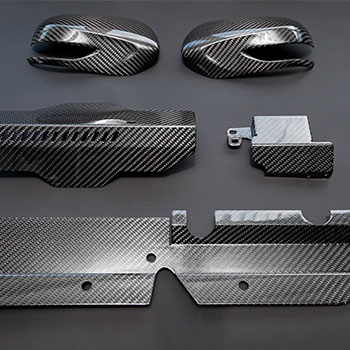
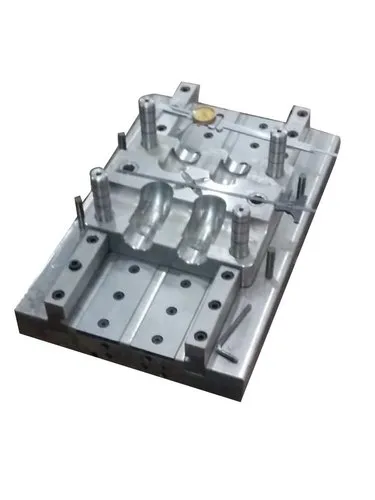
Composite materials are engineered materials made by combining two or more distinct substances—typically a matrix and a reinforcement—to produce a material with superior mechanical, thermal, and chemical properties. The most common composites used in industrial moulding include fiberglass-reinforced plastics (FRP), carbon-fiber composites, and kevlar-reinforced polymers. These materials are increasingly preferred in automotive, aerospace, marine, and consumer product applications due to their high strength-to-weight ratio, corrosion resistance, and design flexibility.
Types of Composite Materials
Polymer Matrix Composites (PMC)
Matrix: Thermoset (e.g., epoxy, polyester) or thermoplastic (e.g., nylon, polypropylene).
Reinforcement: Glass fiber, carbon fiber, aramid fiber.
Used in automotive panels, sports goods, and aircraft interiors.
Metal Matrix Composites (MMC)
Matrix: Aluminum, magnesium, or titanium.
Reinforcement: Silicon carbide or alumina fibers.
Used in aerospace, automotive pistons, and brake rotors.
Ceramic Matrix Composites (CMC)
Matrix: Silicon carbide, alumina, or other ceramics.
Reinforcement: Ceramic fibers or whiskers.
Ideal for high-temperature applications like turbine blades and heat shields.
Moulding Requirements of Composite Materials
The moulding of composite materials differs significantly from traditional thermoplastics or metals because of their layered structure, curing characteristics, and reinforcement orientation. Below are the key requirements:
1. Mould Design
Moulds must withstand high curing temperatures and pressures (typically 120–180°C).
Mould surfaces should be smooth and non-porous to ensure a defect-free finish.
Draft angles and parting lines should be carefully designed to facilitate demoulding without fiber damage.
Use of vacuum bagging or autoclave-compatible moulds for high-strength composite parts.
2. Material Preparation
Precise fiber orientation and resin-to-fiber ratio are crucial for desired mechanical properties.
Prepreg materials (fibers pre-impregnated with resin) are often used for uniform resin distribution.
Reinforcements must be clean, dry, and free from contaminants.
3. Moulding Methods
Common moulding processes for composites include:
Compression Moulding:
Used for sheet moulding compounds (SMC) and bulk moulding compounds (BMC). It provides good surface finish and dimensional accuracy.Resin Transfer Moulding (RTM):
Involves injecting resin into a closed mould containing dry fibers. It ensures uniform wet-out and is suitable for medium-volume production.Vacuum Bag Moulding:
Removes trapped air and compacts the laminate, improving strength and reducing voids.Filament Winding:
Continuous fibers are wound over a rotating mandrel, ideal for cylindrical or spherical components like pipes and tanks.Pultrusion:
Continuous process for producing long, constant-profile composite sections such as rods and beams.
4. Curing Requirements
Proper curing under controlled temperature and pressure is critical for achieving full resin cross-linking.
Post-curing may be needed to improve thermal and mechanical properties.
Autoclave moulding ensures optimal compaction and minimal void content.
5. Surface Treatment and Finishing
Moulds are often coated with release agents (e.g., silicone or fluoropolymer coatings) to prevent sticking.
Surface coatings or gel coats may be applied to improve appearance and weather resistance.
Quality Considerations
Void content, fiber misalignment, and incomplete curing are common defects that affect performance.
Non-destructive testing (NDT) methods such as ultrasonic or X-ray inspection are often used for quality assurance.
Conclusion
Composite materials offer unmatched performance benefits across industries, but their moulding requires specialized equipment, precise process control, and deep understanding of material behavior. Proper mould design, curing control, and fiber alignment are essential to achieving high-quality, durable composite products.