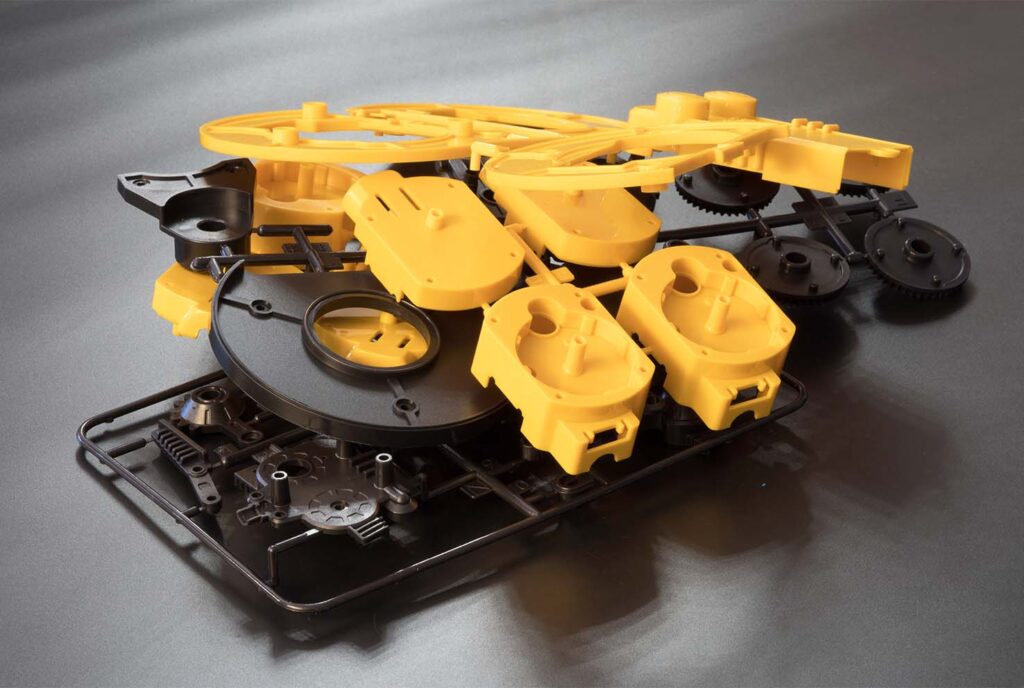
Rapid prototyping has become an essential tool in modern plastic furniture manufacturing. It enables designers and engineers to transform digital concepts into physical models quickly, helping to visualize, test, and refine designs before investing in expensive production moulds. By integrating rapid prototyping techniques, manufacturers can significantly reduce development time, improve product quality, and enhance design innovation.
Concept of Rapid Prototyping
Rapid prototyping refers to a group of advanced manufacturing technologies that create physical models directly from 3D CAD data in a short time. It allows iterative testing of form, fit, and functionality without the need for full-scale tooling. Common rapid prototyping methods used in the furniture moulding industry include:
3D Printing (Additive Manufacturing)
Techniques such as FDM (Fused Deposition Modeling), SLA (Stereolithography), and SLS (Selective Laser Sintering) are widely used to create prototype parts or scaled furniture models.CNC Machining
Used for producing prototype mould inserts or functional parts with high accuracy and surface finish.Vacuum Casting / Silicone Moulding
Ideal for making short runs of prototype furniture components that mimic production-grade plastic parts.
Applications in Plastic Furniture Moulding
Design Validation:
Rapid prototypes help evaluate furniture designs in terms of ergonomics, appearance, and aesthetics before final tooling.Functional Testing:
Physical prototypes allow assessment of mechanical strength, assembly fit, and load-bearing capacity.Mould Design Optimization:
By testing prototype parts, engineers can identify potential mould flow or shrinkage issues early in the design stage.Customer Feedback and Customization:
Prototypes can be shared with customers or design teams for real-time feedback, enabling quick modifications and personalization.
Benefits
Reduced Development Time: Speeds up the design-to-production cycle.
Cost Efficiency: Minimizes rework and prevents costly mould corrections.
Improved Design Accuracy: Detects design flaws before full-scale mould production.
Enhanced Innovation: Encourages experimentation with new materials, textures, and shapes.
Better Communication: Provides tangible models for design discussions and marketing presentations.
Integration with Mould Development
Once a prototype design is approved, data from the rapid prototype can directly inform the final mould design. The 3D CAD data and prototype feedback help in refining:
Gate and runner placement
Cooling system layout
Parting lines and ejection systems
This integration ensures that the final injection mould is optimized for efficient production and high-quality surface finish.
Conclusion
Rapid prototyping has revolutionized plastic furniture moulding by bridging the gap between conceptual design and manufacturing. It enables faster design validation, reduces tooling risks, and promotes continuous innovation in furniture aesthetics and functionality. As technology evolves, the adoption of rapid prototyping will continue to enhance competitiveness and efficiency in the plastic furniture industry.