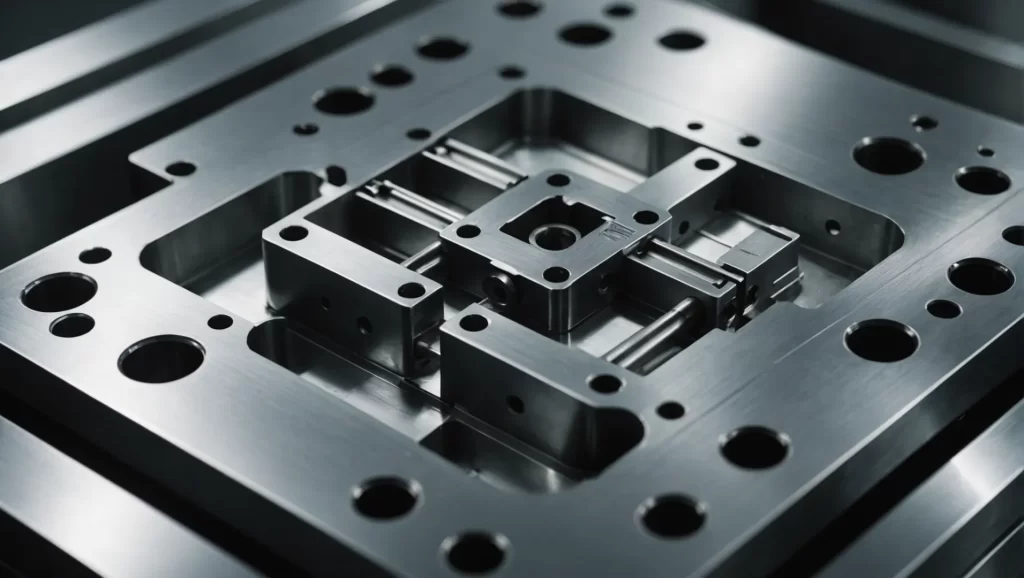
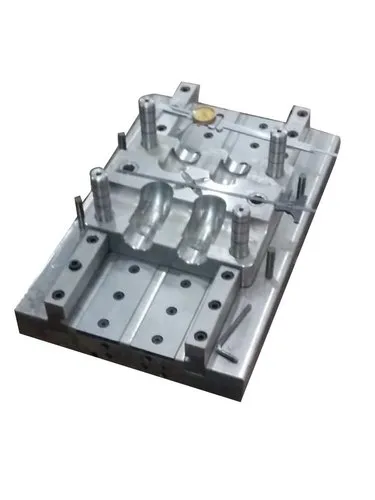
In mould manufacturing, the surface quality and longevity of the mould play a crucial role in ensuring consistent product quality and minimizing maintenance costs. Moulds are exposed to high temperatures, pressure, friction, and chemical attack during production. Therefore, surface treatment and coatings are applied to enhance their durability, wear resistance, and performance.
1. Importance of Surface Treatment
Surface treatment improves the functional properties of mould surfaces beyond the inherent capabilities of the base material. The key benefits include:
Improved wear resistance – reduces abrasion and erosion.
Enhanced corrosion resistance – protects against chemical reactions and oxidation.
Reduced friction – eases demoulding and improves surface finish of products.
Extended service life – reduces maintenance frequency and replacement costs.
Improved thermal stability – ensures consistent performance under high temperature cycles.
2. Common Surface Treatment Techniques
a) Nitriding
Process: Introduces nitrogen into the surface of steel at high temperatures.
Advantages: Forms a hard surface layer (nitrides) that increases hardness and wear resistance without affecting core toughness.
Applications: Common in injection moulds and die-casting moulds.
b) Hard Chrome Plating
Process: Electroplating a thin layer of chromium onto the mould surface.
Advantages: Provides excellent corrosion resistance, smooth finish, and reduces friction.
Limitations: May crack under repeated heating and cooling cycles.
c) PVD (Physical Vapour Deposition) Coating
Process: Deposits hard coatings like TiN (Titanium Nitride), CrN (Chromium Nitride), or TiAlN (Titanium Aluminium Nitride) under vacuum.
Advantages: High hardness, strong adhesion, good wear and corrosion resistance, and stable at high temperatures.
Applications: Widely used in high-performance and precision moulds.
d) CVD (Chemical Vapour Deposition) Coating
Process: Uses chemical reactions of gaseous compounds to form hard coatings.
Advantages: Excellent hardness and wear resistance.
Applications: Ideal for high-temperature moulding operations such as die casting.
e) Polishing and Texturing
Polishing: Improves surface finish, reduces friction, and aids easy demoulding.
Texturing: Enhances aesthetic appearance or functional grip on the moulded product.
3. Advanced Surface Treatments
a) Laser Surface Hardening
Uses laser beams to locally harden the mould surface, improving wear resistance and fatigue strength without distorting the part.
b) Ion Nitriding / Plasma Nitriding
A controlled process that produces a uniform, hard, and corrosion-resistant surface layer with minimal distortion.
c) DLC (Diamond-Like Carbon) Coating
Offers extremely low friction and high hardness, ideal for moulds working with abrasive plastics or materials with glass fibers.
4. Selection of Surface Treatment
The choice of surface treatment depends on:
Mould material (e.g., P20, H13, stainless steel)
Type of moulding process (injection, compression, or blow moulding)
Production volume and operating temperature
Nature of the polymer (corrosive, filled, or unfilled)
Required surface finish of the moulded product
5. Maintenance and Performance
Regular inspection and re-coating when necessary help maintain the surface integrity. Proper lubrication, cleaning, and temperature control also prolong coating life and maintain mould performance.
Conclusion
Surface treatment and coating technologies are vital for achieving long-lasting and efficient moulds. By selecting the right treatment method—whether nitriding, hard chrome plating, or advanced coatings like PVD and DLC—manufacturers can significantly improve the durability, productivity, and quality of their moulding operations.